
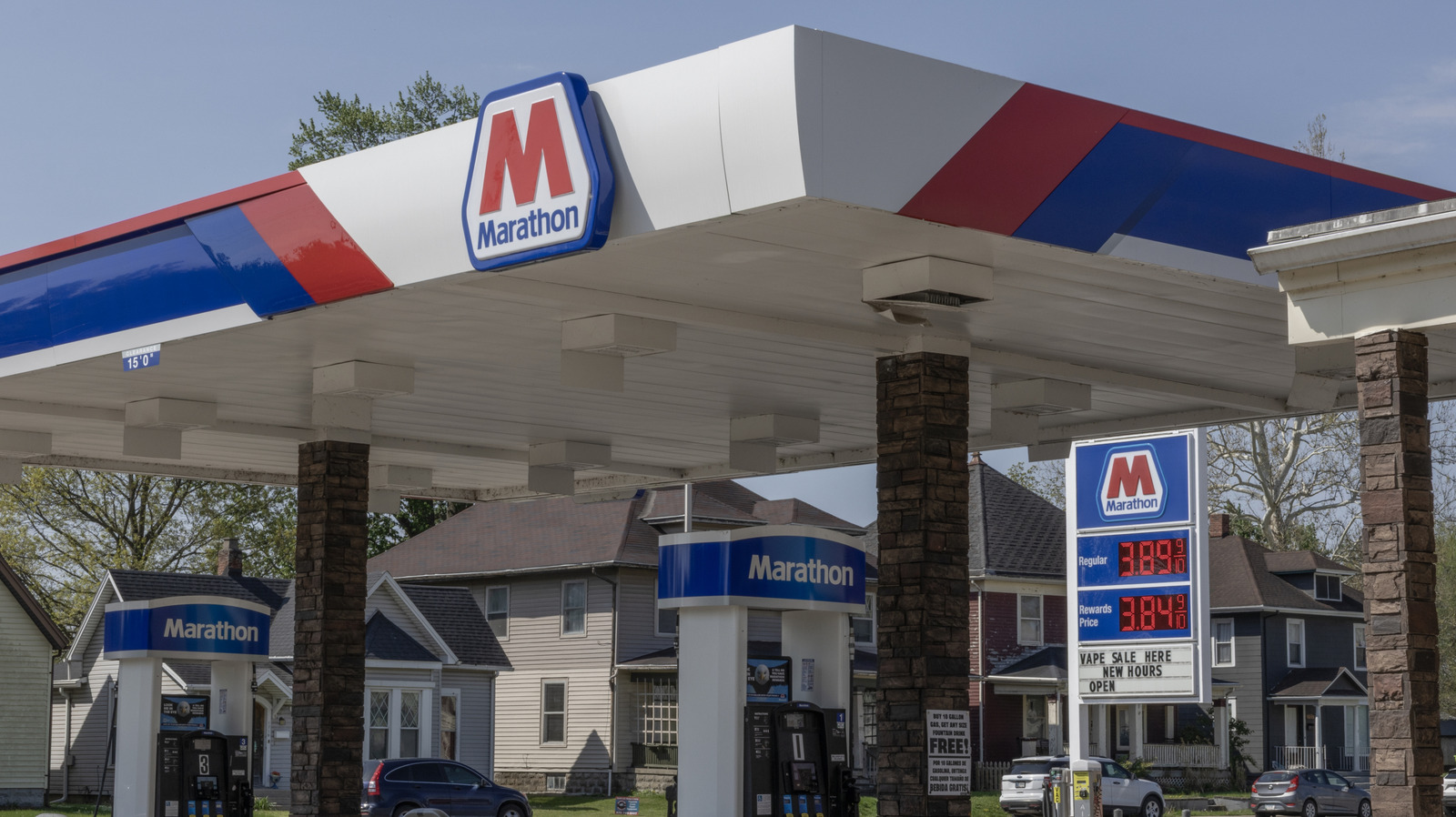

Marathon Petroleum has more than 7,000 locations across the United States, a long way since it was the Ohio Oil Company, founded back in 1887. Marathon Petroleum is currently an independent company, but it has a pretty complex ownership history.
Ohio Oil was purchased by Standard Oil Trust two years after it was founded. In 1906, the company forged its first pipeline from Illinois to Indiana. However, the U.S. Supreme Court broke up Standard Oil in 1911, making Ohio Oil independent again.
In 1924, Ohio Oil purchased Lincoln Oil Refining Company and then Transcontinental Oil Company in 1930. This is when it came across the Marathon brand name. For decades, the Ohio Oil focused on supporting the defense industry during the World War II and then post-war development after.
In 1962, Ohio Oil changed its name to Marathon Oil Company. It was purchased by U.S. Steel in the 1980s. In 2001, Marathon Oil broke off from the steel company to become independent once more. In 2011, Marathon Oil split off from even more assets — including transportation and sales — to become Marathon Petroleum Corporation.
Marathon Petroleum’s pivot to renewable natural gas
In 2018, Marathon Petroleum acquired Andeavor, creating the largest refiner in the United States. After acquiring ten more refineries and more than 3,000 retail gas stations, Marathon was popping up all over the states. This includes El Paso, Texas, Los Angeles, California, and Salt Lake City, Utah. By the mid-2020s, Marathon Petroleum controlled interest in about 20,000 miles of oil and natural gas pipelines.
In 2021, Marathon sold its Speedway markets to 7-Eleven for $21 billion. While Marathon Oil was purchased by ConocoPhillips in 2024, Marathon Petroleum continued as an independent operator. It did, however, acquire just under 50% of LF Bioenergy in 2023, a company focused on renewable natural gas. Marathon started operating the Green Bison Soy Processing Facility — soybean oil as a form of renewable diesel, part of Marathon’s renewable energy initiatives.
This may have been partially in response to the company’s history of pollution-related fines and an attempt to reduce greenhouse gases. In 2023, Marathon’s refinery in Louisiana caught fire, with naphtha burning for hours, toxins spreading into the air. This forced schools and businesses in the area to evacuate, and Marathon found itself getting sued. “This was an entirely preventable event,” New Orleans attorney Kerry James Miller told USA Todaypointing to Marathon’s poorly maintained electrical equipment, which was close to its storage tanks.

Comments are closed.