
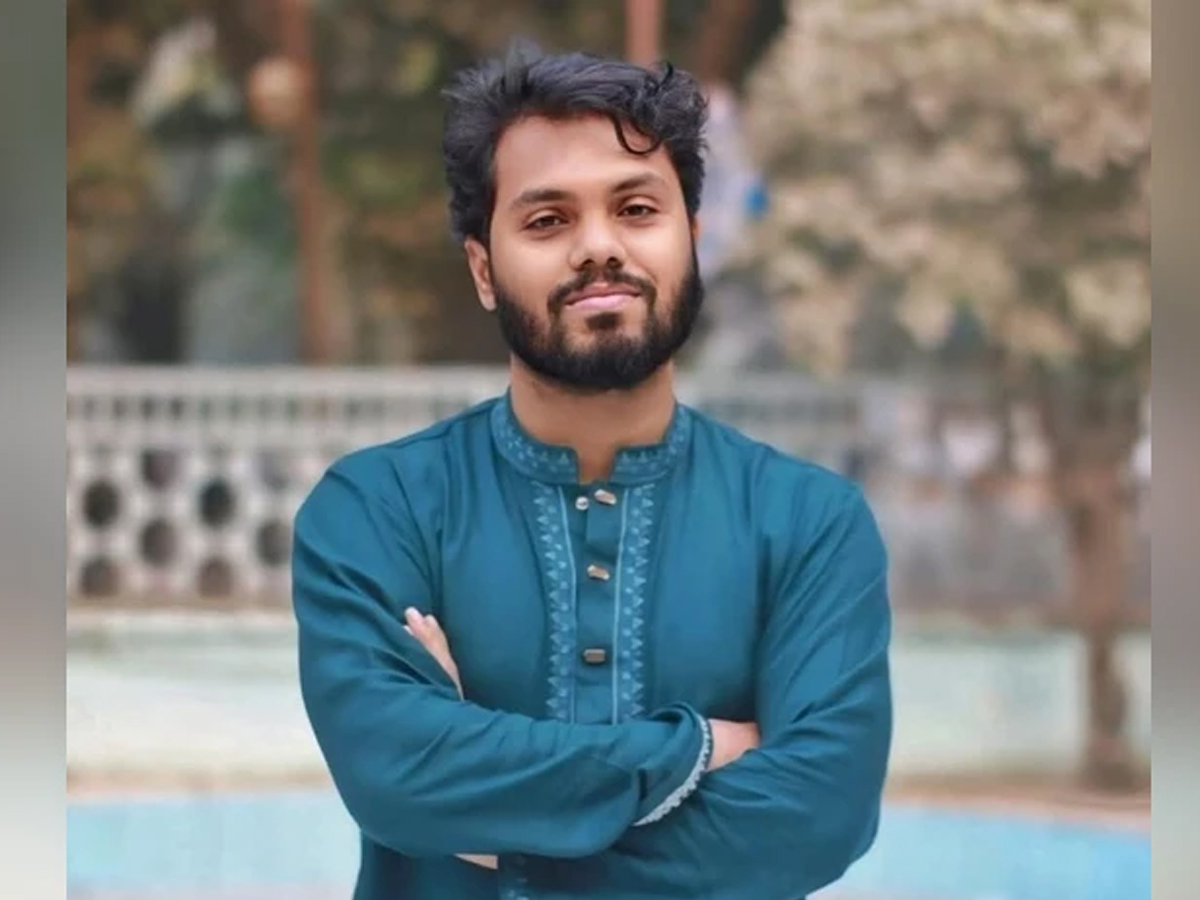
Who Was Sharif Osman Hadi? Killing of Bangladesh Youth Leader Sparks Violent Protests Ahead of Elections

25
Bangladesh has entered a tense and dangerous phase just weeks before the national elections. The killing of the young political leader, Sharif Osman Hadi, has shaken the country. Streets have turned violet, and protests have spread fast. Media houses were attacked, and diplomatic tensions with India have risen again.
What began as an election campaign has now turned into a national crisis.
Who Was Sharif Osman Hadi?
Sharif Osman Hadi was a 32-year-old youth leader and political organiser. He became popular during the July-August 2024 uprising that ended Sheikh Hasina’s long rule. He worked closely with student groups and young activists.
Hasi was a leading face of Inquilab Mancha, a radical political and cultural platform. The group gained strength during the mass protests and later became a major political force. It claimed to protect “July warriors,” those who took part in the uprising.
Hadi strongly opposed the old political system, and he often spoke against India and the Awami League. Many supporters saw him as a symbol of resistance and change.
After Sheikh Hasina fled to India, Inquilab Mancha expanded its influence. The group demanded the complete removal of the Awami League from politics. It accused the party of authoritarian rule and human rights abuses.
Earlier this year, the interim government led by Muhammad Yunus officially disbanded the Awami League. The party was barred from contesting future elections.
Hadi then decided to enter electoral politics and announced plans to contest the February 12 election. 2026 elections as an independent candidate from Dhaka’s Bijoynagar area.
How did Sharif Osman Hadi die?
The attack took place on December 12 in central Dhaka. It happened just one day after the Election Commission announced the election schedule.
Hadi was shot while beginning his campaign in the Bijoynagar area. Police said attackers followed him and opened fire before fleeing.
A Dhaka police spokesperson said, “Osman Hadi was shot at 2:25 pm in front of DR Tower on Box Culvert Road at Bijoynagar. We have initially learned that three assailants on a motorcycle shot him and fled the scene.”
Some reports said Hadi was riding a rickshaw when the attackers struck. He suffered a severe head injury.
Doctors rushed him to Dhaka Medical College and Hospital. His condition worsened quickly. Authorities placed him on life support.
The interim government later decided to airlift him to Singapore for advanced treatment. Despite medical care, Hadi remained critical for nearly a week.
On December 18, he died at a hospital in Singapore.
Yunus Government Reacts to Hadi’s Killing
Muhammad Yunus addressed the nation after Hadi’s death. He called it a serious blow to Bangladesh’s political transition.
He announced a day of state mourning. Flags were lowered across government offices, schools, private buildings, and Bangladeshi missions abroad.
Yunus warned those responsible for the killing. He said, “No leniency will be shown.”
He also urged calm and restraint. He asked people to avoid rumours and misinformation.
Yunus described Hadi as an enemy of the forces trying to reverse the revolution. He said, “Their evil efforts to frighten the revolutionaries will be completely thwarted.”
Earlier, Yunus linked the attack to election sabotage. He warned, “The objective of the conspirators is to derail the election. This attack is symbolic — meant to demonstrate their strength and sabotage the entire electoral process.”
After Hadi’s death, Yunus said, “His passing represents an irreplaceable loss to the nation’s political and democratic sphere.”
Protests Erupt, Dhaka Turns Violent
News of Hadi’s death spread rapidly. Thousands of protesters took to the streets across Dhaka.
Crowds chanted slogans and demanded justice. Many promised to continue protests until arrests were made.
Violence soon followed. Mobs attacked buildings, set fires, and broke windows.
Two major newspapers were targeted. Protesters attacked the offices of Prothom Alo and The Daily Star. Fires broke out inside both buildings.
Around 30 journalists were trapped inside The Daily Star office. Firefighters later rescued them.
One journalist, Zyma Islam, posted on Facebook, “I can’t breathe anymore. There’s too much smoke.”
Both newspapers stopped publication the next day.
The army and border guards later deployed across sensitive areas. Authorities tightened security ahead of the return of Hadi’s body from Singapore.
Political and Symbolic Targets Attacked
Violence spread beyond media houses. Protesters attacked symbolic sites linked to the Hasina family.
The historic house of Sheikh Mujibur Rahman at Dhanmondi-32 was vandalised and set on fire again. The site holds deep national importance.
In other areas, mobs attacked cultural institutions. Chhayanaut, a major Bengali cultural organisation, also faced arson.
Protesters destroyed Awami League offices across districts. In Rajshahi, a bulldozer demolished a party building.
Highways were blocked in several regions. Transport and daily life came to a halt.
Why Protests Turned Anti-India
Anger soon shifted toward India. Protesters accused India of sheltering Hadi’s attackers.
Some political groups claimed the suspects had fled across the border. They demanded immediate extradition.
Sarjis Alm of the National Citizen Party said,
“The interim government, until India returns assassins of Hadi Bhai, the Indian High Commission to Bangladesh will remain closed. Now or Never. We are in a war!”
Demonstrators marched toward the Indian High Commission, chanting slogans.
Bangladesh’s Foreign Ministry summoned India’s High Commissioner. It asked for cooperation in preventing suspects from escaping.
The ministry said, “The Ministry further sought India’s cooperation in preventing the escape to India of the suspects involved in the recent attempted assassination of Bangladeshi political leader Sharif Osman Hadi and, in case they manage to enter Indian territory, to ensure their immediate apprehension and extradition to Bangladesh.”
India also summoned Bangladesh’s envoy earlier, rejecting claims of involvement.
What Lies Ahead for Bangladesh
Bangladesh has remained under an interim government since August 2024. Yunus promised reforms and fair elections.
However, challenges remain. Protests continue. Political divisions are deep. Human rights groups have raised concerns.
The Awami League’s ban from elections has further polarised the country.
Against this backdrop, Hadi’s killing has become a rallying point. The coming weeks may shape Bangladesh’s political future.

Comments are closed.