
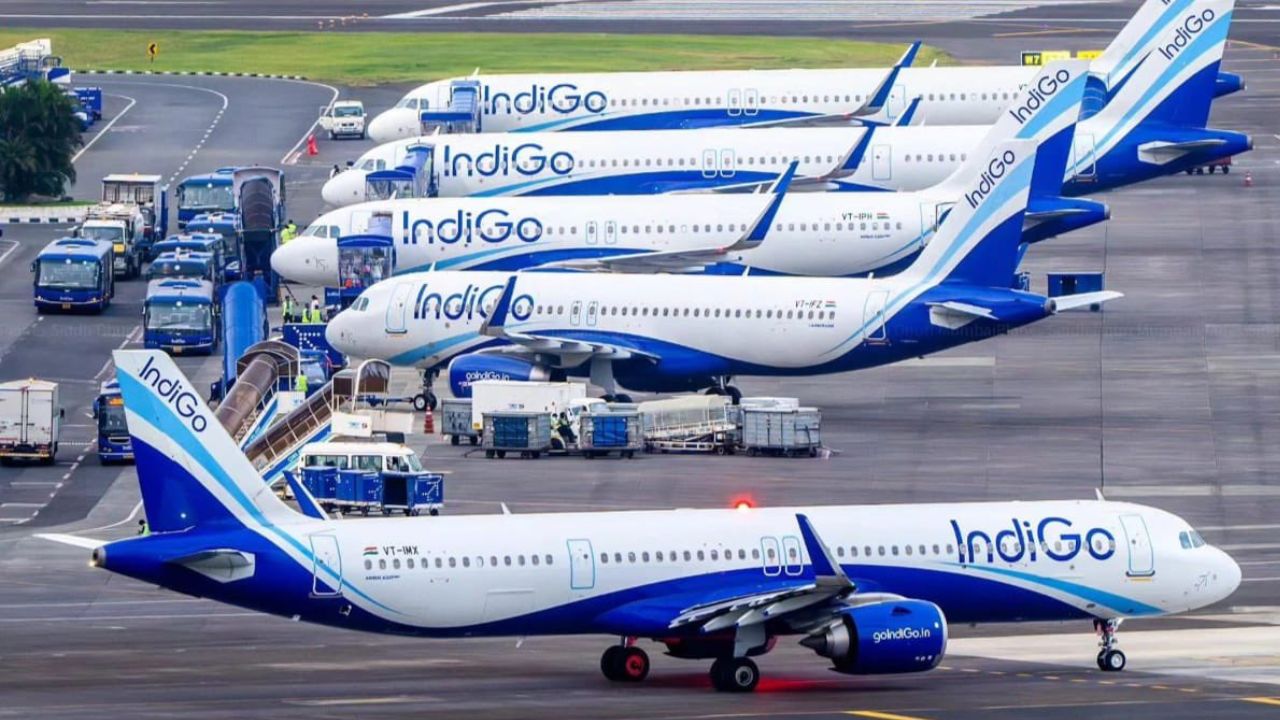
IndiGo planes are stalled! Someone is crying and someone is sleeping, then why are tickets being sold at such a high rate? rents sky high

The country’s largest airline IndiGo It has been facing a huge operational crisis for the last several days. On Friday, the situation became so bad that more than 1,000 flights had to be canceled in one day alone. All domestic flights from Delhi were canceled for the whole day. The biggest confusion for passengers was that despite such large-scale cancellations, IndiGo continued selling tickets and air fares reached record levels.
Read now on WhatsApp also, click to subscribe
Two questions are constantly arising in the minds of people – When flights are being cancelled, why are tickets being sold? And why are fares on these routes so expensive? The answer lies in the industry logic, which can be understood from the current situation of IndiGo and the airline dynamic pricing system.
Why are tickets being sold despite flight cancellations?
The entire flight schedule of IndiGo has not come to a standstill. The airline operates more than 2,200 domestic and international flights daily, only a portion of which have been affected by the Ghazi crisis. All domestic flights from Delhi remained canceled on Friday. But flights on Kolkata–Guwahati, Chennai–Coimbatore and many non-metro routes are running smoothly with less frequency and delays. Because a portion of the network is still operational, IndiGo continues to sell tickets on these operated flights.
Cancellation fixed 24–48 hours in advance – further flights open for booking
Airlines generally do not cancel flights weeks in advance. IndiGo is deciding the schedule for the next 24–48 hours after looking at the daily situation. Just because today’s flight has been cancelled, does not mean that the flight two days later will also be cancelled. Therefore, flights with further dates remain open for booking in the system. IndiGo said today’s major cancellation is a “one-time system reboot” so that planes and crew can be redeployed and normal operations can be resumed.
Why are rents so expensive? The game of ‘dynamic pricing’
IndiGo’s share in India’s domestic aviation market is more than 60%. When such a big airline suddenly removes thousands of seats from the market – the number of seats decreases. The demand remains the same. The system increases the fares manifold by switching to “dynamic pricing”.
Flight fares in the last 24 hours
Delhi-Mumbai one-way fare: ₹50,000
Delhi-Mumbai return fare: ₹60,000
Delhi-Bengaluru: Up to ₹1,00,000
Bengaluru-Mumbai: ₹40,000 instead of normal ₹7,000
People are saying on social media that “Delhi-London ticket is cheaper than this!” Should dynamic pricing stop in times of crisis? This is a big question before both the government and the airlines – Shouldn’t the fares be limited by stopping the system during emergencies or major operational breakdowns? Many passengers said that it seems as if the helplessness of the passengers is being taken advantage of in the midst of the crisis.
Why do tickets for canceled flights appear ‘available’? Airline system shows a flight as ‘Cancelled’ only when the crew assignment fails. Rotation of the aircraft must be impossible. Before then it remains open to flight bookings, as it is assumed that operations can stabilize afterwards. This is the SOP of airlines around the world.
What should passengers do?
Before reaching the airport, definitely check the flight status, reach the airport before time, because there is increased crowd and delay. Fares are likely to remain high on all airlines for the next few days. IndiGo has expressed hope that the situation will start improving from Saturday and operations will become almost normal by 10–15 December.

Comments are closed.