
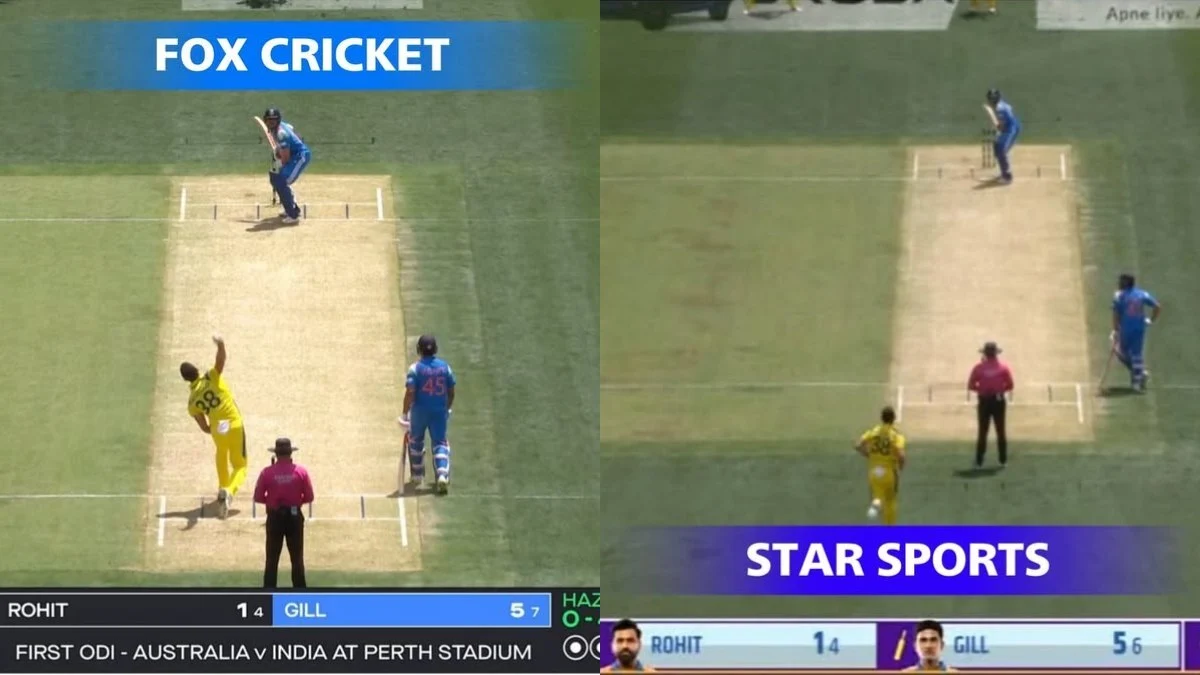

Key Points:
The huge technical difference is clearly visible in the cricket broadcasts of India and Australia. Australia uses 4K HDR, modern cameras and advanced production technology while India is still on the older HD setup. Seeing the better quality in ICC events proves that the problem is not the venue but the lack of production upgrade.
Delhi: It is not hidden from anyone that the era of change in cricket telecast started from Australia. The way Kerry Packer’s Channel 9 showed its World Series Cricket matches, cricket turned into a product as well as a game. Kerry Packer is gone but Australia left no stone unturned in changing and improving the standard of cricket broadcast with time. This was a signal of change for all other big cricket playing countries. Even then the difference is visible.
At present, BCCI has many times more money in its coffers than Cricket Australia, but these days, cricket lovers in India are getting a lot of opportunities to see the difference in the level of broadcast of cricket between the two boards: watching the Ashes Test game and Team India’s match against the visiting team of South Africa on the same day.
Question on social media
Due to this difference, there is a storm on social media. Can’t the standard of cricket broadcast in India be improved like Australia? What is lacking in BCCI? It is clear that while Australia invests heavily in new equipment and skills involved in broadcasting, India continues to follow the same age-old approach which does not improve the quality of the picture, better presentation of the game and overall cricket viewing.
Indian cricket fans also deserve better. The difference between the cricket production setup of BCCI and Cricket Australia is shocking. Why does the standard of cricket broadcast in India seem ‘outdated’ despite being one of the largest cricket markets in the world? If you want to know the difference then take a sample note:
Difference between broadcasting of Australia and India
Technical difference is the biggest reason
Cricket Australia broadcasts every match played in Australia in native 4K HDR, delivering a clearer picture, better colors and 50p progressive motion. The BCCI has so far stuck to the legacy 1080i HD broadcasts, which used interlaced video and resulted in standard cricket broadcast standards in all respects.
Cricket Australia’s outside broadcast trucks are on modern 12G-SDI and IP infrastructure, designed for high-resolution workflows, while India is running an older HD flypack.
Difference between camera and production system
There is also a clear deficiency in camera technology. Australia uses Sony HDC-4300 and 5500 True-4K cameras, high-speed slow-motion gear up to 300 fps, and even 600 fps ultra-motion cameras, while BCCI’s production uses older HD cameras with lower capabilities and slower frame rates.
These differences not only impact the viewing experience, but also impact ball-tracking and replay analysis. Cricket Australia employs a six-camera high-speed system and a 100-camera 360-degree replay setup for seam and swing tracking, while the players here are often limited to early HD angles, resulting in less clear ball-tracking and replays showing the picture from a lower angle.
Impact on analysis and replays
All these differences are indicative of the difference in the technology adopted. There is no use in entangling this discussion in the heavy language of technical differences, it just has to be understood that BCCI in India has never paid attention towards taking the level of cricket production to that height. Cricket Australia’s cricket production is in HDR and BCCI is still working in SDR.
The problem is not the venue, but the production quality.
It is not that this difference cannot be eliminated in India. This was understood during the ICC Cricket World Cup 2023 itself, when ICC used its own teams and equipment for the production and took over the production. At the same time, the stadiums suddenly started looking better, which clearly shows that the problem is not the venue but the production quality.
Despite huge revenues, the BCCI has spent little to upgrade the broadcast infrastructure even though Indian cricket fans constitute the largest contributor to global cricket viewership and deserve much better cricket production quality. When BCCI itself took over the production from the broadcast buyers, it was thought that they would keep making changes but nothing happened and there is ‘only compromise’ at every level.

Comments are closed.