
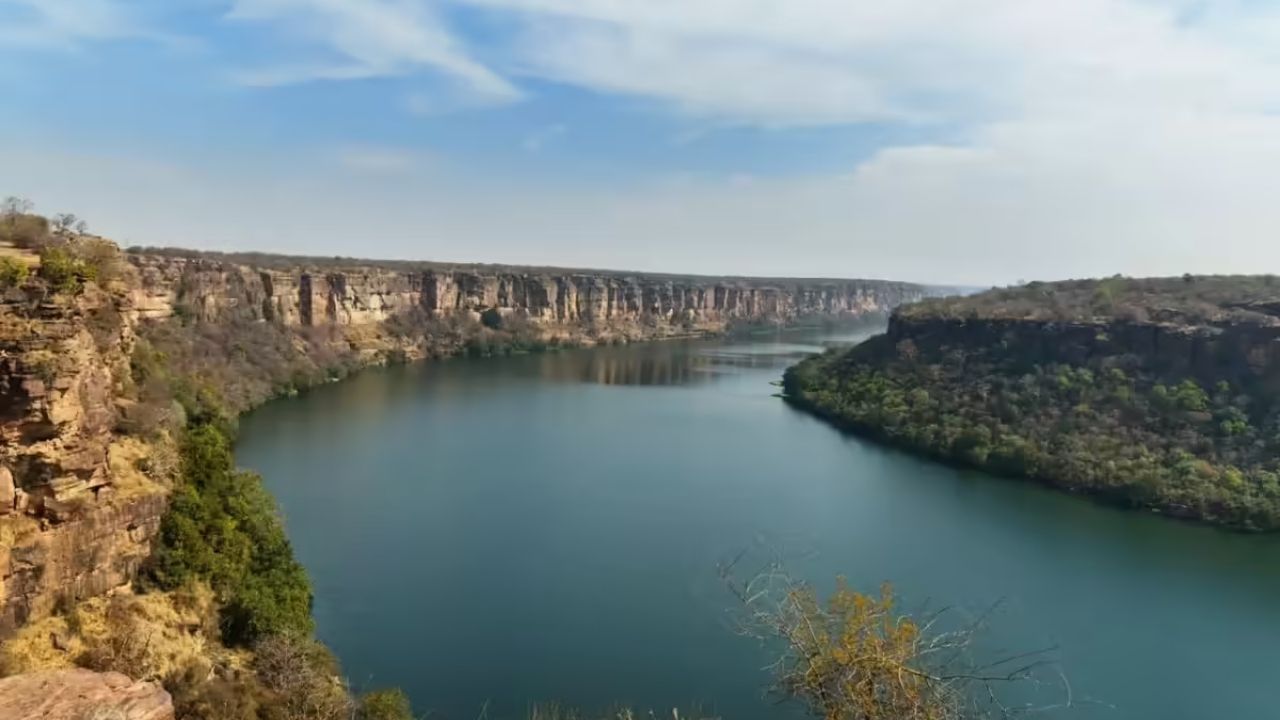

In India, rivers are given the status of mother. Rivers like Ganga, Yamuna, Narmada and Godavari are worshipped, festivals and rituals are held in their names. There is a river in this country which neither got religious recognition nor the right to be worshipped, people know this river by the name of Chambal. The question is, why was Chambal river kept away from worship for centuries? Is this river really cursed or is there some other historical and social reason hidden behind it?
There are stories of curse in mythological stories regarding the Chambal river which flows through Central India. It is said that this river was declared impure because of the violence and blood flow in ancient yagyas. With time this belief became so deep that the name of Chambal almost disappeared in religious texts and traditions. In later times, incidents related to banditry and violence also made the image of this river more negative.
Also read: Difference between Pradosh and Shivratri, is there any special coincidence between the two?
Why is Chambal river not worshipped?
Most of the rivers of India like Ganga, Yamuna, Narmada, Godavari are considered worshipable but there is a general belief about Chambal river that it is not worshiped or is worshiped in a very limited form. There are mythological curses, stories related to violence and social fear behind it.
Mythological story related to Chambal river
King Rantidev and the curse of the Brahmins
According to the Puranas and folklore, King Rantidev was a great charitable king. A huge yagya was organized in his kingdom, in which a large number of animals were sacrificed. After the yagya, the blood and remains of the dead animals were poured into a river. This river later came to be called Chambal. Angered by this, the Brahmins and sages cursed the river that this river would not be considered sacred and would not be worshipped, according to beliefs, due to this, Chambal came to be called the cursed river.
Also read-Kharmas period comes twice, which one is considered more special
beliefs related to violence and blood
According to another belief, there has been a lot of war, massacre and violence in the Chambal region since ancient times. It is believed that in many wars, bodies of dead soldiers and criminals were thrown into this river, due to which the river came to be considered impure. This became the reason why it was not included in religious rituals.
Was Chambal ever worshipped?
Yes, Chambal was worshiped in early times but that worship was limited to the local people only. Tribal and rural communities worshiped the river as the life giver. It was important in agriculture, animal husbandry and as a water source, but it did not find a place in Brahmanical traditions and gradually its place in religious texts and social beliefs started decreasing.
When and why did the puja stop?
It is believed that after the later Vedic period and Mahajanapada period (about 1000–500 BC), when the scripture-based religious system became stronger, Chambal was put in the category of unholy river.
Notoriety due to association with dacoits
In the medieval and modern times, the Chambal area used to become a stronghold of dacoits (rebels). Due to violence, kidnappings and murders, this area became a symbol of fear, due to which the image of Chambal became even more negative, although this was a socio-political reason, not a religious one.
Is Chambal really impure?
No. This is an illusion. Chambal river is still counted among the cleanest rivers of India, rare creatures like crocodiles, dolphins, turtles are found in it. Its water is also potable in many places.

Comments are closed.