
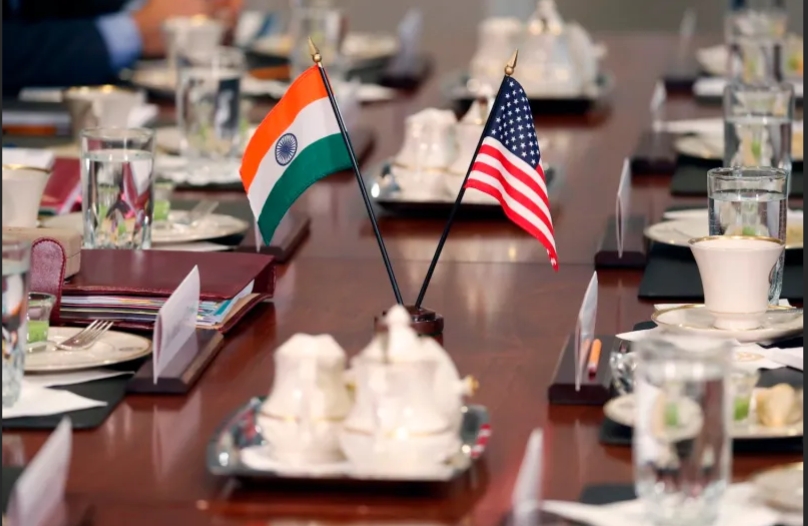

The United States launched the **PAX Silica** initiative in December 2025 as a strategic alliance to secure robust supply chains for silicon, semiconductors, critical minerals, AI infrastructure, and related technologies. Its purpose is to reduce dependence on coercive suppliers—primarily China—and to foster trustworthy partnerships between partner countries.
The initial group includes eight partners: **Japan**, **South Korea**, **Singapore**, **Netherlands**, **United Kingdom**, **Israel**, **United Arab Emirates**, and **Australia**. These countries dominate the key chokepoints: advanced chip manufacturing (Japan, South Korea), specialized equipment (Netherlands), logistics and semiconductors (Singapore), minerals (Australia), and expertise in defense tech, cyber and AI (UK, Israel, UAE).
India’s absence from this inaugural group has sparked discussion, but it reflects the alliance’s focus on countries with immediate, high-end strengths in the most sensitive upstream segment. India specializes in chip design—it has about 20% of the world’s engineers—and is making rapid progress in downstream areas.
The government has approved **10 semiconductor projects** in six states under the India Semiconductor Mission, with emphasis on outsourced assembly, testing (OSAT) and advanced packaging, with clusters emerging in places like Sanand in Gujarat. Additionally, an incentive scheme of ₹1,500 crore with guidelines to be released in October 2025 promotes mineral processing and recycling required for domestic dominance.
Pax Silica is not a closed club; Sources say that there is a possibility of expansion. India’s exclusion is more of an indication of sharpening indigenous capabilities in critical nodes than an insult. By becoming indispensable through design talent, back-end manufacturing and mineral security, India is poised to join the future and have greater impact in the evolving AI-driven global order.

Comments are closed.