
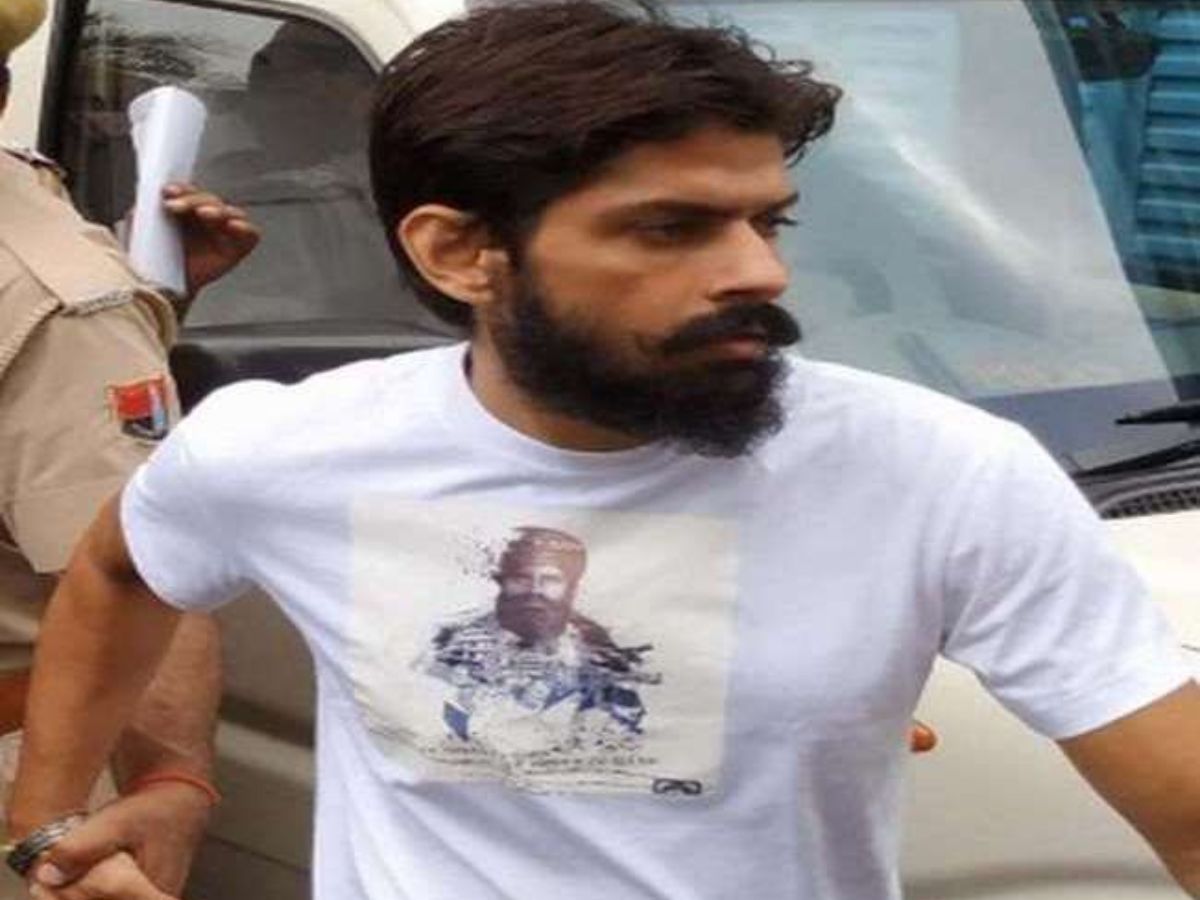

A sweeping federal indictment in the United States has brought jailed gangster Lawrence Bishnoi into the spotlight once again, with Washington expected to formally seek his extradition from India. The case stems from a multi-agency international crackdown called “Operation Hard Ball”, in which US authorities accused Bishnoi of directing a transnational criminal network from inside an Indian prison. While the charges may satisfy key legal requirements under the India-US extradition treaty, that does not automatically mean India is bound to hand him over. Under both the bilateral treaty and Indian law, New Delhi has several legal grounds to refuse or delay any extradition request.
Reportedly, the US indictment accuses Lawrence Bishnoi of offences including racketeering conspiracy, murder-for-hire, extortion and narcotics trafficking. American authorities believe these activities formed part of an organised international criminal network allegedly operated from behind bars.
Lawrence Bishnoi extradition hinges on India-US treaty and dual criminality rule
As per reports, the extradition process from India to the United States is carried out through the India-United States Extradition Treaty signed in 1997 and the Indian Extradition Act, 1962. The dual criminality rule is among the major conditions for extradition where the offenses must be punishable for at least one year in prison in both countries.
In regard to Lawrence Bishnoi, the dual criminality requirement is met in a general sense since the offenses as per the US charges, which include murder, extortion, and organized crimes, are equally grave under the Indian laws, Bharatiya Nyaya Sanhita.
Lawrence Bishnoi may remain in India because domestic cases come first
As per reports, while satisfying the criteria of dual criminality, the criminal procedure in India favors the domestic criminal process. Lawrence Bishnoi is undergoing trials in many states based on charges of murder and extensive extortion along with crimes committed in terrorism.
By virtue of the extradition treaty, India has a provision to defer the surrender of an accused who is being tried or undergoing sentence within the jurisdiction of India. The deferral provisions provide Indian authorities sufficient time to finish the prosecution and serve any sentence in connection with that before surrendering.
Lawrence Bishnoi case also depends on government’s final decision
The treaty also contains a political offence exception, although violent crimes such as murder, hostage-taking and drug trafficking are specifically excluded from that protection. Even so, if India believes a foreign prosecution is politically motivated rather than purely criminal, it can refuse extradition.
Citizenship in itself does not hold the ground for denying extradition in terms of the India-US extradition treaty. The decision regarding whether to extradite a person or not is ultimately taken by the Ministry of External Affairs, which holds ultimate executive authority over the matter despite the findings by Indian magistrates about fulfillment of all the necessary conditions.
For the time being, Lawrence Bishnoi is still in the custody of India. Moreover, in view of the large number of criminal charges brought against him, India legally stands on strong grounds to hold him in its prisons despite any attempt by the United States to extradite him.
Also Read: Why Was Blake Lively Missing From Taylor Swift and Travis Kelce’s Wedding? Here’s What Reports Claim
Khalid Qasid is a media enthusiast with a strong interest in documentary filmmaking. He holds a Master’s degree in Convergent Journalism from AJK MCRC. He has also written extensively on esports at Sportsdunia. Currently, he covers world and general news at NewsX Digital.
The post Why Does US Want Lawrence Bishnoi, Can India Refuse To Extradite Him? appeared first on NewsX.

Comments are closed.