
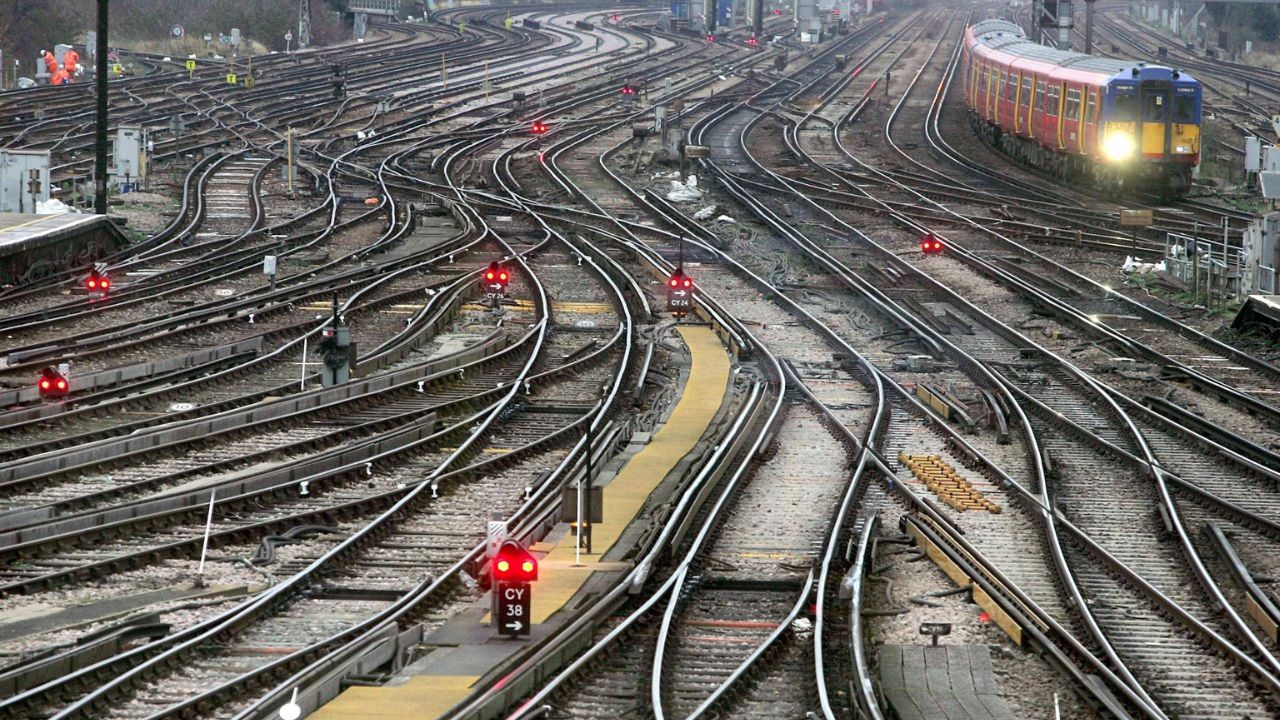

Indian Railway Tracks: The railway network in India is huge. Railways are running from every corner of the country. Millions of passengers travel by rail as the cost of travel is low and it is available for long distances. Be it passenger transport or freight transport, the railway runs on its tracks carrying huge loads. But while traveling by train, this question must have come in your mind that even though the railway tracks are made of iron, how come they do not rust due to the sun? What are the reasons for this? This is what we are going to tell you today.
The first and most important thing that you might not know is that Indian Railway Tracks are not made of ordinary iron. Rails are made of carbon steel or high-carbon manganese steel, which is stronger and more corrosion-resistant than ordinary iron. This metal is designed in such a way that it protects against bad weather.
Another thing is that during the construction of railway tracks, they are subjected to special heat treatment and hard surface finishing. This provides natural protection against corrosion and moisture. The cross section of the rails is thick, so that corrosion does not penetrate deep. Corrosion propagation process is much less in thicker metal. Indian Railway Tracks
Railway tracks are laid at a height where water does not accumulate to prevent rain and moisture from entering the tracks. The gravel and slope structure allows moisture to flow down.
All the tracks are periodically inspected, grinding and repaired by the Railways. At that time the minor rust on the track is removed. In many sensitive areas, a special corrosion-resistant compound is applied to the rails.
The continuous load and heat applied to the rails strengthens its surface. As trains weighing lakhs of kilograms move on the tracks, he is under pressure. This pressure and heat thickens the steel surface, reducing the area for corrosion.

Comments are closed.