
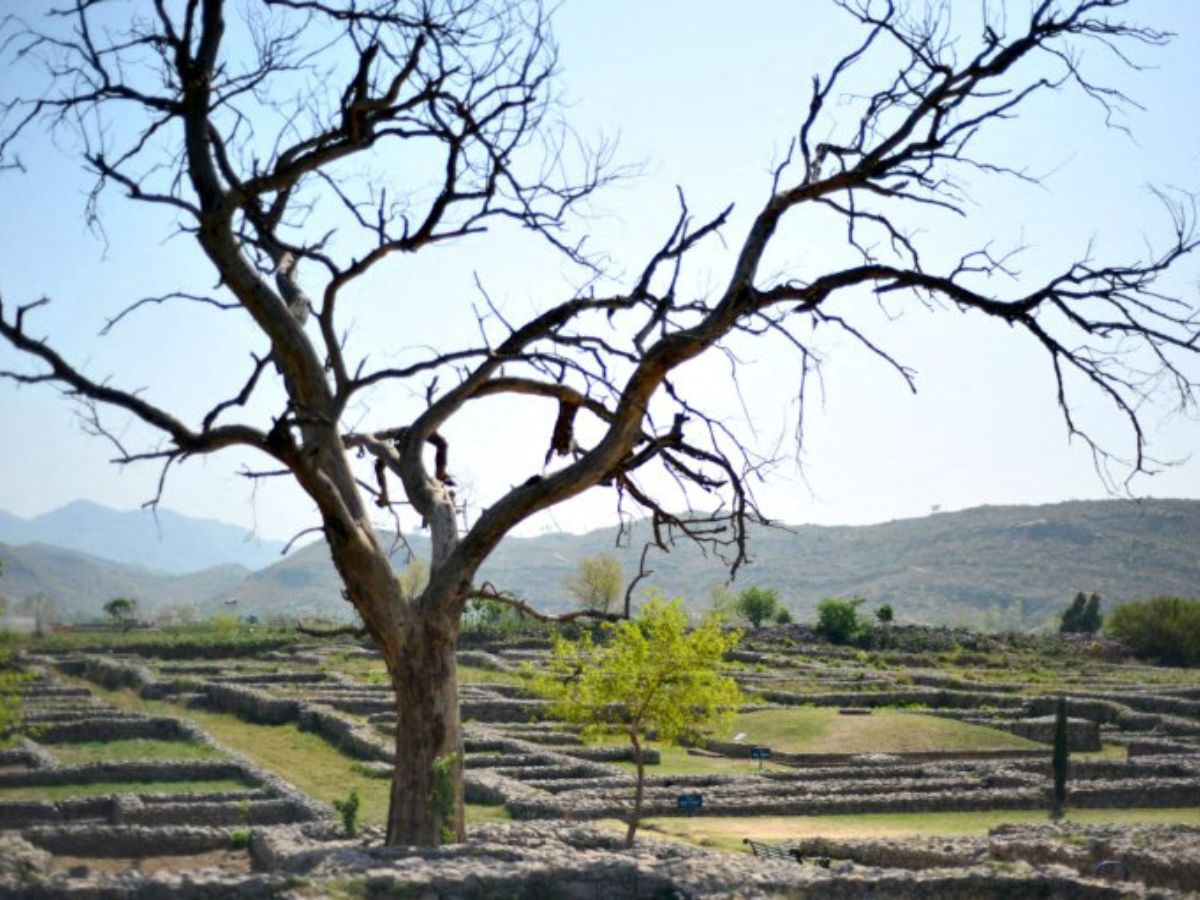

Pakistan is facing criticism because UNESCO issued a statement claiming that conservation efforts at the world heritage site of Taxila, an archaeological and Buddhist site of great significance in South Asia, might have jeopardized its authenticity. This comes after the conservation efforts at the site carried out by the Department of Archaeology and Museums of Pakistan, which is believed to have used modern techniques such as the use of cement and masonry on some parts of the site. As reported by the Pakistani newspaper Dawn, UNESCO warned that unless appropriate steps were taken, the Taxila site would be listed on the World Heritage in Danger list.
Known in ancient times as Takshashila, Taxila has long been promoted by Pakistan through tourism campaigns and heritage projects. However, UNESCO’s concerns centre on whether recent interventions have altered the site’s original character rather than preserving it according to internationally accepted conservation standards.
Why Taxila is one of the Indian subcontinent’s greatest ancient heritage sites
Located around 35 kilometres northwest of Islamabad in Pakistan’s Punjab province, Taxila formed part of the ancient kingdom of Gandhara, which is mentioned in the Ramayana, Mahabharata and several Sanskrit texts. Flourishing between the 6th century BCE and the 5th century CE, it became one of the world’s earliest centres of higher learning and is traditionally associated with renowned scholars such as Chanakya (Kautilya) and physician Charaka.
The archaeological complex preserves remains from the Achaemenid, Mauryan, Indo-Greek, Kushan and Gupta periods. It was also home to one of the earliest Buddhist mahavihara complexes, reflecting its Vedic, Buddhist and Greco-Buddhist heritage. Recognising its outstanding universal value, UNESCO inscribed Taxila on the World Heritage List in 1980.
Why UNESCO objected to the Taxila restoration work
The controversy centres on conservation work at Sirkap and Mohra Moradu, two major monuments within the Taxila complex. According to Dawn, UNESCO described the work as “unnecessary interventions” that could undermine the site’s authenticity and warned Pakistani officials that it would not hesitate to take strict action if the changes were not reversed.
The issue reportedly came to UNESCO’s attention in March after a visitor shared photographs and details of the restoration with Pakistan’s Permanent Delegate to UNESCO in Paris. According to PTI, the visitor alleged that original archaeological walls had been replaced with new masonry or had their height increased. Dawn, after reviewing photographs, reported that ancient irregular stonework had been replaced in places with polished, uniformly sized modern materials. Government officials quoted by the newspaper also said using cement and modern masonry violated UNESCO’s internationally accepted conservation principles.
Why the Taxila dispute matters beyond one archaeological site
Reports say that following the complaints, UNESCO carried out a joint technical inspection of the Taxila Museum and nearby archaeological sites on June 12 with Pakistan’s Department of Archaeology and Museums and the Ministry of National Heritage and Culture. During the visit, Pakistan’s Punjab archaeology department defended its work.
As per reports, Director General Malik Zaheer Abbas rejected claims that reconstruction had taken place, saying such allegations were inaccurate. He maintained the work was intended to stabilise vulnerable remains, prevent further deterioration and preserve authenticity in line with international conservation standards. Abbas added there was “no question” of reversing reconstruction because the work involved conservation rather than rebuilding.
The warning carries wider implications because officials cited by Dawn said it could weaken Pakistan’s efforts to secure UNESCO recognition for 24 additional heritage sites that have been under consideration since 1997. Beyond the current dispute, the debate highlights the importance of protecting Taxila, a site that represents a shared civilisational legacy of the Indian subcontinent stretching back to the Vedic age.
Also Read: Why Did Iran Wait Four Months To Hold Ali Khamenei’s Funeral? Where Was His Body Kept?
Khalid Qasid is a media enthusiast with a strong interest in documentary filmmaking. He holds a Master’s degree in Convergent Journalism from AJK MCRC. He has also written extensively on esports at Sportsdunia. Currently, he covers world and general news at NewsX Digital.
The post Why Is UNESCO Warning Pakistan Over Taxila? All About The Ancient World Heritage Site appeared first on NewsX.

Comments are closed.