
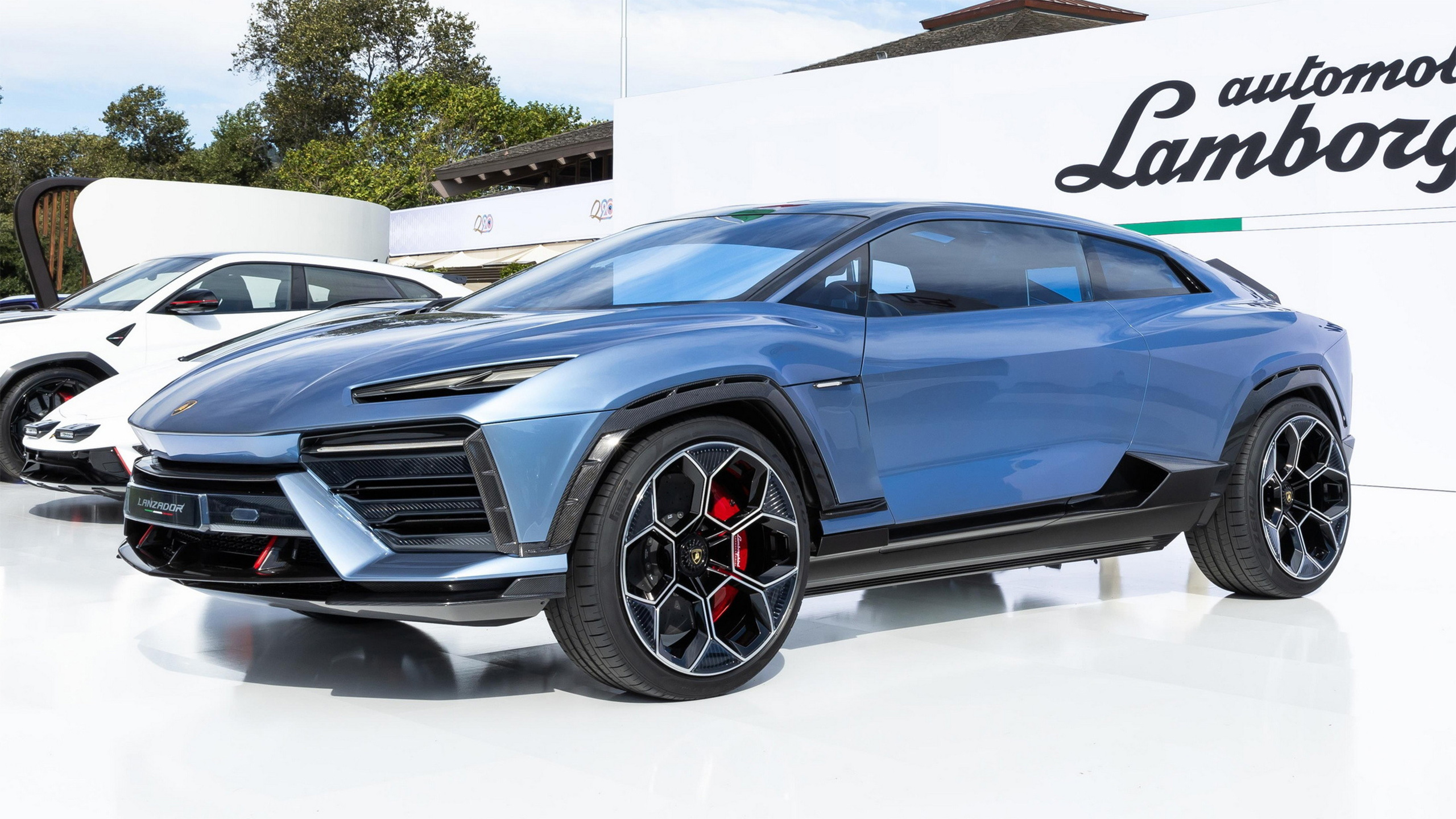

Lamborghini has had a change of heart regarding its first all-electric model. The Italian supercar brand has now scrapped the Lanzador, an electric coupe with a high stance, which was previously a bold move towards an electric future.
The reason for this move is a change in market dynamics and the brand’s attempt to preserve what makes its cars special for the driver.
This news was shared by CEO Stephan Winkelmann in an interview with The Sunday Times. He stated that the company came to this conclusion after extensive internal discussions and feedback from customers and dealers in major markets.
The key challenge was not technological but emotional. Lamborghini is of the opinion that its cars should provide a strong emotional experience, and the company felt that the Lanzador would not be able to provide that in its current form.
There had been indications of trouble for over a year now. In an interview with The Drive in the past, Chief Technology Officer Rouven Mohr stated that the demand for electric vehicles was not consistent across regions.
Some of Lamborghini’s biggest markets were less enthusiastic about a quick transition to battery power. This made it difficult to come up with a single solution for all customers.
Why Is Lamborghini Taking the Slow Lane to Full Electrification?
Premium sports car brands have a special problem with electrification. Electric powertrains provide rapid acceleration and instant torque, but customers still want engine noise, vibration, and character.
A character like this defines a Lamborghini. Without it, the brand would be losing some of its appeal. While engineers can mimic sound and feedback, it is very hard to recreate the emotional connection between the driver and the car.
The Lanzador was first unveiled as a concept car at the Monterey Car Week in 2023. Lamborghini positioned it as a four-seat coupe with increased ground clearance, electric motors on both axles, torque vectoring, and rear-wheel steering.
The vehicle was intended to combine performance with everyday driving capabilities. At the time, the brand had plans for a market launch in 2028. The car would have been the brand’s first all-electric production model.
Since then, the world of EVs has evolved. Some governments have relaxed their schedules for meeting strict emissions standards. Incentives have changed, and the rate of electric vehicle sales growth has slowed in some areas. Large development expenditures have also pushed car manufacturers to reconsider significant investments.
For niche brands with smaller production, the financial risk associated with every new platform increases.
Lamborghini has not shelved its electrification plans. Rather, it intends to proceed at a speed that synchronises with customer demand. The company has already employed plug-in hybrid solutions in its models.
Hybrid solutions enable engineers to integrate electric torque with internal combustion engines, maintaining sound and driver engagement while reducing emissions.
Lamborghini’s Strategic Pivot to Preserve Brand Identity
According to reports, a new plug-in hybrid model will fill the gap that was once intended for the Lanzador. This strategy will give Lamborghini the opportunity to develop battery technology and analyse consumer reaction to electric performance vehicles. This strategy will also enable the company to preserve its brand identity as the industry develops.
Lamborghini has established its brand identity in Sant’Agata Bolognese through drama, design, and emotional driving experiences.
Winkelmann emphasised that the company will not introduce an electric vehicle until it meets these criteria. The company does not want to produce a vehicle that lacks connection to its brand identity.
The discontinuation of the Lanzador indicates the uncertainty of the transition to electric performance. Car manufacturers are faced with the challenge of balancing regulation, technology, cost, and consumer demand.
However, for Lamborghini, emotion is the primary driver of decision-making. The company will introduce its first electric vehicle, but only when it is able to provide the same emotional driving experience that every vehicle bearing the brand’s name provides.

Comments are closed.