
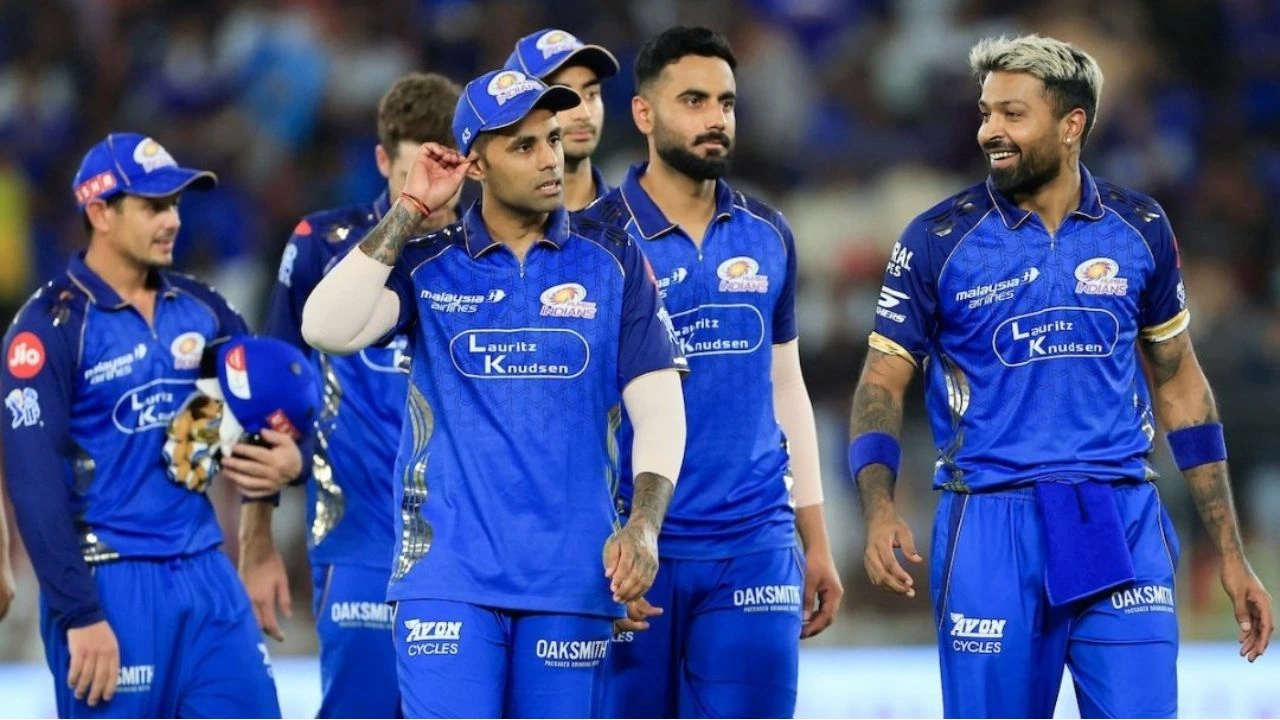

If IPL trophies were handed out for squad sheets, Mumbai Indians would already be planning another open-bus parade. Rohit Sharma, Suryakumar Yadav, Tilak Verma, Hardik Pandya, Jasprit Bumrah, Trent Boult, Deepak Chahar, Ryan Rickelton; this was not a team, it was a cricketing luxury showroom.
And yet, by May 10, MI were out of IPL 2026 before the playoffs, sitting on just three wins from 11 matches. That is not just a bad season. That is a five-time champion walking into a tournament with a sword and somehow losing the fight because nobody agreed who should swing it.
The last-ball defeat to Royal Challengers Bengaluru in Raipur was the official end, but honestly, MI’s season had been coughing for weeks. RCB only signed the death certificate. Bhuvneshwar Kumar ripped through the top order with 4 for 23, Krunal Pandya batted through cramps for 73, and then Bhuvneshwar came out with the bat and hit the kind of six that makes a bowling coach question reality.
But MI did not get eliminated because of one bad over or one mad finish. They got eliminated because their entire season was full of half-plans, broken rhythm and big names playing small cricket at the wrong times.
Mumbai Indians: A star-studded team without a clear identity
The biggest problem with Mumbai Indians in IPL 2026 was not lack of talent. It was lack of clarity. The old MI teams were frightening not simply because they had great players, but because every player knew his exact job. Lasith Malinga knew when he would bowl. Kieron Pollard knew when to absorb and when to explode. Rohit Sharma’s captaincy gave the side a calm centre. Bumrah was the weapon, not the whole emergency service.
This season, MI often looked like a team trying to remember what it used to be. Were they building around youth? Were they still depending on the old core? Were they an attacking batting side? A bowling-heavy side? A Hardik Pandya team? A Rohit-era team still emotionally living in the past? Too often, they looked like all of these things at once, which in T20 usually means you are none of them properly.
The leadership issue hung over them like background noise that never fully went away. Hardik Pandya’s captaincy was always going to be judged harshly because of the history around the handover from Rohit. That does not mean every defeat was about captaincy, but it does mean every defeat became heavier. When a team is winning, everyone calls it ‘multiple leaders in the dressing room.’ When it is losing, the same thing becomes confusion. MI looked like a side with too many senior voices but not enough single-minded direction.
Their golden-era strength was role certainty. In 2026, that certainty vanished. Batters looked unsure whether to attack or rebuild. Bowlers looked dependent on Bumrah to clean up every mess. Field placements and bowling changes often felt reactive. A champion side usually makes opponents respond to them. MI spent too much of this season responding to damage already done.
IPL 2026: The powerplay became a problem at both ends
MI’s season repeatedly went wrong in the first six overs. In T20, the powerplay is not the whole match, but it often decides the mood of the match. MI kept losing that mood early.
With the bat, they were too frequently pushed into rescue mode. Instead of setting up platforms, they kept creating repair jobs. A top order with Rohit, Rickelton, Suryakumar and Tilak should not constantly leave the middle order walking in like firefighters. But that became the pattern. Once early wickets fell, MI’s batting lost its natural aggression. The middle overs became about recovery rather than control, and by the death overs they were often trying to manufacture totals instead of launching from a strong base.
The Raipur match summed it up brutally. Bhuvneshwar removed Rickelton, Rohit and Suryakumar early, leaving MI at 28 for 3. That is not a beginning; that is a pothole. Tilak Varma and Naman Dhir fought to drag them to 166 for 7, but the innings never truly looked like the product of a heavyweight batting unit. It looked like a rescue act.
With the ball, the problem was just as serious. Bumrah remained MI’s most reliable force (without any wickets this time), but the attack around him did not provide enough control or threat. Opponents could afford to respect Bumrah and attack others. That is a dangerous place for any bowling unit. When one bowler becomes both your shield and your sword, the rest of the attack starts looking decorative.
Deepak Chahar and Trent Boult had moments, but MI needed sustained pressure, not occasional reminders of reputation. They leaked too many runs early in several matches, and once the opposition got ahead, MI lacked the collective calm to pull games back consistently. Bumrah can win overs. He cannot babysit an entire bowling innings every night.
MI’s big names did not deliver big moments
The harsh truth is that MI’s biggest players did not produce enough match-winning performances across the season. That is where star-studded teams are judged. A young side can say it is learning. A rebuilding side can ask for patience. A team like MI, with that much pedigree, has to deliver now.
Hardik Pandya’s season never found rhythm. His batting returns were ordinary, his bowling impact was limited, and injury issues disrupted the balance further. When your captain is also supposed to be your finisher and a seam-bowling option, his inconsistency affects two departments at once. MI did not just miss Hardik’s runs or overs; They missed the confidence that comes when the captain looks in command.
Suryakumar Yadav also had flashes, but flashes do not carry a campaign. MI needed the old SKY: the middle-over monster, the man who turns 45 for 2 into 95 for 2 before the opposition has processed the angles. Instead, he was unable to dominate consistently. Rohit’s unavailability and fitness concerns also hurt the top order’s rhythm. Tilak Varma showed fight, and Naman Dhir had useful moments, but MI needed their senior core to own games more often.
The injury issues made things worse. Hardik missing important matches, Rohit dealing with fitness interruptions, Mitchell Santner being ruled out; all of this prevented MI from settling into a stable XI. But injuries alone cannot explain three wins in 11 matches. Good franchises absorb injuries through planning. MI looked like every absence forced them into another reshuffle of identity.
And then there was the fielding. Championship teams save runs when their batting and bowling are imperfect. MI, too often, gave opponents extra life through dropped chances and sloppy moments. In a season where they lost tight games, those small mistakes became expensive. T20 is already a format of tiny margins. MI kept donating margins.
The Raipur defeat was the perfect summary of Mumbai Indians’ IPL 2026 season.
The defeat to RCB was painful because MI had chances to win it. They had RCB under pressure. Corbin Bosch bowled superbly. Bumrah’s 19th over, giving away only three runs, should have tilted the match decisively. But even then, MI could not close.
That is the most worrying part. Old Mumbai Indians used to smell fear in opponents. This MI seemed to feel it themselves. Krunal Pandya, cramping badly, still looked clearer than MI’s bowlers in the biggest moments. Bhuvneshwar Kumar, a bowler by profession, hit the pressure shot MI could not prevent. Defending 15 in the last over with your season alive should bring out ice. MI brought out anxiety.
Their elimination was confirmed because the numbers made survival impossible, but their real elimination had happened earlier: in muddled powerplays, uncertain leadership, underperforming stars, and a team culture that no longer looked as ruthless as the badge demands.
Mumbai Indians do not need to panic, but they do need honesty. They must decide what their next identity is. Nostalgia cannot be a strategy. Reputation cannot be a batting order. Bumrah cannot be the full bowling plan. And a dressing room full of leaders still needs one clear direction.
For years, MI were the IPL’s great closers. In 2026, they became the team that kept finding ways to lose games they had chances to win. That is how a star-studded side gets eliminated before the playoffs: not suddenly, but slowly, one unclear decision at a time.
Also READ: Bhuvneshwar Kumar and Krunal Pandya reminded everyone that cricket is still a game for the tough-minded
Comments are closed.