
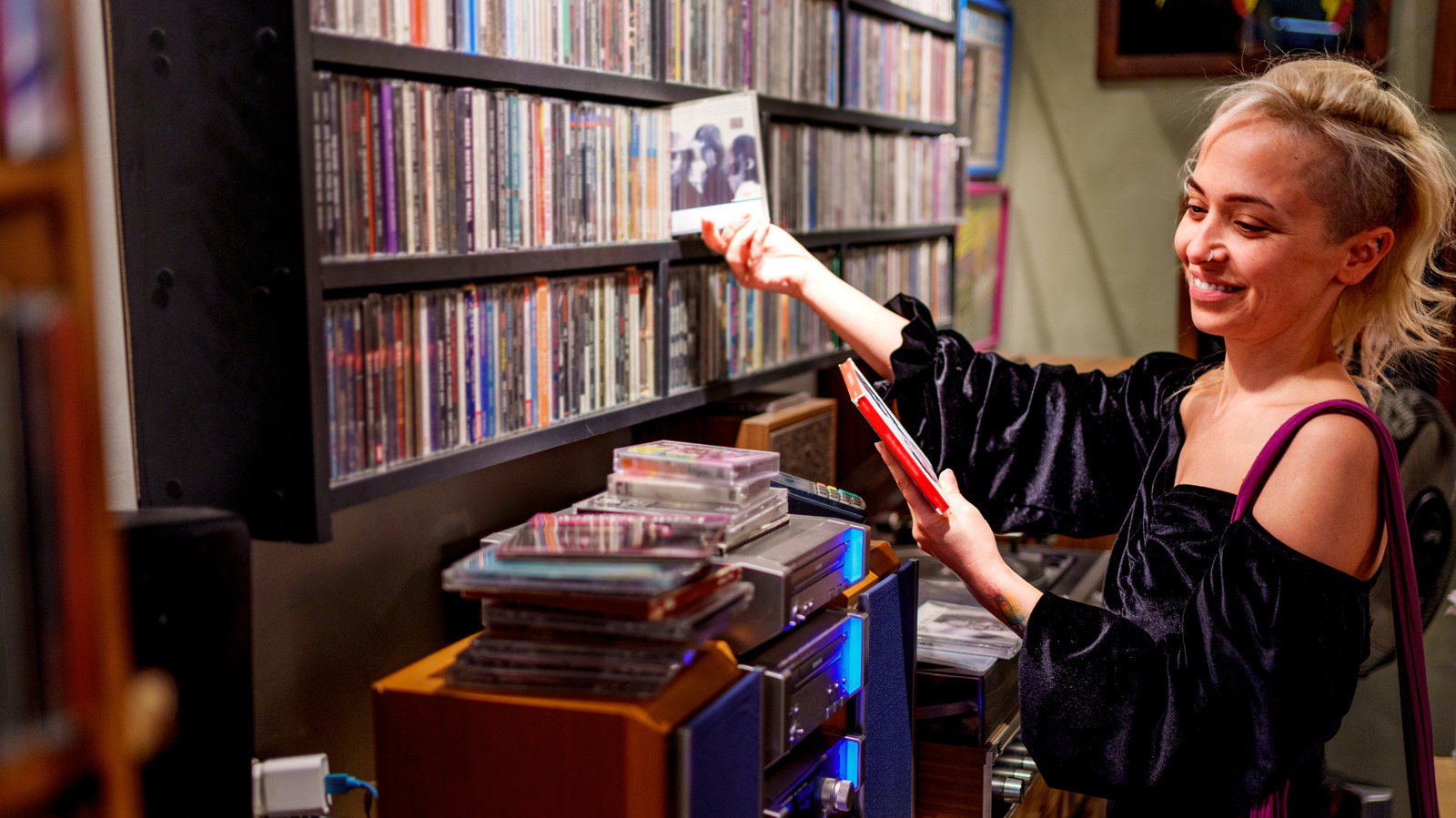

The youth yearn for the past, or at least for the physical items it produced. Evident in online trends on TikTok and other of-the-moment platforms is a demand for old school media, from DVDs and CDs to VHS tapes and cassettes. Awash as we are in the digital world, full of its buzzing notifications and endless data harvesting, it’s easy to see why someone who grew up without any memory of life before the internet was pocket-sized would see the media of the generation prior as a signifier of simplicity.
But is the move toward physical media simply another fad, like Stanley mugs and Labubus, or is it a sign of where culture is headed? It’s impossible to gauge how widespread this trend actually is, although there’s plenty of circumstantial evidence. Videos about physical media consistently get high engagement on social media, and news pieces continue to cover the phenomenon. Even so, major streaming services don’t seem to be going anywhere. Looking across the information available, it’s clear that physical media represents a simplicity and sense of control that feels increasingly distant, at least for a select few. From escaping the endless pressure cooker of social media and digital surveillance to restoring a sense of personal ownership, here’s why physical media seems to be making a comeback.
For many, physical media represents a break from digital noise
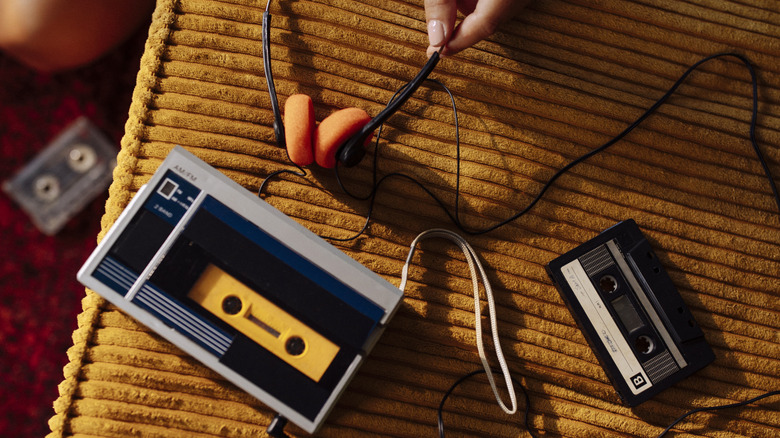
For some, physical media is a fashion trend, returning alongside other post-Y2K totems like low-rise jeans. But another early 2000s trend has reared its head: mass surveillance. In the immediate wake of the 9/11 attacks, the Patriot Act greatly expanded the government’s ability to carry out domestic surveillance. It is not hard to draw a straight line to the present day, where we are all too painfully aware that our private data is all over the internet. Simply watching a movie on Netflix helps to build a profile of your personality that will be used to target you with ads, and that’s barely skimming the surface. In that light, physical media is a beacon of freedom. Cassette tapes won’t send data about your music tastes when you play them.
The business model of big data has led to a digital life that has begun to feel exhausting for some. As reported by CNBCmany of the young people adopting physical media are acutely aware that their every move online is monetized and sold back to them. People interviewed spoke about the toll those pressures have taken on their mental health, a sense of always being advertised to and overloaded with information. In this environment, offline experiences become something of an oasis. Need a break from the ads? An iPod or even an old CD player lets you listen in peace and is a more affordable alternative to Spotify Premium.
Physical media is more reliable than streaming
Streaming services were pitched to the public as a convenience, and in many ways, they are. No longer must anyone wait in line at the record store or hope the local Blockbuster hasn’t sold out its copies of the hottest new film. Simply fire up your smart TV, and you’ll be watching the opening credits within moments. But that’s the best-case scenario.
Too often, you’ll find that the movie you were hoping to see isn’t on any of the services you subscribe to, forcing you to choose between forking over money for yet another subscription or watching something else. In some cases, entire series have been pulled from streaming, as was the case with HBO’s wildly popular “Westworld.” Those who own the physical box set can watch the series whenever they please, while everyone else has to wait for it to pop up on another platform.
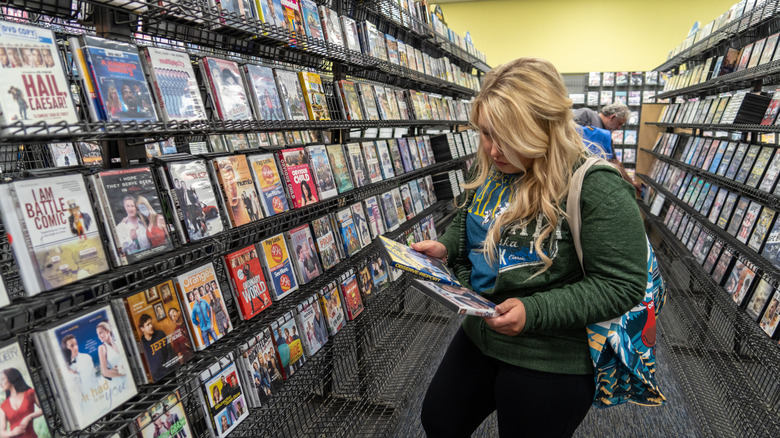
As reported by the LA Timespeople who buy DVDs and other physical media are doing so in large part to avoid subscription fatigue. Those interviewed expressed irritation at the number of subscriptions they had to maintain to have access to the movies, shows, or music of their choosing, and balked at the impermanence of streaming libraries. They also highlighted the joy of organic discovery in a world dominated by algorithmic recommendations. Discovering an underrated film from decades past is technically possible on streaming platforms, but only if you wade past the endless rows of suggestions. Browsing the shelves of a video or record store restores a sense of personal taste and control. There’s no evidence people have adopted physical media in enough numbers to worry Netflix or Disney+, but the trend speaks to a cultural malaise that feels increasingly universal.

Comments are closed.