

“I just don’t know what to do at home anymore,” she said. “I never expected things to be this difficult.”
Before leaving Vietnam in 2016, Truc worked as an assistant beautician earning about VND5 million a month. As her parents’ health declined, financial pressure mounted, prompting her to take out a bank loan and apply for Japan’s Technical Intern Training Program.
She was accepted and placed at a component manufacturing factory in Aichi, Japan. By working overtime and benefiting from a strong yen, Truc earned between 150,000 and 160,000 yen (US$954–1,017) per month. After covering living costs, she sent most of her income home and cleared her debts within six months. When her contract ended in late 2019, she returned to Vietnam confident her savings would allow her to renovate her home and open a beauty salon.
Reality proved harsher. She struggled to find work for months, and her cosmetology skills had become outdated during her time in factory work. Techniques, tools and design standards had changed significantly, and refresher courses were costly. Employers also favored younger workers.
As her savings dwindled, Truc moved to Ho Chi Minh City and took a job at a Japanese-owned packaging factory, hoping her language skills would give her an edge. Even with overtime, her monthly income topped out at about VND11 million, far below what she had earned in Japan.
“The work was physically exhausting,” she said. “Sometimes I had to carry more than 10 kilograms at once. It’s hard not to feel discouraged when comparing life here to life abroad.”
By the end of 2023, still unable to find a sustainable path in Vietnam, Truc quit her job and reapplied for a visa to Japan.
Her experience is far from unique. A report by the Japan International Cooperation Agency shows that only 26.7% of Vietnamese returnees find stable employment after coming home, even when they return with savings of VND300–500 million.
A joint study by the International Labour Organization and the International Organization for Migration found that nearly 44% of returning migrants worldwide face difficulties securing jobs.
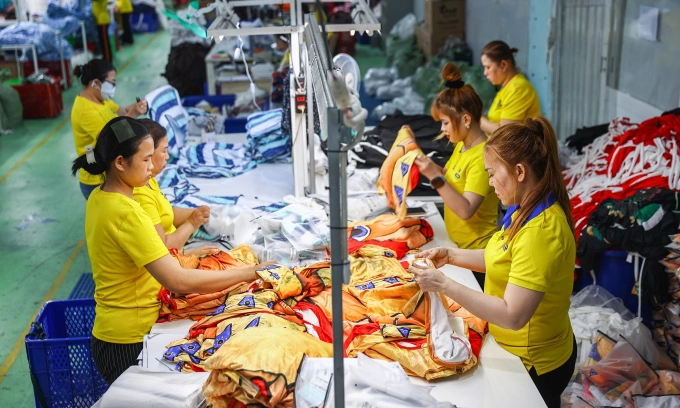
Assembly line workers at Dony Garment Vietnam, HCMC, August 2025. Photo by VnExpress/ Quynh Tran |
Local surveys also point to high livelihood vulnerability among returnees, highlighting the need for stronger reintegration support.
Labor migration specialist Le Hong Phuong says Vietnamese workers returning from abroad often face three major challenges.
The first is the income and skills gap. Blue-collar workers in Vietnam typically earn VND8–10 million per month, about one-third of what they can make in Japan. Moreover, factory experience overseas rarely translates into the white-collar or skilled jobs many returnees hope for.
The second is psychological pressure. Returnees are often expected to succeed financially and live up to the image of having “made it” abroad, a burden that is heavier in rural areas with limited job opportunities.
The third risk is failed entrepreneurship. Many returnees pour their savings into small businesses or investments without sufficient knowledge, only to see them collapse. Phuong recalled one case in which a worker invested over VND1 billion in an electric vehicle shop that failed quickly, forcing him to return to Japan for manual labor.
Another example is Phan Van Thanh, 30, and his wife. After six years in Japan, the couple returned to Vietnam in mid-2023 with VND400 million, determined to work for themselves. Finding the food and beauty sectors overcrowded, they invested VND100 million in wedding decoration equipment.
“The deeper we got into it, the more overwhelmed we felt,” Thanh said. “There was no profit at all.”
To offset losses, he bought a car and drove for ride-hailing apps. With their savings nearly gone, the couple considered returning to Japan. Only after a year did the business begin to stabilize, though Thanh said: “Still, compared to my life abroad, things are much tougher.”

Comments are closed.