
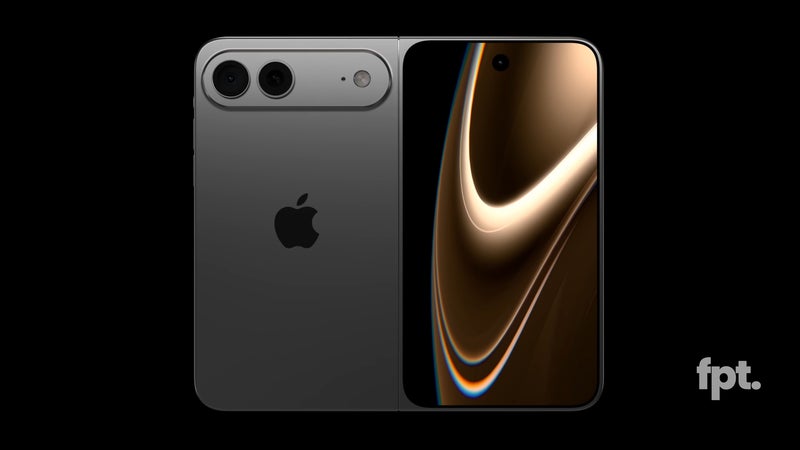

For years, the “iPhone Fold” has been the Loch Ness Monster of the tech world frequently spotted in patent filings and supply chain leaks, yet never quite surfacing in a retail box. As we approach the mid-way point of 2026, the anticipation has reached a fever pitch. However, a series of new reports from analysts at Barclays suggest that while the wait is almost over, Apple fans may need to hold their breath for just a few months longer than originally anticipated.
Historically, the Apple calendar is set in stone: an early September event, pre-orders on Friday, and devices in hands by the following week. For the iPhone 18 cycle, that tradition is expected to hold for the Pro and Pro Max models. However, the iPhone Fold is carving out its own path.
According to Mark Gurman, there is “no doubt” that the foldable will ship later than its candy-bar counterparts. While Apple is still expected to unveil the device as the “One More Thing” of its September 2026 keynote, actual retail availability is currently tracking for a late October to December 2026 window. This mirrors the strategy Apple used for the iPhone X in 2017 announcing a revolutionary new form factor alongside standard models but delaying the ship date to ensure manufacturing yields meet Apple’s notoriously high standards.
The “Crease-Free” Obsession: Why It’s Delayed
The primary reason for the delay isn’t a lack of ambition, but a pursuit of perfection. Internal sources suggest Apple has been obsessed with eliminating the “display crease” that has plagued rivals like Samsung and Google for generations.
To achieve a virtually invisible fold, Apple is reportedly using a specialized chemical filler and a 3D-printed titanium hinge system. This allows the 7.8-inch internal display to “drop” into the hinge in a water-drop shape, reducing the mechanical stress on the pixels. However, the complexity of mass-producing this “crease-free” glass is high. Yield rates for the ultra-thin folding panels are reportedly lower than expected, forcing Apple to push the shipping date back to build up enough inventory for what is expected to be a massive global demand.
Hardware Specs: A 2nm Powerhouse
Under the hood, the iPhone Fold is shaping up to be a technical marvel. It is expected to debut the A20 Pro chipbuilt on TSMC’s cutting-edge 2-nanometer process. This chip isn’t just about speed; it’s about efficiency. Foldable devices have historically struggled with battery life due to the power draw of their massive internal screens. The A20 Pro aims to solve this with a 25% improvement in power efficiency over the A19.
The device is rumored to feature a 7.8-inch internal display that opens like a book, paired with a 5.5-inch external cover screen. In a surprising twist for a “Pro” level device, Apple is reportedly moving away from Face ID for this specific model. Due to the extreme thinness of the folding chassis rumored to be just 4.5mm when unfolded, the bulky 3D sensors for Face ID simply won’t fit. Instead, the iPhone Fold will likely feature a Touch ID sensor integrated into the power button, a first for a flagship iPhone in years.
Pricing and Positioning: The $2,000 “Ultra” Tier
Apple isn’t positioning the iPhone Fold as a replacement for your current phone, but as a new “Ultra” tier of mobile computing. Leaks suggest a starting price of $1,999nearly double the cost of a standard Pro model.
For that price, users are getting more than just a folding screen. The device is expected to feature a titanium and aluminum frame for maximum durability and a dual-camera system consisting of two 48MP sensors. Interestingly, the Fold may skip the telephoto lens found on the Pro Max to keep the device’s profile as slim as possible, relying instead on high-resolution digital cropping powered by Apple Intelligence.
The Split-Launch Strategy of 2026
The delay of the Fold is part of a broader, more complex launch strategy for 2026. Apple is reportedly splitting the iPhone 18 lineup into two distinct phases:
Fall 2026: The iPhone 18 Pro, iPhone 18 Pro Max, and the “Halo” iPhone Fold.
Spring 2027: The standard iPhone 18, the entry-level iPhone 18e, and a second-generation “iPhone Air.”
By delaying the Fold’s shipment and pushing the standard models to the spring, Apple is ensuring that the holiday season is dominated entirely by its most expensive, high-margin hardware. It’s a bold gamble that relies on the “must-have” nature of the foldable form factor to keep consumers waiting through the autumn.
While a December ship date might frustrate those eager for a foldable iPhone, the consensus among analysts is that Apple is right to wait. A first-generation product with a visible crease or a fragile hinge could do permanent damage to the “Fold” brand. By taking these extra months to refine the manufacturing process and perfect the A20 Pro integration, Apple is betting that being best is better than being first.

Comments are closed.