
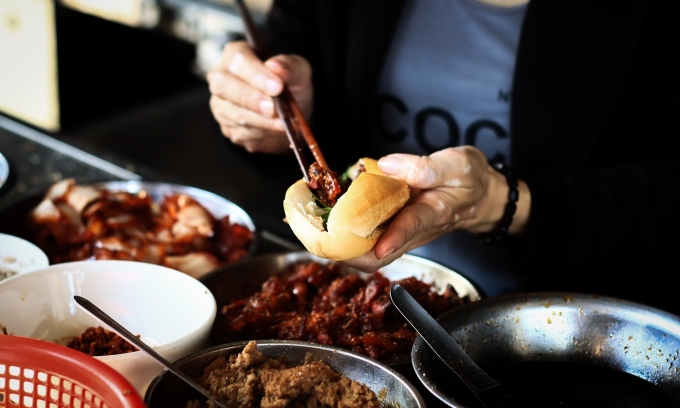

In recent days, more than 100 people were hospitalized after eating banh mi bought from a bakery in Phu My Ward, in the former Ba Ria–Vung Tau area. Earlier, in early November, over 300 people in Ho Chi Minh City fell ill after consuming banh mi from several shops, with Salmonella identified as the cause. In mid-December, more than 200 people in Quang Ngai were also poisoned after eating banh mi, after both processed meats and raw vegetables were found to be contaminated by the same bacteria.
Authorities say these incidents show a pattern rather than isolated mistakes. Salmonella has been identified as the main cause in most cases, often linked to pate, pork sausage, cold cuts or raw vegetables. This suggests that food safety failures can occur at multiple points in the chain, from ingredient sourcing and preparation to storage and serving.
Salmonella commonly exists in raw meat, eggs and animal organs. If food is not cooked thoroughly enough, or if cooked items are re-contaminated through shared knives, cutting boards or unwashed hands, the risk of food poisoning increases sharply. Raw vegetables served with banh mi can also carry harmful bacteria if they are not properly washed and disinfected.
According to food safety officials in Ho Chi Minh City, the recent outbreaks highlight ongoing risks associated with street food, especially fast-selling, ready-to-eat items consumed by large numbers of people every day.
One major concern is storage. While banh mi is eaten fresh, many fillings are prepared the night before. If they are not kept cold enough or are left at room temperature for hours, bacteria can multiply rapidly.
Ingredient quality is another key issue. Handmade pate, pork sausage and cold cuts produced without strict hygiene oversight are particularly vulnerable to contamination. Even if only one ingredient is unsafe, it can contaminate the entire sandwich.
Food handling practices also play a critical role. Poor hand hygiene, not wearing gloves and using the same utensils for raw and cooked foods are common causes of cross-contamination.
Food safety authorities are urging banh mi vendors to strictly follow hygiene regulations, store food at safe temperatures, prepare ingredients daily and avoid using fillings that have been stored for extended periods. Consumers are advised to choose vendors with clear hygiene practices and to be cautious with banh mi that contains many pre-prepared fillings, especially if the food has an unusual smell or appearance.
Anyone experiencing symptoms such as abdominal pain, vomiting or diarrhea after eating should seek medical care promptly and report the case to authorities, so further outbreaks can be prevented.

Comments are closed.