
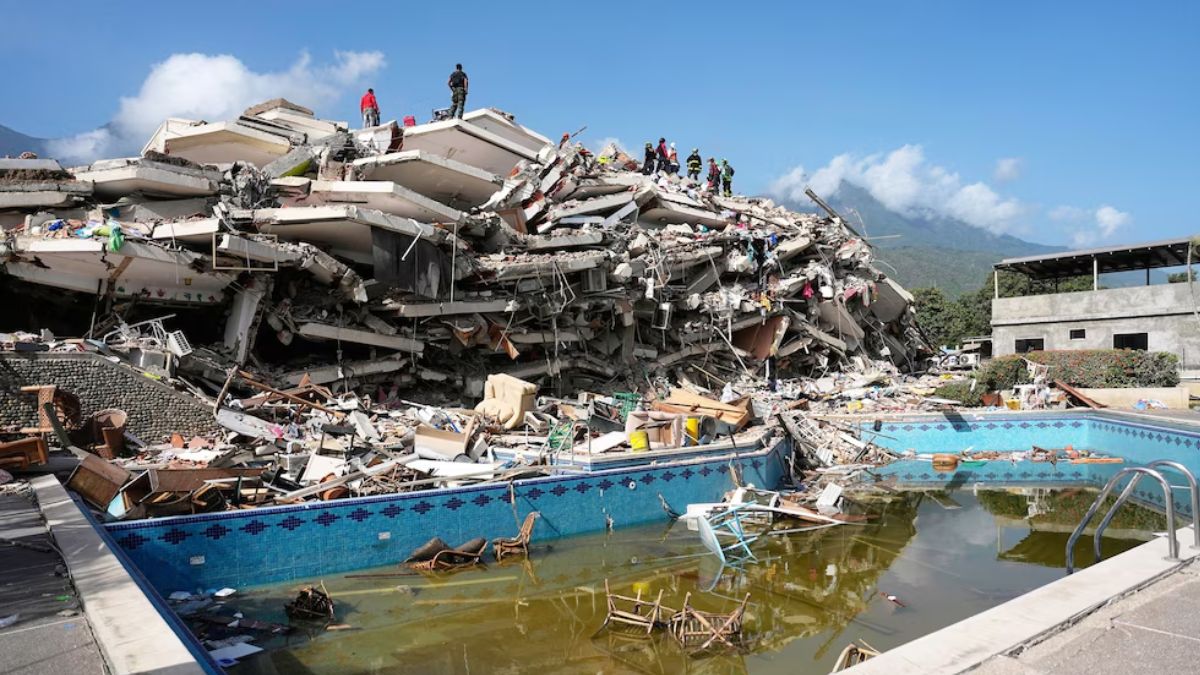

When two powerful earthquakes measuring 7.2 and 7.5 struck Venezuela within minutes of each other, the destruction was immediate. Buildings collapsed, thousands of people were trapped, and entire neighborhoods were reduced to rubble. But as rescue efforts unfolded, another question quickly emerged. Why did the disaster become so catastrophic?
The answer goes far beyond the strength of the earthquakes. Experts say the country’s long running economic crisis, weakened infrastructure, struggling healthcare system, and political instability all combined to make the impact far worse than it might have been under different circumstances.
Venezuela earthquake exposed years of economic decline
Natural disasters often hit the poorest and most fragile countries the hardest. Venezuela was already facing that reality before the earthquakes arrived.
The country has spent more than a decade dealing with one of the worst economic collapses in modern history. Hyperinflation, shrinking oil revenues, sanctions, and political unrest have pushed millions of people into poverty. Basic public services have steadily declined, leaving hospitals, emergency responders, and local governments with limited resources.
Many residential buildings were also aging or poorly maintained. In lower income communities, families often lived in structures that were never designed to withstand major seismic activity. When the earthquakes struck, many of those buildings collapsed within seconds, trapping residents inside.
The financial crisis has also led to years of underinvestment in roads, communication systems, emergency equipment, and disaster preparedness. That meant rescue teams faced enormous challenges reaching the worst affected areas quickly.
Venezuela’s healthcare and emergency response struggled after the quake
The hours after a major earthquake are often the most important for saving lives. Search teams race against time to pull survivors from collapsed buildings before injuries, dehydration, or suffocation become fatal.
In Venezuela, that response was slowed by limited equipment, damaged infrastructure, and overwhelmed medical facilities.
Residents in several communities reported digging through rubble themselves while waiting for professional rescue teams to arrive. Some grieving families said they were forced to recover the bodies of loved ones without official assistance because help never reached them in time.
Hospitals were already operating under severe pressure before the disaster. Shortages of medicines, medical supplies, and healthcare workers made treating thousands of injured people even more difficult. International aid agencies later warned that millions could require emergency shelter, clean drinking water, sanitation services, healthcare, and other essential support in the weeks ahead.
Venezuela political crisis made disaster recovery even harder
The earthquakes also arrived during a politically sensitive period for Venezuela.
The country was already navigating a fragile transition after months of political uncertainty. Public trust in government institutions had weakened after years of economic hardship, making frustration over the disaster response grow even faster.
As international rescue teams and humanitarian organizations mobilized, questions shifted from the earthquakes themselves to whether Venezuela had been adequately prepared for such a large scale emergency. While foreign aid and military assistance began arriving, experts noted that rebuilding damaged communities would likely take years rather than months.
The tragedy has become more than a story about a natural disaster. It has highlighted how deeply economic collapse, weakened public services, and political instability can magnify the human cost of an unexpected crisis. Reconstructing homes and infrastructure will be a massive challenge, but restoring the systems that protect people before disaster strikes may ultimately prove to be Venezuela’s most difficult task.

Comments are closed.