
Will get freedom from land disputes: CM Dhami started ‘Revenue Lok Adalat’ in Uttarakhand, now cases will be filed sitting at home

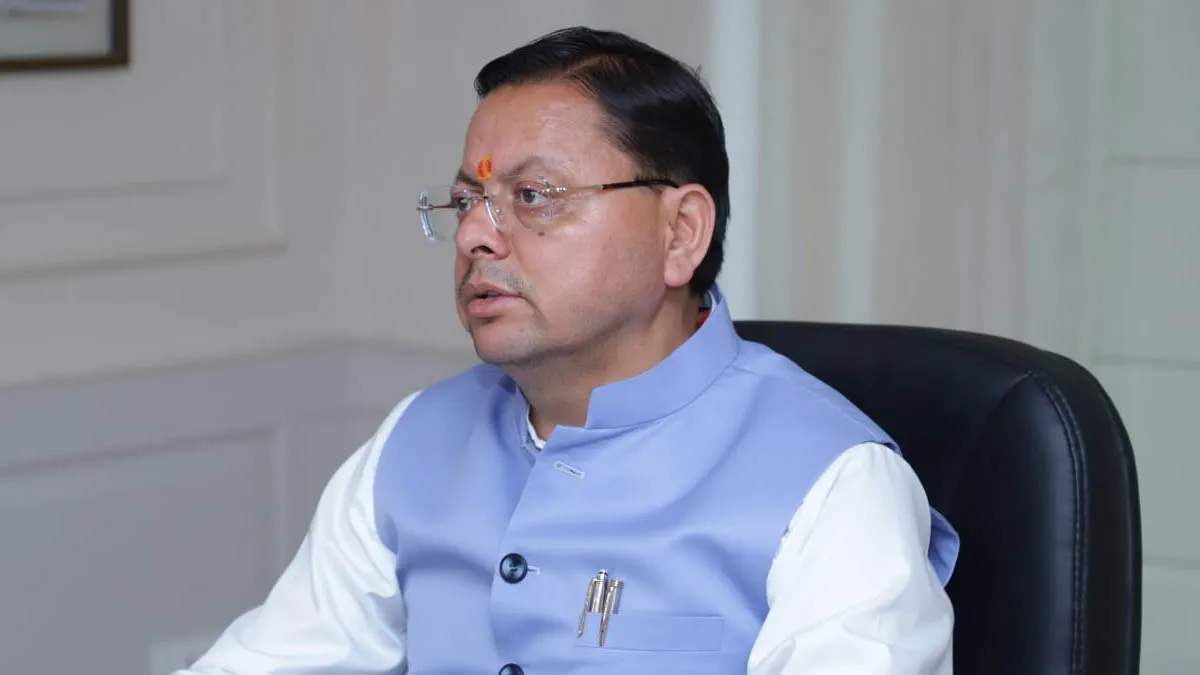
Dehradun: Chief Minister Pushkar Singh Dhami has taken a big and decisive initiative to end the land-property disputes pending for years in Uttarakhand. The Chief Minister formally inaugurated ‘Revenue Lok Adalat’ in the state through video conferencing. The main objective of this campaign is to bring the concept of ‘Justice at your doorstep’ to the ground, so that the general public does not have to make rounds of the courts and can get justice in a time bound manner.
The Chief Minister made it clear that quick solution to the problems of the people is the top priority for the state government. In fact, in a state like Uttarakhand, land disputes are not just a legal process, but they are directly related to the livelihood of farmers and self-respect of families. Keeping this sensitivity in mind, the government has started working on the mantra of ‘simplification, solution and disposal’.
Attack on 50 thousand pending cases, hearing simultaneously at 210 centers
If we look at the situation of revenue courts in the state at present, the figures are shocking. At present there are about 400 revenue courts operating in Uttarakhand, in which more than 50 thousand cases are pending. To reduce the burden of these cases, the Chief Minister has simultaneously started organizing Revenue Lok Adalats at 210 places in all 13 districts of the state.
It is being told that in this first phase itself, about 6,933 cases will be disposed of quickly on the spot. The special thing is that in these courts, not only land disputes but also cases related to serious matters like Excise, Stamp Duty, Electricity Act, Rent Control and Senior Citizens Act will be heard transparently.
Justice will be digital: Land disputes will be registered sitting at home
The government has taken the help of technology to make administrative processes transparent. While inaugurating the ‘Revenue Court Case Management System’ (RCCMS) portal, the Chief Minister said that now citizens will not need to go to tehsil or collectorate for small tasks. People will be able to register their case online while sitting at home and will also be able to see the status report of their case.
Chief Minister Dhami called it part of the vision of ‘Minimum Government, Maximum Governance’. He instructed the officers in a strict tone that the technology should not be used only for records, but for the convenience of the common man.
Historical instructions in matters of inheritance: ‘New Khatauni should be given till thirteenth’
During this program, the Chief Minister gave a very sensitive and humanitarian suggestion, which is being discussed everywhere. He asked the officials not to harass the family in cases of undisputed inheritance (warisnama). He directed that after the death of the land owner, the process of mutation should be completed by the time the ‘Thirteenth’ or ‘Pipalpani’ rites of the deceased are performed and the new Khatauni should be handed over to the family.
“When a family is in mourning, real good governance is to save them from the hustle and bustle of government offices,” the CM said. Apart from this, a deadline has also been set to settle old disputes related to measurement of land and illegal encroachments within one month.
Backlog will be cleared on war footing
Chief Secretary Anand Bardhan, who was present in the review meeting, has issued strict instructions to the District Magistrates to implement the Chief Minister’s instructions on the ground. He said the backlog of revenue promises would be cleared on a ‘war footing’. The intention of the government is clear that the number of pending cases should be brought to the minimum level in the next one month. Revenue Secretary Ranjana Rajguru and other senior officials were also present on this occasion.
In fact, this initiative of the Uttarakhand government will not only streamline the judicial system but will also prove to be a milestone in curbing the increasing land disputes in rural areas. Now it remains to be seen how seriously the administrative system implements this ‘deadline’ and ‘sensitivity’ of the Chief Minister.

Comments are closed.