
Will Get to Study for Only 4 Years in US? Here’s What Trump’s New Visa Rules Mean for Indian Students

Students planning to study in the United States may soon have to consider more than just university admission and tuition fees. A major change announced by the Donald Trump administration could change the way lakhs of Indian students and others study and stay in the US. The US Department of Homeland Security (DHS) has finalised new rules that replace the long-standing ‘Duration of Status’ system with a fixed period of stay. If the rule clears the rest of the congressional review process, it would take effect about 60 days after publication.
Changes may mean more paperwork, stricter rules and greater uncertainty for Indian students, now the largest international student community in the US, when planning higher education.
What Has Changed?
Until now, students on F-1 visas could stay in the US as long as they were enrolled in a recognised course and complied with all visa conditions. There was no defined end date to their stay.
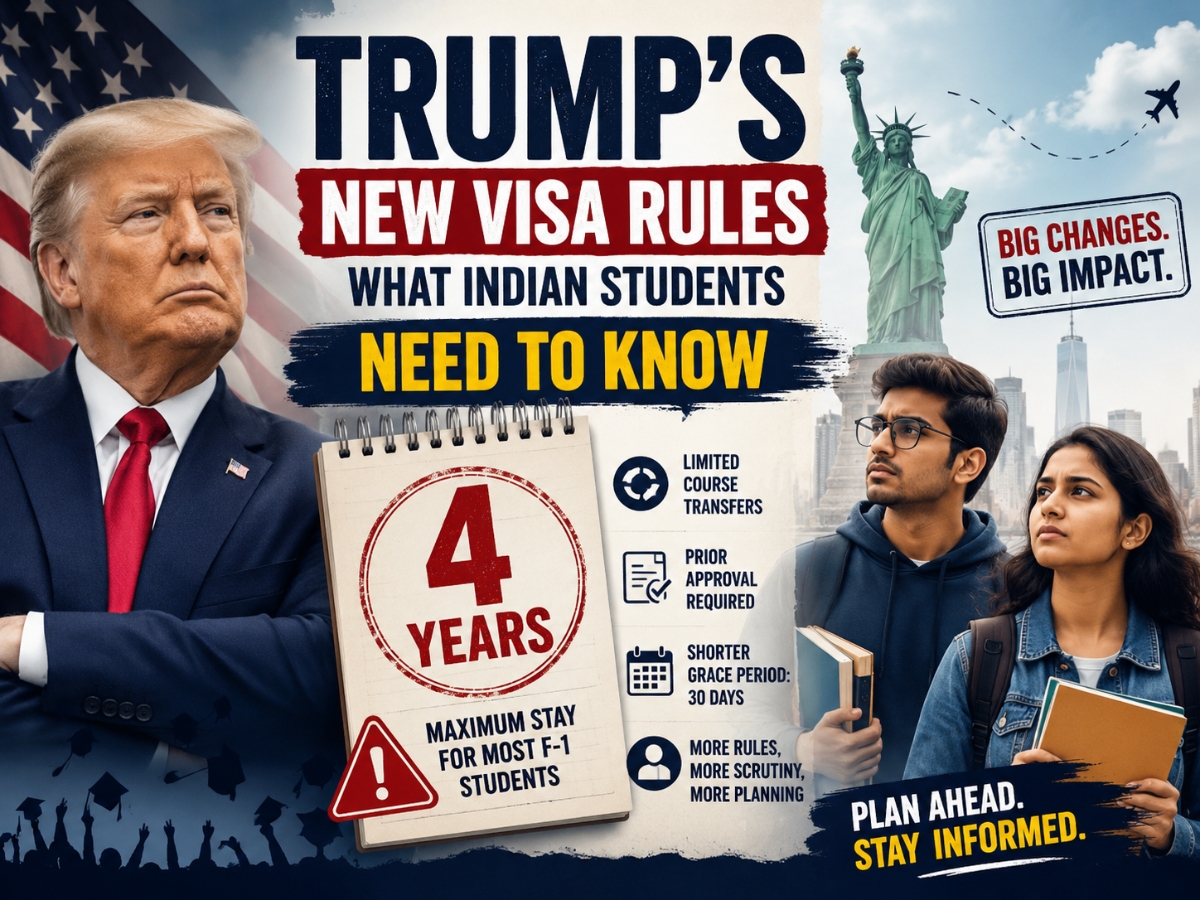
The new rule would generally permit most F-1 student visa holders to remain in the United States for as long as four years. If it takes them longer, they will need to apply to DHS for an extension before their stay is authorised to expire.
Many J-1 exchange visitors, including researchers and scholars, as well as some foreign media representatives travelling on I visas, will also be subject to the same fixed-period system.
Why Is the US Changing Rules?
The Trump administration says the current system makes it difficult to track whether international students meet visa requirements over years.
The DHS states that creating a set stay period will enhance oversight of temporary visa holders, close gaps in the immigration system, and bolster national security.
The move is part of a wider immigration policy that has already seen tighter visa screening and tougher enforcement measures.
What Does This Change Mean For Indian Students?
After the US, India has the most students going to the US. According to the latest report, Open Doors 2024-25, around 3.6 lakh Indian students were studying in US universities and colleges, making nearly 31% of total international students.
Many Indian students often choose courses that are longer than four years. They cover PhD programmes, research-based master’s degrees, medical education and specialist engineering courses.
Now, under the new system, these students must get an extension from DHS before the four years are up to stay in school legally.
Less Flexibility to Change Courses
The proposed rules would also limit students’ ability to change academic plans.
Most F-1 visa holders are not permitted to change their course, major or level of education during their first year.
Graduate students may have even fewer options, and changing programmes or fields of study may be restricted. Students who have completed a programme in the same F-1 status may be ineligible to register for a subsequent programme at the same or lower academic level.
Such restrictions could make it harder for students who are still trying to decide between different career options to plan ahead.
Grace Period Shortened to 30 Days
Another major change is what happens to students once they finish their course.
International students are allowed 60 days to prepare to leave the US, apply for Optional Practical Training (OPT) or change their visa status.
The new rule shortens that grace period to 30 days, leaving students with less time to make big decisions after they graduate.
What if a student needs extra time?
Students enrolled in courses of more than four years must apply for an extension before their authorised stay expires.
If they don’t receive the extension in time, they could lose their legal immigration status. Even paperwork or processing delays can be an issue if you don’t have approval by the deadline.
What About Students Already in the US?
DHS has offered transition provisions for students already in the United States under the existing “Duration of Status” system.
For most existing students, the current arrangements will continue to apply for the remainder of their course or up to four further years depending on their circumstances.
Should Students Be Worried?
The new rules have not yet gone into effect. They have to undergo a congressional review process before they can become effective.
For students intending to apply to US universities, there will be no immediate change. But if the regulation is implemented, future applicants, especially those considering courses with lengthy durations, might have to include visa extensions, more rigorous academic rules and reduced post-study periods in their planning, together with tuition fees and cost of living.
You can still go to the US to study, but it may be more formal and require much closer attention to immigration deadlines than before.
Also Read: PC Jeweller’s Rs 1,000 Crore QIP Plan Gets Board Nod; What’s Behind the Move?
Priyanka Roshan is a business writer and assistant editor at the NewsX website who tracks everything from stock market swings and corporate earnings to personal finance trends and policy shifts. Known for turning fast-moving business developments into sharp, reader-friendly stories, she combines speed, accuracy, and a data-driven approach to break down complex financial news for everyday audiences.
With over 9.5 years of newsroom experience, Priyanka has worked with leading media organisations, including Bussiness, Times Now, and Ping Digital, covering diverse beats such as business, politics, technology, auto, travel, sports, and the world. From live breaking news desks to SEO-led digital storytelling, she specialises in creating engaging content that keeps readers informed without overwhelming them.
The post Will Get to Study for Only 4 Years in US? Here’s What Trump’s New Visa Rules Mean for Indian Students appeared first on NewsX.

Comments are closed.