
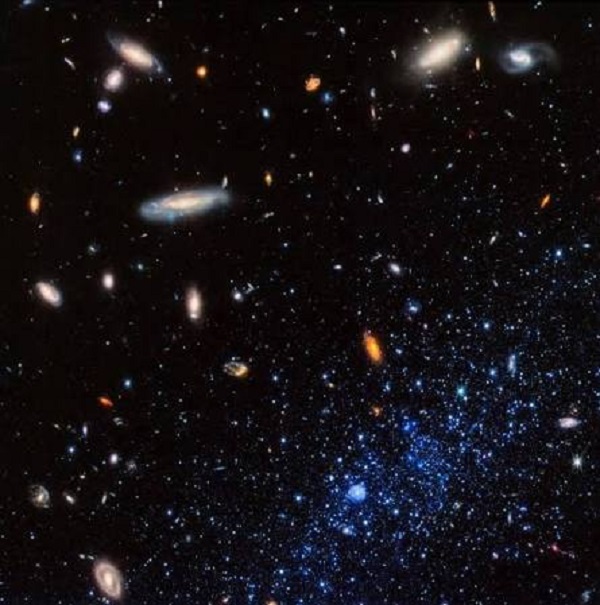
Will the sky full of stars end? Scientists expressed serious concern over the plan of 17 lakh satellites

New Delhi. The view of shining stars and distant galaxies in the clear night sky may change in the future. Scientists have warned that proposed plans to send millions of new satellites and giant space mirrors into low Earth orbit could pose a major threat to astronomical research as well as the natural night sky. He says that if effective global control is not imposed on these projects, the study of the universe may have a serious impact in the future.
The findings of this study led by scientists at the European Southern Observatory (ESO) have been published in the prestigious research journal Astronomy & Astrophysics Have been published in.
Plan of 17 lakh satellites raises concerns
According to the study, at any time in low Earth orbit the maximum One million relatively low brightness satellites There should be only. Scientists believe that if this number exceeds this, the functioning of astronomical observatories will be seriously affected.
On the contrary, the proposed plans of various space companies and institutions in the future About 17 lakh satellites and space mirrors The aim has been set to install it in the classroom. This number is almost higher than the safe limit suggested by scientists. 17 times more Is.
Problem increased after Starlink
According to the report, this concern first came to light in the year 2019, when SpaceX sent the initial satellites of its Starlink internet service into space. Bright streaks from satellites began to appear in long exposure astronomical photographs, making it difficult for scientists to make accurate observations.
At that time the Earth’s orbit was approximately 2,000 active satellites Were present. Now this number has increased more than 14,000 It is done. If defunct satellites and space debris are also included, the number of artificial objects in orbit is approximately 32,000 Has reached.
Why is the limit of one lakh important?
ESO astronomer Olivier Haino based the study on experience and computer simulations over the past three decades. According to him, even if the satellites are not visible to the naked eye, when their number reaches around one lakh, the damage caused to observatories can be equal to or greater than the normal damage caused by weather or technical failure.
He also said that if the number of satellites 50 thousand If it is kept limited to around 1000, then the situation will be much more favorable for scientific research.
A large part of the photos may be useless
The study also analyzes SpaceX’s proposed plan to develop a space-based data center in the future. 10 lakh additional satellites It has been said to send.
According to simulations, if the plan is implemented then Chile-based ESO’s Very Large Telescope (VLT) A photo taken two hours after dark will show the bright streaks of dozens of satellites. This makes the picture approximately 28 percent share May be unusable for scientific analysis.
May have an impact on the exploration of the universe
Scientists say that if the number of satellites continues to increase at this pace, there will be major obstacles in important research related to distant galaxies, possible planets like Earth and the initial structure of the universe. He believes that the need of the hour is to set clear rules and boundaries at the global level to strike a balance between scientific research and protection of the night sky with the expansion of space activities.

Comments are closed.