

The figures, released ahead of International Women’s Day, show that 58 of the top 200 universities in the THE World University Rankings 2026 have a female vice-chancellor or president, accounting for 29% of the total.
This represents a slight increase from 27% the previous year and marks the seventh consecutive annual rise. The share has grown significantly from 17% in 2019, when only 34 institutions in the top 200 were led by women.
Researchers say the trend points to gradual improvement but stress that progress remains uneven.
Elisabeth Kelan, a professor at King’s Business School, described the data as an important symbolic milestone, while cautioning that rising numbers do not necessarily mean university cultures are evolving at the same pace.
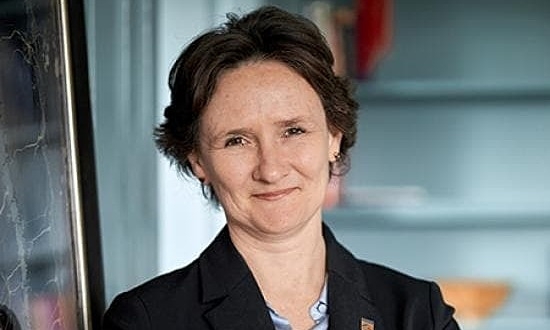
Among the prominent female leaders at highly ranked universities are Irene Tracey at the University of Oxford, ranked number one in the world by the THE World University Rankings for a record 10 consecutive years (2017 to 2026), Sally Kornbluth at the Massachusetts Institute of Technology, and Deborah Prentice at the University of Cambridge.
Professor Irene Tracey is Vice Chancellor at the University of Oxford. Photo courtesy of the university |
However, the distribution varies widely across rankings and countries, according to the British magazine reporting specifically on news and issues related to higher education.
Only 20% of the top 50 universities are led by women, compared with about one-third of those ranked between 51 and 200. Of the 28 countries with universities in the top 200, 11 have no female leaders.
China, which has 13 universities in the ranking, remains the only country with at least 10 institutions on the list but no female university president.
In the United States, women lead 15 of the 55 ranked universities, or 27%, slightly lower than last year.
The proportion is higher in several other countries, including the U.K. (31%), Germany (33%), Australia (40%), and the Netherlands (55%).
| World University Rank 2026 | University | Country | Leader |
| 1 | University of Oxford | United Kingdom | Irene Tracey |
| 2 | Massachusetts Institute of Technology | United States | Sally Kornbluth |
| =3 | University of Cambridge | United Kingdom | Deborah Prentice |
| 10 | Yale University | United States | Maurie McInnis |
| 20 | Columbia University | United States | Claire Shipman (acting president) |
| 21 | University of Toronto | Canada | by Melanie Wood |
| =31 | New York University | United States | Linda Mills |
| 35 | Federal Polytechnic School of Lausanne | Switzerland | Anna Fontcuberta i Morral |
| 46 | KU Leuven | Belgium | Severine Vermeire |
| 49 | University of Heidelberg | Germany | Frauke Melchior |
Experts say the growing number of female leaders should be welcomed but viewed within a broader context.
Kelan said it was important to pay attention to the circumstances surrounding women’s appointments.
“These roles are increasingly high stakes and complex, and women are often brought in at precisely the moments when institutions face particularly difficult challenges,” she told THE.
“This shapes what leadership looks like in practice and influences the kinds of expectations placed on women once they are in these roles.”
Similarly, Christine Min Wotipka, associate professor of education at Stanford University, said the figures represent a positive step, though one that warrants caution.
She noted that while many universities have never had a female leader, there is no shortage of qualified women capable of filling such roles.
At the same time, she said institutions should consider whether structural barriers or difficult circumstances may still place women in precarious leadership positions, sometimes described as the “glass cliff.”

Comments are closed.