
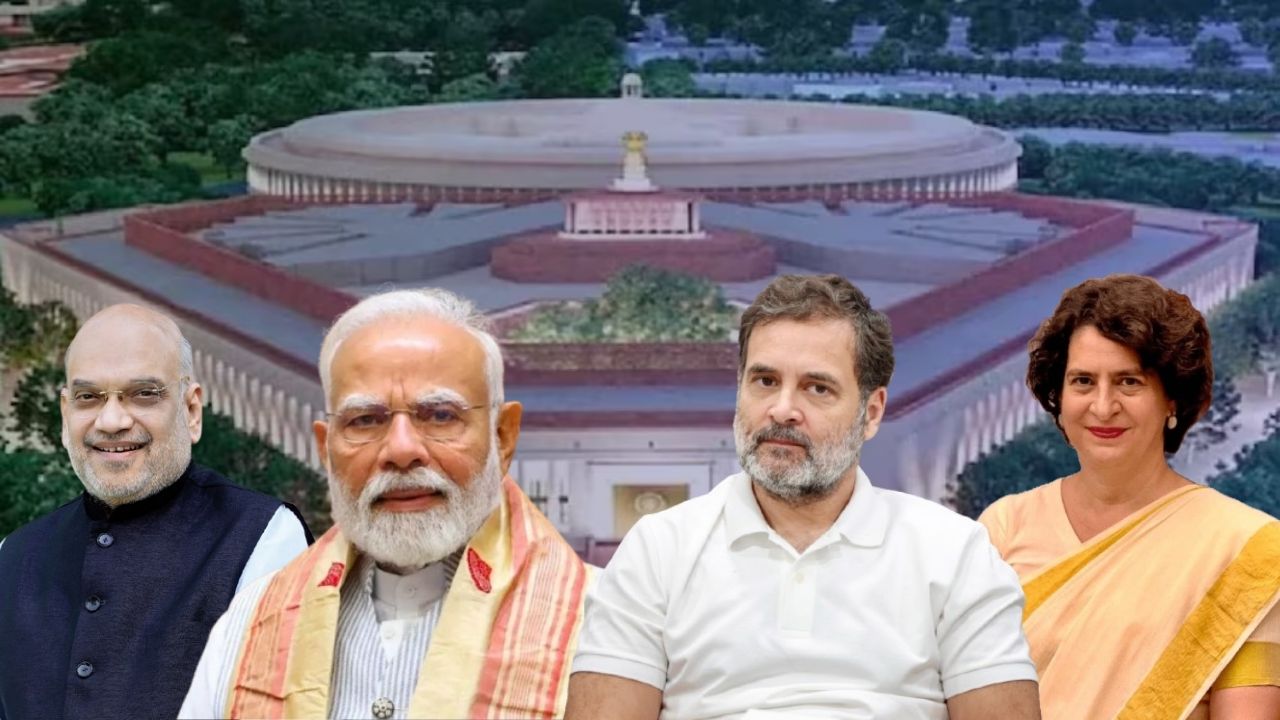
Women reservation bill: The political move of the rulers under the cover of women’s reservation? ‘These’ issues under discussion

Women Reservation Bill : New Delhi : A special session is being called for women’s reservation in the Parliament and this is going to be an important issue during the Modi government. The central government is taking steps towards implementing 33% reservation for women in Parliament and state assemblies before the 2029 Lok Sabha elections. (Parliament Of India) In the three-day special session that began today (16), the government introduced three bills to amend the Nari Shakti Vandan Act.
The government passed the law in September 2023, but its implementation was linked to the next census and constituencies based on it. Therefore, it was initially expected that the system would be implemented before the 2034 Lok Sabha elections. Now, the government is working on a plan to implement this by 2029 based on the 2011 census. But before that, there have been serious differences between the government and the opposition over the constituency realignment process, the time frame and the potential imbalance between northern and southern states.
Also Read: “If the Samajwadi Party works, then they will caste the houses too…”, Amit Shah’s rude reply to Akhilesh Yadav
These three bills have been introduced in the Parliament.
1. Constitution Amendment Bill 2026
This new constitutional amendment is being introduced to implement reservation for women in Lok Sabha and Legislative Assembly. The proposal proposes to increase the number of Lok Sabha seats from 543 to 850 (815 for states and 35 for union territories).
Government wants to amend Article 81 and 82. Earlier, the provision stated that the constituencies would be redrawn on the basis of the first census after 2026. However, the government now wants to do away with this condition and authorize redrawing of constituencies on the basis of the 2011 census as well, so as to speed up the process and implement it by 2029.
2. Reorganization of Constituencies Bill (Division Bill 2026)
The bill will establish a complete procedure for implementation of reservation. A new constituencies reorganization commission will be set up to reorganize boundaries and seats. The commission will decide to reserve 273 seats (33%) for women out of 850 seats. However, a clear formula for allotment of seats is yet to be decided. It will also decide how the reserved seats will be rotated after each election to ensure equal opportunities for all regions.
3. Union Territories (Amendment) Bill 2026
Through this Bill, an attempt has been made to implement reservation for women in the Legislative Assemblies of Union Territories including Delhi. It also provides for implementation of 33% reservation in the Legislative Assemblies of Delhi, Puducherry and Jammu and Kashmir.
Also Read: Three days, 28 hours and the new structure of Indian democracy; Will the special session of Parliament change the direction of power equations?
What are the objections of the opposition parties?
Several parties including Congress, Samajwadi Party, Left parties and DMK have objected to the government’s plan. This includes the following points.
- Relying on old census of 2011 for delimitation
- Lack of clear formula for delimitation
- Possible impact on South Indian states
- Lack of separate provisions for OBC reservation
- Allegations of haste for political gain
- Opposition parties say delimitation on the basis of population could reduce seats in states like Tamil Nadu, Kerala and Telangana, while increasing seats in northern India.
What does the government say?
The government says it is impossible to decide which seats will be reserved for women without delimitation. Delimitation is a constitutional and transparent process, which cannot be avoided. The government has argued that reservation for women can be implemented by 2029 by redrawing constituencies based on the 2011 census.

Comments are closed.