
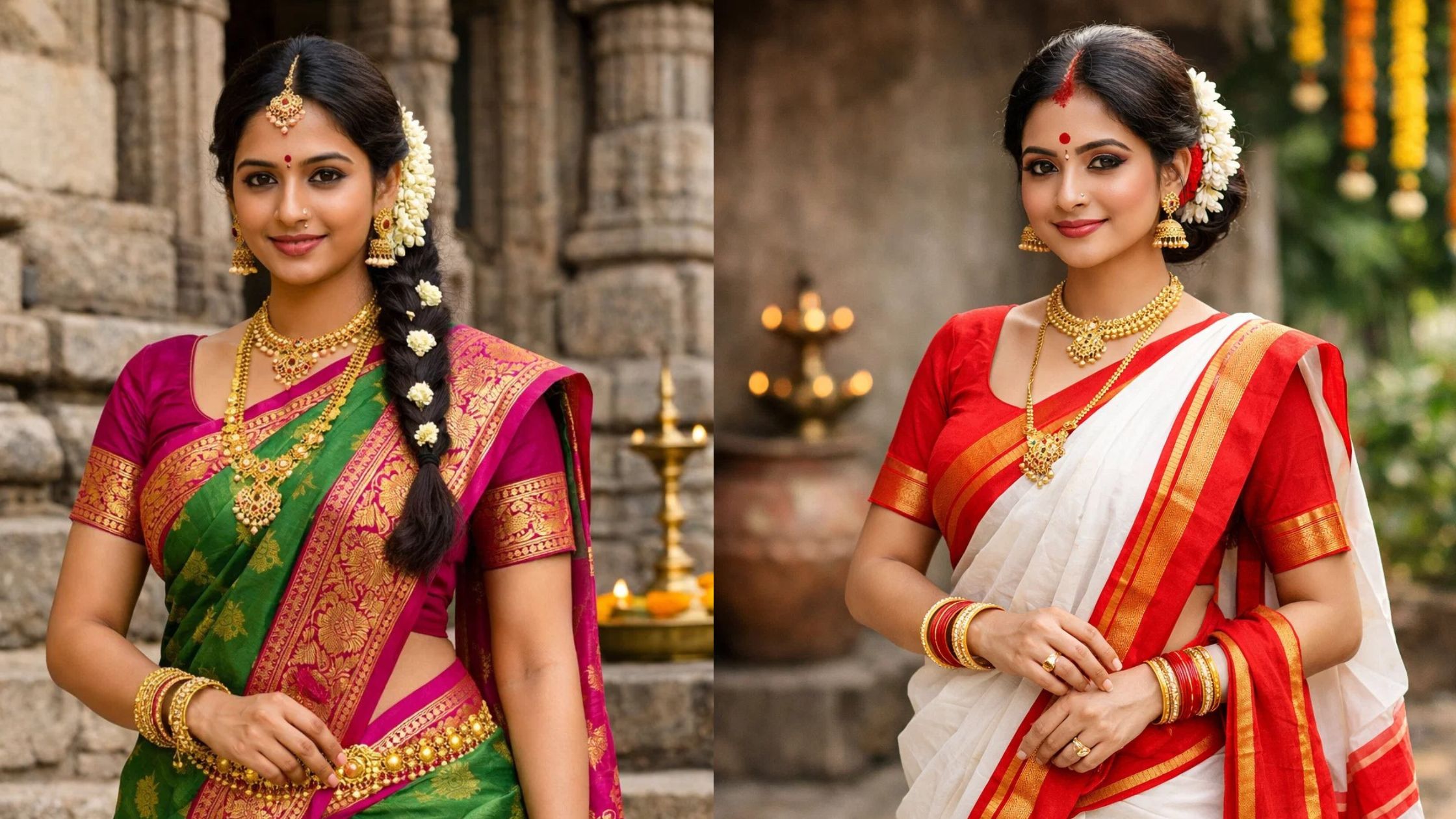
World Saree Day 2025: From Coorgi style of Karnataka to Atpure of Bengal, India’s unique saree draping

Saree has a very deep and old connection with the rich heritage and culture of India. Its roots go back to ancient times like the Indus Valley Civilization. This six-yard beautiful cloth is worn wrapped around the body and is widely worn on special occasions of life like weddings, festivals (like Diwali, Navratri, Durga Puja etc.) and formal functions.
Wearing a saree is a special art in itself, which is very flexible and open. On this special occasion of World Saree Day, we are telling you some very famous and some lesser known ways of wearing traditional saree from different regions of India. These ways are not only beautiful, but also have interesting stories and practicality hidden behind them.
Read now on WhatsApp also, click to subscribe
coorgi saree of karnataka
Coorgi or Kodagu style is a very unique and special style of wearing saree of Karnataka. In this, all the folds (pleats) are tied at the back side of the waist. The pallu is brought from behind and thrown over the shoulder and is often tied with a knot in the front. The story of this genre is very interesting, it is a beautiful blend of mythology and everyday needs. According to a popular legend, this style is associated with sage Agastya and his wife Kaveri. When Kaveri became a river, the strong flow of water pushed the folds from front to back. Taking inspiration from this, Kodava women adopted this unique method, which helps in moving easily in the hilly areas.
Nivi Saree of Andhra Pradesh
Nivi style is the most common and easily recognized way of wearing a saree. In this, folds are made very neatly on the front side of the waist and the pallu (loose end of the saree) is draped beautifully on the left shoulder. This method provides great convenience in movement and also gives an evergreen, attractive look. Generally blouse and petticoat are used for good structure. Its roots can be seen in ancient sculptures, but in the 19th century, Gyanadanandini Devi Tagore gave it a modern look with blouses and petticoats. By combining Indian tradition with Victorian decency, she showed women an easy way to maintain their identity in colonial society.
Kerala Mundam Neriyathum Saree
This style reflects the traditional way of wearing saree without blouse in ancient times. This is a special garment of Kerala consisting of two parts – the lower part is Mundu and the upper part is Neriyathu. There is a golden border on both the edges. Neriyathu is worn covering the upper body and left shoulder beautifully. It evolved from ancient Indian garments such as Antriya and Uttariya, especially for Nair women. It became famous due to the patronage of the kings in Balaramapuram and holds a special place in important rituals like weddings. Famous painter Raja Ravi Verma has also shown it beautifully in his paintings. Channar rebellion is also associated with its history, where lower caste women fought for the right to wear outerwear.
Pin Kosuvam Saree of Tamil Nadu
Pin Kosuvam (or Pinkosu) is a traditional style from Tamil Nadu, in which folds are made at the back. It is very popular in rituals of villages and temples. It is known for its coolness and convenience, as it is often worn without a petticoat. Thick cotton sarees are tied with special knots at the waist, making them easy to move and giving a unique, graceful look. In ancient times, women doing physical work like farming used to wear it. The name itself means ‘folds at the back’. Today this style is becoming a little extinct, but considering its beauty and usefulness it is being revived.
atpure saree of bengal
Atpure is one of the most easily recognized styles of Bengal. In this, wide and loose folds are made in front of the waist and the pallu is left flowing casually over the left shoulder. Sometimes the pallu is worn folded or kept open. This style is very simple, beautiful and comfortable, especially for festivals like Durga Puja. The classic white saree with red border is very popular. This style originated in the Bengali Renaissance of the 19th century, when Rabindranath Tagore’s sister-in-law Gyanadanandini Devi created it. Taking inspiration from Parsi and English styles, she took a practical approach with blouses and petticoats, making the saree a symbol of modern freedom.
Goa Kunbi Saree
This traditional saree of the Kunbi tribe of Goa is knee-long and made of red-white checkered cotton fabric. It becomes easier to work in the fields by tying it on the shoulder. It is a symbol of the cultural identity of Goa. Designer Wendell Rodricks played a big role in making it popular again. Its short length is very useful for work in paddy fields. Checks made of natural colors and worn without a blouse reflect the simple lifestyle before Portuguese influence. Today it is reviving as a symbol of Goa’s heritage.

Comments are closed.