
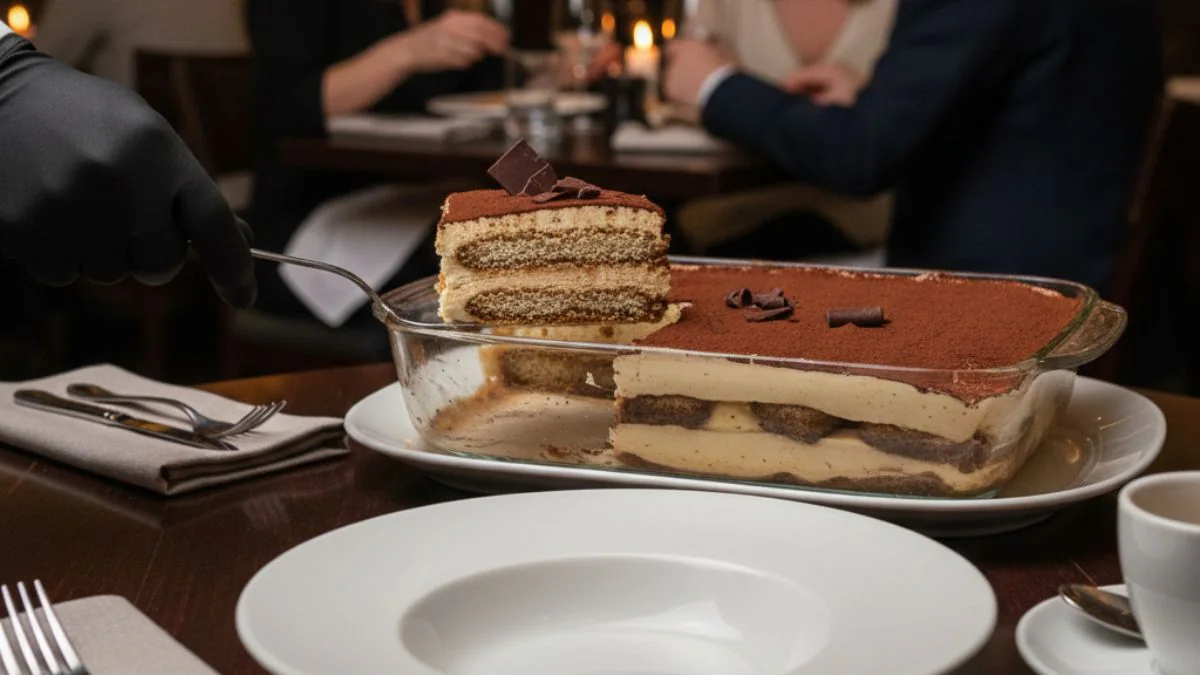

There are very few desserts that have managed to do what tiramisu has done: leap off the menu of a single restaurant in a small Italian city and become, within a few decades, one of the most ordered, most imitated, most argued-about sweet preparations on the planet. It is on restaurant menus in Mumbai and Gurugram, in bakery display cases in Chennai and Bengaluru, and in home refrigerators across the country, thanks to a handful of accessible ingredients and a recipe that rewards patience more than skill. World Tiramisu Day falls on the 21st of March each year, and whether you are eating it in a Treviso piazza or pulling a glass of it from your own fridge at midnight, this is a dessert that has earned every bit of its global obsession.
Also Read: Family Sues US Ski Resort Claiming Hot Chocolate Was Too Hot
What Tiramisu Actually Is
Before the history and the controversy and the world records, a moment of appreciation for what the dessert actually is. Tiramisu is, at its simplest, layers of savoiardi biscuits (ladyfingers) dipped in cold espresso, sandwiched between a cream made from egg yolks beaten with sugar and folded into mascarpone cheese, dusted generously with bitter cocoa powder, and then chilled until it holds together in a state somewhere between a custard and a mousse. There is no baking involved. There is no complicated technique. There is just good mise en place, patience, and the willingness to let it rest in the refrigerator long enough for the layers to set properly.
The name means “pick me up” in Italian, or more literally “carry me upward,” a reference to the energizing combination of coffee, sugar, and egg that sits at its core. The dessert lifts your spirits with every spoonful, which, as origin stories go, is one of the more honest ones in food history.
The History: More Complicated Than You Think
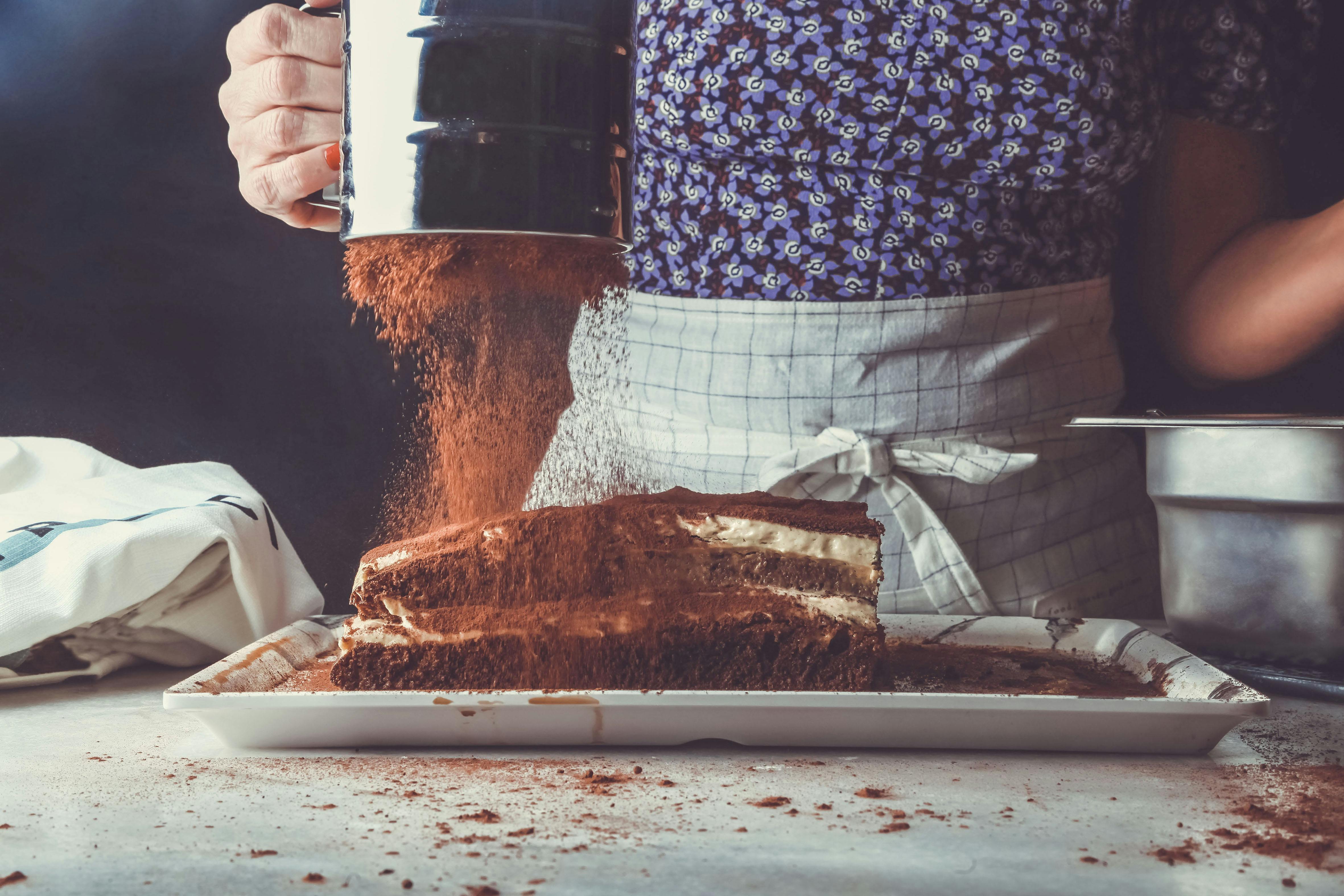
The origin story of tiramisu is one of the most contested in the food world, and that contest is both genuinely interesting and, at this point, fairly exhausting to the Italians involved in it.
The most widely accepted account points to the restaurant Alle Beccherie in Treviso, a city in the Veneto region of northeastern Italy, where the modern tiramisu as we know it is said to have been created in the early 1970s. The chef Roberto “Loli” Linguanotto and the restaurant’s owner Ado Campeol are credited with codifying the recipe, and the Campeol family spent years asserting this claim. Massimo Linguanotto, son of Roberto, still serves on the jury of the Tiramisu World Cup, a competition held annually in Treviso, as part of the living chain of custodianship around the recipe.
But there is a much older, more interesting backstory. At the most elemental, tiramisu in its proto form was something called lo sbatudin, an old Veneto peasant preparation of egg yolks beaten with sugar until pale and frothy. This mixture, eaten with a spoon or used to dip biscuits, has roots going back at least to the 18th century in the Veneto countryside. It was simple, calorific, and energizing, which is why one version of the tiramisu origin story, repeated with some frequency in food history circles, holds that a version of the dessert was served in the brothels of northern Italy in the 19th century as an energy-boosting preparation for clients. Egg yolks, sugar, savoiardi, and Marsala: a kind of proto-tiramisu. Whether this story is historically accurate or charmingly embellished, it has given tiramisu an irresistible past that has followed it from red-light districts to Michelin-starred kitchens.
What is clear is that a clever pastry chef at some point brought all the elements together, espresso, mascarpone, egg yolks, savoiardi, cocoa, and created something that was immediately recognizably different from what had come before. The Beccherie version from the 1970s became the one the world adopted.
The Six Ingredients That Started A War
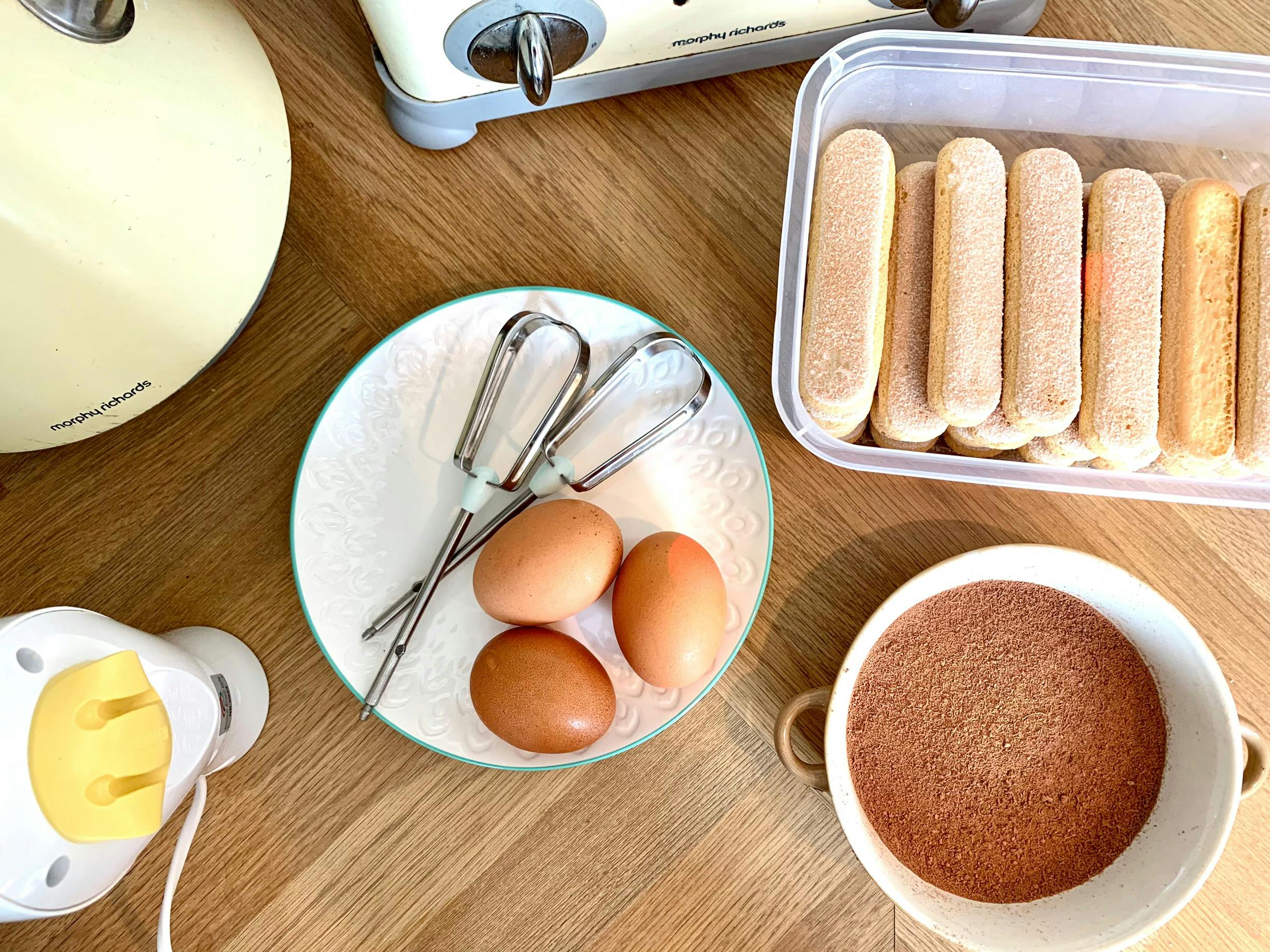
Tiramisu is protected. The Accademia del Tiramisù, based in Treviso, has codified the original recipe down to six ingredients: mascarpone cheese, eggs, sugar, ladyfinger biscuits, coffee, and bitter cocoa powder. No alcohol. No cream. No vanilla. Just these six things, in their correct proportions, prepared with care.
This codification exists because tiramisu generates more culinary argument per square inch than almost any other dessert in Italy. The egg white question (include it or not?), the cream question (add whipping cream or rely on mascarpone alone?), the alcohol question (Marsala, rum, Kahlua, or none?), the biscuit question (savoiardi or the thinner Pavesini?), the coffee temperature question (hot or cold?), all of these are live debates in Italian kitchens and have been for decades.
The purists say: six ingredients, mascarpone at room temperature, egg yolks beaten pale, biscuits only lightly dipped in cold coffee, cocoa powder sifted at the end. The experimentalists say: this is a dessert built for creativity, and almost any variation is valid as long as the spirit of the thing is preserved.
Both are right, in their own way, which is precisely why tiramisu keeps generating interesting conversations and new recipes in equal measure.
Also Read: Which City Is Known As The “Baklava Capital Of The World”?
The Tiramisu World Cup: The Sweetest Competition On Earth
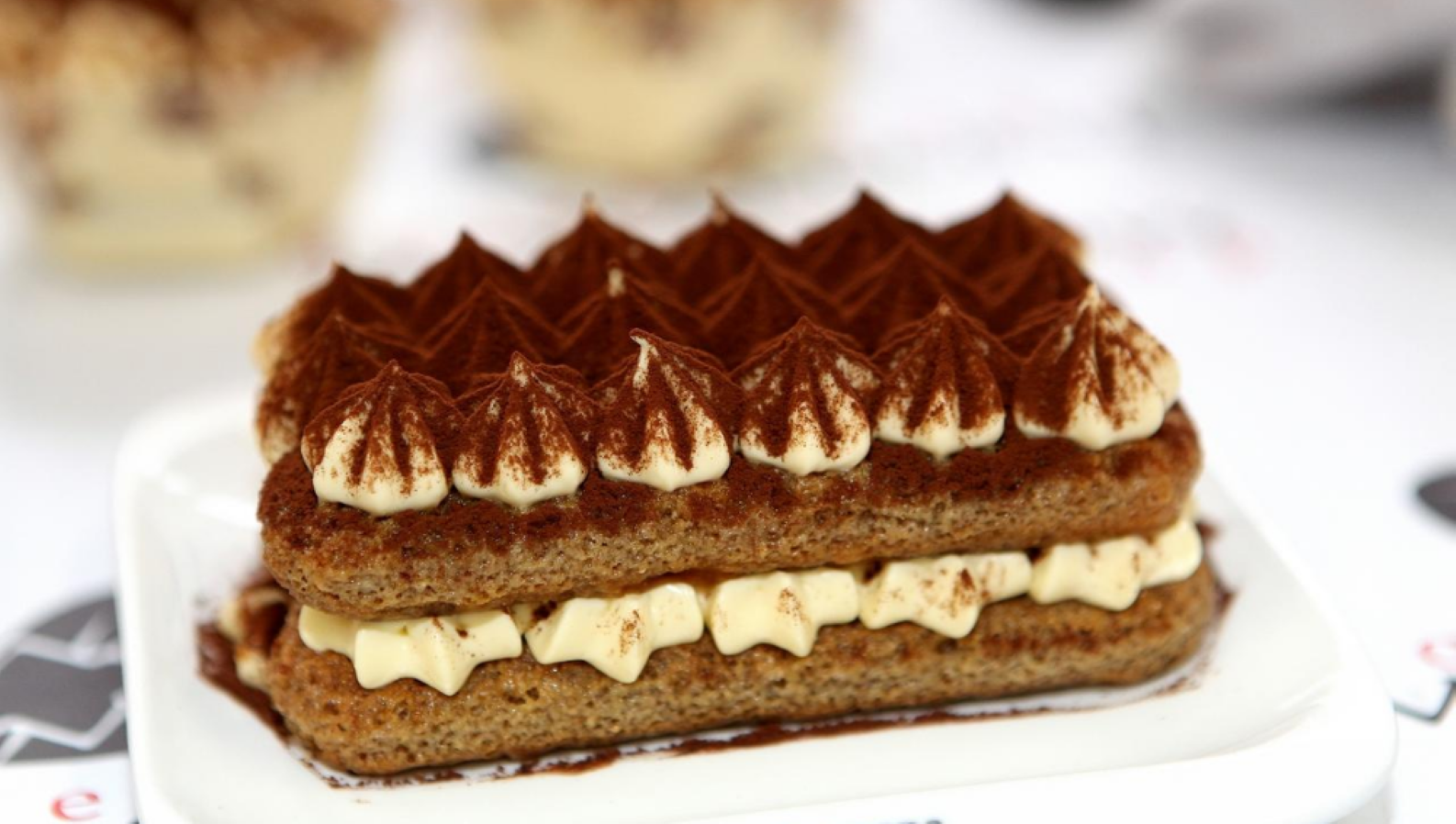
Every year in October, the city of Treviso becomes the unlikely center of the dessert world for three days. The Tiramisu World Cup (TWC), first held in 2017, is a competition open exclusively to non-professional home cooks from anywhere in the world, and it has, in a remarkably short time, become one of the most charming and genuinely competitive food events in existence.
The first edition in 2017 attracted 720 competitors from across Italy and internationally, with over 500 media outlets covering the event, numbers that surprised even the organizers. The competition has grown every year since, and the 2025 edition, the ninth, drew 240 finalists from around the world to Plaza Borsa in Treviso for the Grand Final.
The structure is wonderfully democratic. There are two categories: the Original Recipe (strictly the classic six ingredients, no additions permitted) and the Creative Recipe (mascarpone, eggs, coffee, and cocoa powder compulsory, but up to three additional ingredients allowed). Judges are required to pass a 15-question quiz on the competition rules before being admitted. In 2025, the judging application window was open for just 24 hours, and 350 judging spots sold out in under twelve hours.
The competition has produced some extraordinary results. In 2019, Sara Arrigoni won the Creative Recipe category with a strictly non-alcoholic mojito tiramisu, under the theme “Spritz Time.” In 2021, competitors were required to apply the concept of cinema to their creations. In 2025, Barbara Tosato, a medical radiotherapy technician from Mestre, won the Original Recipe category, while Daniela De Biasio, an agritourism worker from the Prosecco Hills, took the Creative award with her “Il Golosone,” featuring salted caramel cream and apricot compote. The 2025 jury included Massimo Linguanotto, son of the man widely credited with creating the dish, and the head chef at the original Ristorante Le Beccherie.
Francesco Redi, the event organizer, summed up the ambition of the competition: “Our task has been to project the image of this dessert so closely linked to Treviso to the world, as it is now a heritage of ours on par with the Eiffel Tower. But we must not rest on our laurels; there is still much work to be done.”
Worth noting: The judging role at the TWC is entirely voluntary, unpaid, and without any travel reimbursement. You apply because you love tiramisu enough to want to be part of the thing. Roughly 75 percent of competitors at any given edition are women. And if a registered contestant does not show up on competition day, those on the waiting list get their chance to compete, which has a very pleasant fairness to it.
The Variations: Where Tiramisu Gets Interesting
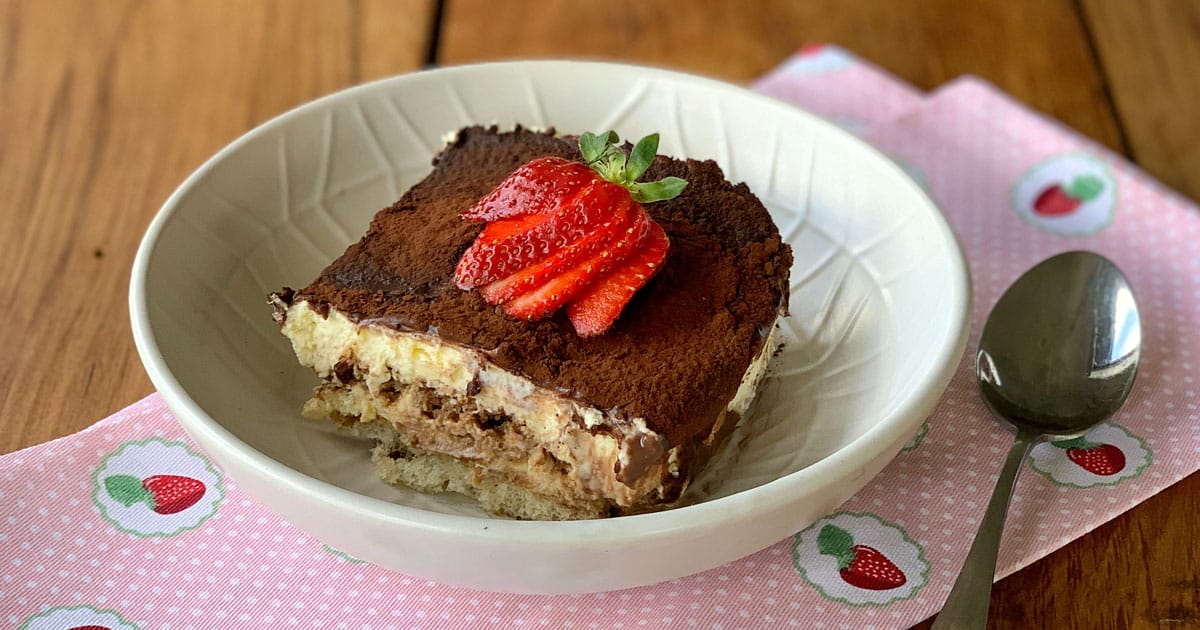
Tiramisu’s global popularity has produced a range of variations that span the spectrum from entirely sensible to genuinely ambitious.
The most accepted non-traditional variations play with the soaking liquid. A limoncello tiramisu replaces the espresso with a mixture of milk and lemon liqueur, producing a pale, fragrant dessert that is particularly good in summer. Matcha tiramisu, popular in Japan and increasingly in India, uses cold matcha instead of espresso, giving the dessert a green layer and a bitter, grassy counterpoint to the sweet cream. Strawberry tiramisu abandons the coffee entirely in favor of fresh strawberry coulis, making a fruit-forward version that is lighter and suited to those who want caffeine-free. There is a s’mores tiramisu, a cherry tiramisu, a panettone tiramisu made with the festive Italian bread in place of savoiardi, and at least one recipe in the book Tiramisù — Storia, curiosità, interpretationi del dolce italiano più amato by food writers Clara and Gigi Padovani that uses Nutella, which the author calls “Nutellamisu.”
In India specifically, the tiramisu has been adapted with a sense of local creativity that is largely working. Filtered coffee tiramisu, using strong South Indian filter coffee decoction instead of espresso, is one of the most natural and genuinely excellent adaptations. The intensity of good filter coffee works brilliantly with mascarpone, and the slightly different bitterness profile actually produces a more complex result than the standard espresso version. Cardamom-spiked mascarpone cream has appeared in Indian fusion bakeries and makes complete sense given the affinity between elaichi and coffee. Mango tiramisu using Alphonso pulp appears in Mumbai and Pune during the season and is one of those happy accidents of culinary geography.
Why Tiramisu Works So Well In India
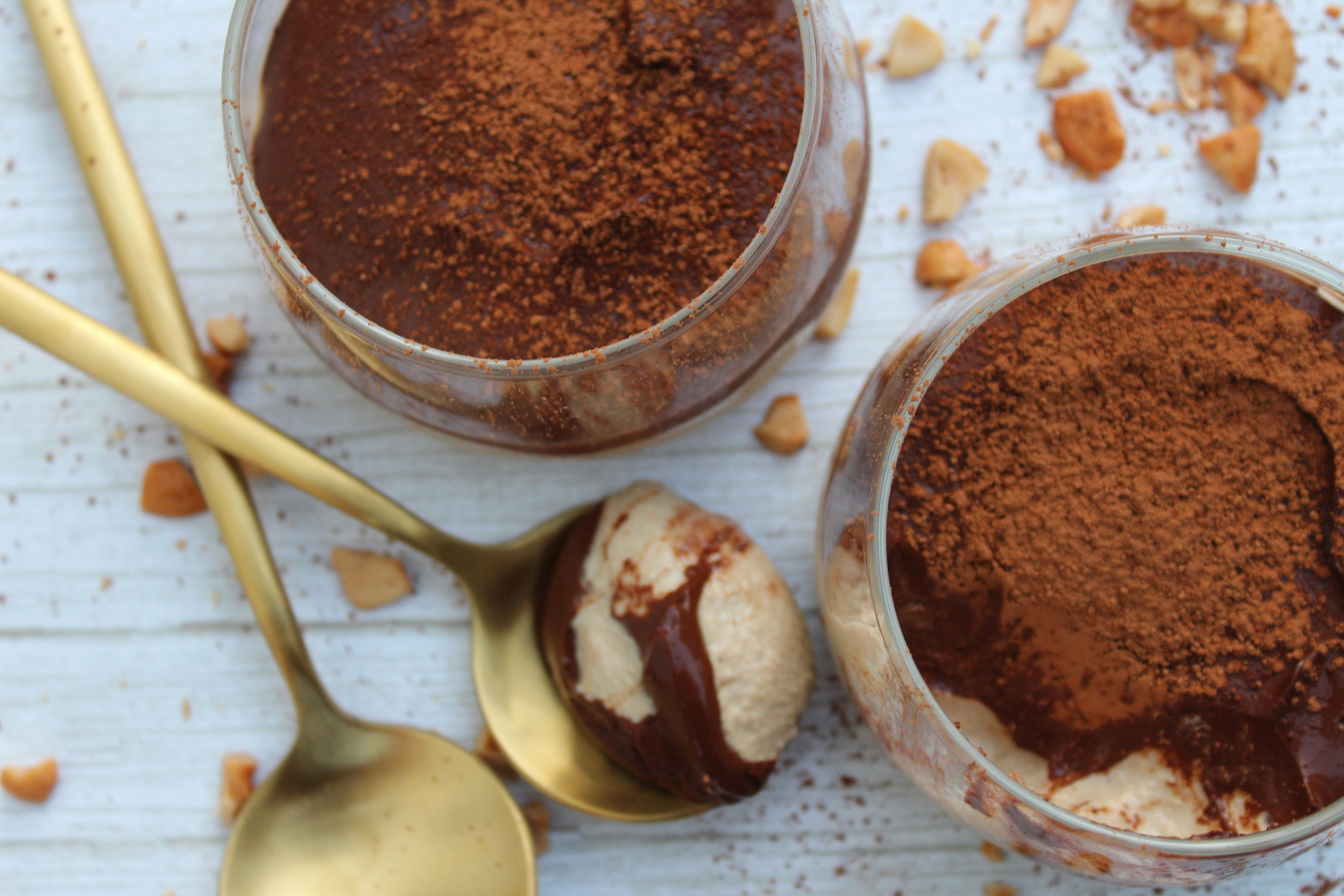
The tiramisu has had no difficulty establishing itself as a restaurant dessert in Indian cities, and the reasons are worth understanding because they are not obvious.
The flavor profile is exceptionally approachable for Indian palates. Coffee is a beloved flavor across the country. Mascarpone, while not a traditional Indian ingredient, is mild and creamy enough to require no adjustment. The sweetness level of a properly made tiramisu is moderate, not cloying in the way some imported Western desserts can be. And the textural contrast between the soft cream and the lightly softened biscuit is familiar to anyone who has eaten a well-made trifle or a firni.
The dessert also travels well commercially. Sealed cups and individual portions of tiramisu have become standard in cafés and dessert stores across major Indian cities, and the no-bake preparation means it can be produced in large quantities without specialist equipment or commercial kitchen infrastructure.
The one persistent challenge is mascarpone availability and cost. Imported mascarpone has historically been expensive in India, but domestic producers have stepped up significantly in recent years. The quality of Indian-made mascarpone now available at most premium grocery stores is genuinely adequate for a good home tiramisu, and the price gap with imported versions has narrowed considerably.
Also Read: From Triveni Café To Clayful, 6 Must-Visit Cafes In Delhi NCR For Art Lovers
Italy’s National Love
There is a reason tiramisu has not faded from menus, home kitchens, or bakery display cases in the decades since it left Treviso. It is the right amount of everything: enough coffee to feel like an adult decision, enough sweetness to feel like a treat, enough richness to feel like an occasion, and enough restraint in its construction to let the quality of the ingredients speak. World Tiramisu Day on the 21st of March is as good an excuse as any to make one, eat one, or at minimum argue about whether or not cream should go in it. Treviso has been having that argument for fifty years. The rest of the world is very welcome to join in.

Comments are closed.