
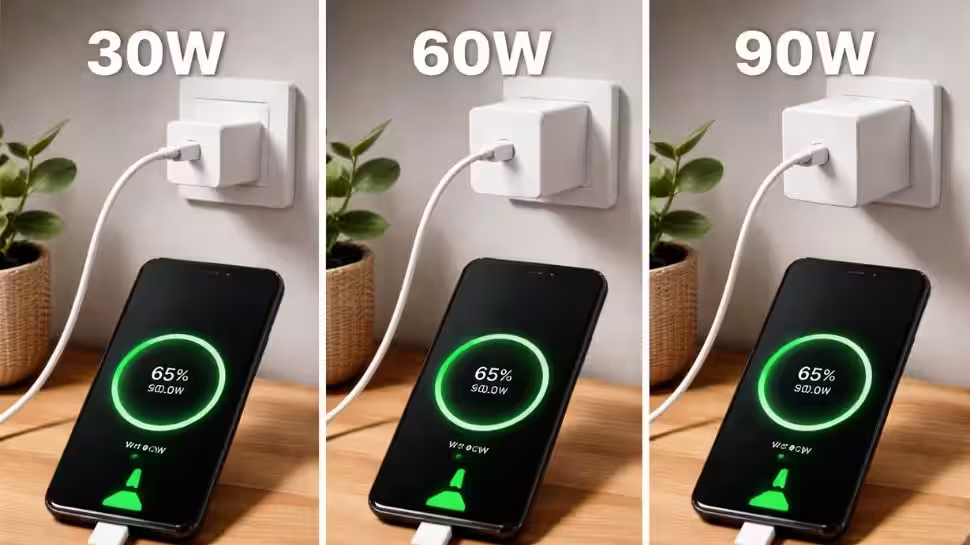
Worried About Your Smartphone’s Battery Health? Check Which Charger Is Best: 30W, 60W, Or 90W–Does Charging Speed Affect Battery Life? | Technology News

Smartphone Battery Health: With smartphones supporting fast charging, charger ratings like 30W, 65W, or 90W have become common factors in phone charging and battery health discussions. Users often argue which is best and think a higher-watt charger is always better, but watt simply refers to the amount of power a charger can deliver. In technical terms, a watt (W) is a unit of power that shows how much energy is transferred per second.
In chargers, wattage is calculated by multiplying voltage (V) and current (A). Higher wattage usually means the charger can supply more power, which leads to faster charging–if the phone supports it.
30W vs 90W Chargers: What’s The Difference?
Add Zee News as a Preferred Source
A 30W charger is commonly used with mid-range and some flagship smartphones. It offers balanced charging speed and generates less heat. On the other hand, a 90W charger is designed for phones that support ultra-fast charging, usually premium models. These chargers can refill the battery much faster, sometimes reaching 50 percent in under 15 minutes.
However, if a phone supports only 30W charging, using a 90W charger will not force extra power into the device. The phone will draw only the power it is designed to handle.
(Also Read: Amazon Great Republic Day Sale 2026: From iPhone Air To OnePlus 15R; Check Top Deals On Budget-Friendly Smartphones)
Does Higher Wattage Harm Battery?
A common concern among most people is whether fast charging affects battery life. Lithium-ion batteries, used in smartphones, are sensitive to heat. Higher-watt charging can generate more heat, especially during the early stages of charging. Over time, repeated exposure to high temperatures can reduce battery health.
However, modern smartphones are built with battery management systems that control power flow, temperature, and charging speed to prevent damage. Many phones slow down charging once the battery reaches around 80 percent to protect long-term battery life.
Charging Speed vs Battery Health
Faster charging is convenient and time-saving, but slower charging can be good for battery health. Using a lower-watt charger, such as 20W or 30W, produces less heat and may help maintain battery health over several years. However, use of fast chargers does not harm battery health if the device is well-designed. Smartphone manufacturers test batteries to handle fast charging within safe limits.
Which Charger Should You Use?
The best charger is the one recommended by the phone manufacturer only. Using a certified charger that matches your phone’s supported wattage ensures safe and efficient charging. For daily use, moderate-watt chargers are ideal, while high-watt chargers are useful when fast charging is needed.

Comments are closed.