


The teaser drops on a quiet Friday evening.
A slim silhouette glows on your screen: flat frame, laptop‑like keyboard, soft light catching the keys. The caption reads,
“We’ve redefined the tablet category, but we’re not stopping there. The #FutureOfComputing is closer than you think.”
With that, Xiaomi sparked speculation about what many believe could be a new Xiaomi hybrid tablet laptop device set for 2026.
It’s vague, calculated, and just intriguing enough to make a student delay revision, a young creator pause editing, or a small business owner wonder if the future of computing is their next work machine, ready to be announced.
But under the glow of that teaser sits the more grounded question: is this “future of computing” really going to change how you work, study, and create – or just how your desk looks?
Is This the Future of Computing or Just Another Form Factor?
Most of us already juggle a phone and a laptop, with tablets filling a fuzzy middle ground.
This new Xiaomi hybrid tablet 2026 seems determined to live in that middle, with a keyboard attached, tablet roots, and laptop ambitions.
The real question is whether it can meaningfully replace a budget laptop alternative for students, families, and small teams, or whether it will become yet another “secondary device” that feels cool for a month and then gathers dust.
Early comments online already hint at that split.
- “If this runs full desktop‑class apps with that chip, I’m in.”
- “Looks nice, but I don’t want to live inside mobile apps for serious work.”
- “Give me a good keyboard, 10+ hours of battery, and sub‑$ 500 pricing – I don’t care what you call it.”
Beneath the excitement is a familiar fatigue, as people are tired of buying beautiful compromises.
Why This Xiaomi Hybrid Tablet Laptop Actually Matters
To be fair, there are clear, practical upsides if Xiaomi executes well:
- Why Xiaomi’s Device Actually Matters
Xiaomi’s teased hybrid device promises real-world utility if specs deliver as hinted. Here’s why it could shift daily routines for budget users and creators.
- Hybrid Portability
Tablet lightness meets laptop usability in one slim package.
Perfect for students hopping from classroom to classroom or freelancers at cafés, as no heavy bag is required.
One sleeve, two modes: work posture flips to media mode instantly.
- Snapdragon Power, Smart Price
With Xiaomi’s recent Pad 8 series starting at around 300–400 USD in China, the expectation is that India and other markets will see a performance‑heavy device priced well below most premium ultrabooks.
This new Snapdragon 8 series tablet could land near that band; you’re looking at enough power for note‑taking, office work, video streaming, and light editing, without the financial sting of a 1,000 USD laptop, making it an affordable work tablet.
- All-Day Battery Reality
9,000+ mAh capacity, typical for Xiaomi tablets, means no midday hunts for outlets.
Efficiency beats many Windows rivals for full days of study-work-play.
One charge powers families through homework to evening shows.
- Flexible Accessories
The teased Xiaomi keyboard tablet setup suggests:
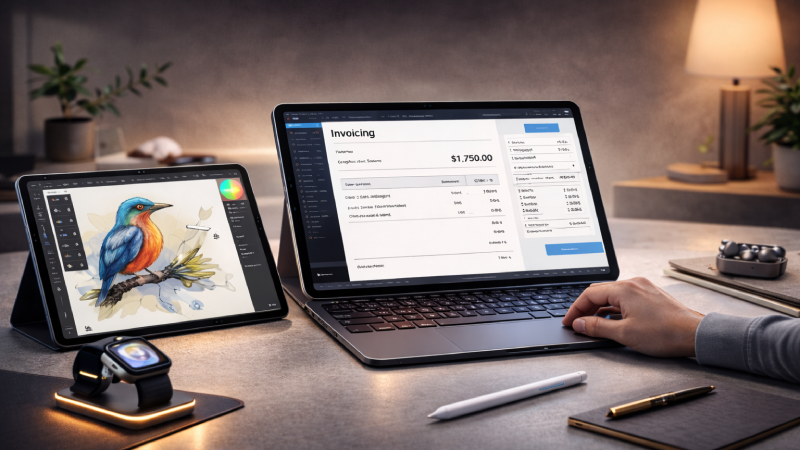
The backlit keyboard, trackpad, and stylus turn it into a sketchpad or mini-desktop.
The same hardware adapts: creators edit, owners invoice, and kids learn.
Versatility maximizes value across shared home or solo use.
Who Stands to Gain the Most?
Here’s where things get more honest. This type of device won’t land the same way for everyone.
| Group | Potential Upside | Friction Points |
| Students | Lightweight, long battery, note‑taking and browsing on a budget | May struggle with heavy coding tools or specialized desktop apps |
| Budget‑conscious users | One device for streaming, basic work, and everyday tasks at sub‑laptop prices | Keyboard extra cost, mobile‑OS limitations, less future‑proof than pricier PCs |
| Young creators | Portable screen for drawing, scripting, basic editing, and social content | Demanding video or 3D workflows may hit performance and software ceilings |
| Small business owners | Good for mail, docs, calls, quick presentations, and travel | Accounting, legacy tools, and peripherals may prefer a full PC environment |
| Families | Shared device for kids’ classes, OTT, web, and casual games | Fragility, accessory costs, and multi‑user clutter over time |
Pricing, Value, and What “Affordable” Really Means
If Xiaomi mirrors its Pad 8 series strategy, a base configuration in the 350-450 USD range feels plausible once you adjust for market and tax rates, with higher tiers reaching 500-600 USD when you add more storage and RAM.
That puts it below many premium laptops but above true entry‑level Android tablets and budget Chromebooks.
Value, then, becomes situational.
- For someone who mainly lives in the browser, uses office suites, and streams video, the price‑to‑experience ratio could be excellent.
- For a creator planning to cut 4K video or a developer running multiple local servers, it’s more likely a secondary travel device than a primary workhorse.

Final Thoughts on The Future of Computing
Xiaomi is currently presenting its vision for futuristic computing through an incomplete demonstration. It consists of standard display screens and polished text, and the ongoing development of intermediate devices that combine tablet and laptop features.
The potential Xiaomi tablet laptop hybrid could become a meaningful budget laptop alternative for users who need lightweight, affordable devices that maintain essential performance levels, especially those who want to use technology for schoolwork, creative projects, and family activities.
But the trade‑offs are equally real. The teaser is meant to spark desire; your job is to bring it into context.
When the full product is revealed, with its exact specs, price, and software story, you’ll have to weigh everything: how you work, what you can spend, which compromises you can live with, and whether this device will genuinely change your daily computing or just your home screen wallpaper for a few weeks.
The future of computing, at least for you, won’t be decided by a launch hashtag.
It will be decided by whether this next Xiaomi machine fits the life you already live and the one you’re slowly building.

Comments are closed.