
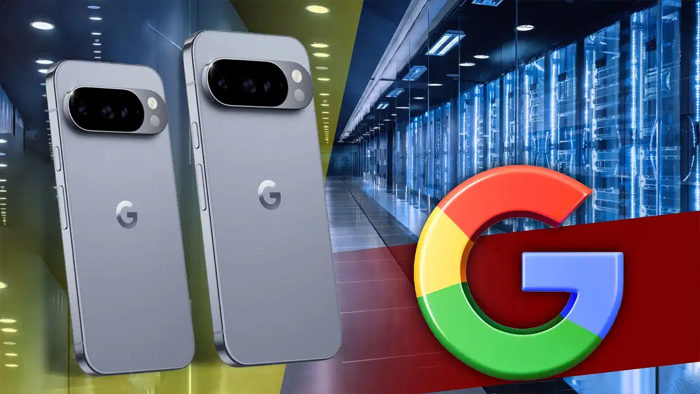

Desk: Often we use a new smartphone only for 2 to 5 years. After this either the phone gets damaged or it is replaced. These old smartphones usually lie in some drawer of the house or are sent for recycling. But now Google is preparing to give them a new life. The company is working on a project under which old smartphones can be converted into small data centers. This will reduce e-waste and can also reduce the environmental damage caused by building computing infrastructure. This initiative can open a new path for cloud services and research projects in future.
Google, in collaboration with the University of California San Diego, has started research on a new concept called “Phone Cluster Computing”. Its purpose is to reuse the main hardware of the old smartphone. During research, the display, battery, camera and external parts are removed from the phone. After this only the motherboard is left, which contains the processor, memory and storage. These parts are connected together and run on a Linux based system. In this way, many old smartphones can work together like a small computing network.
According to Google’s research, about 25 to 50 old smartphones together can provide the capability of a modern server in certain types of tasks. If thousands of legacy mobile devices are linked together, they may be able to handle cloud services and research workloads. These devices can be managed with the help of software platforms like Kubernetes, which is used today to run large cloud infrastructures. Google believes that this technology can reduce the need for new server hardware and better use of existing resources will be possible.
According to the report, the next goal of this project is to create a large computing cluster by connecting about 2,000 old Google Pixel smartphones. Researchers at the University of California San Diego want to use it in academic courses like systems programming and parallel computing. Scientists also want to understand how well ordinary consumer devices can perform in an environment like a data center. If this experiment is successful, then in future instead of throwing away old smartphones, they can be used as computing resources. This will reduce e-waste and reduce both the cost and environmental impact of creating new technological infrastructure.

Comments are closed.