

Ukraine has warned that pressure to reopen a key Russian oil supply route risks undermining Europe’s sanctions framework, framing the dispute as a legal and policy challenge for the European Union’s strategy to restrict Moscow’s energy revenues.
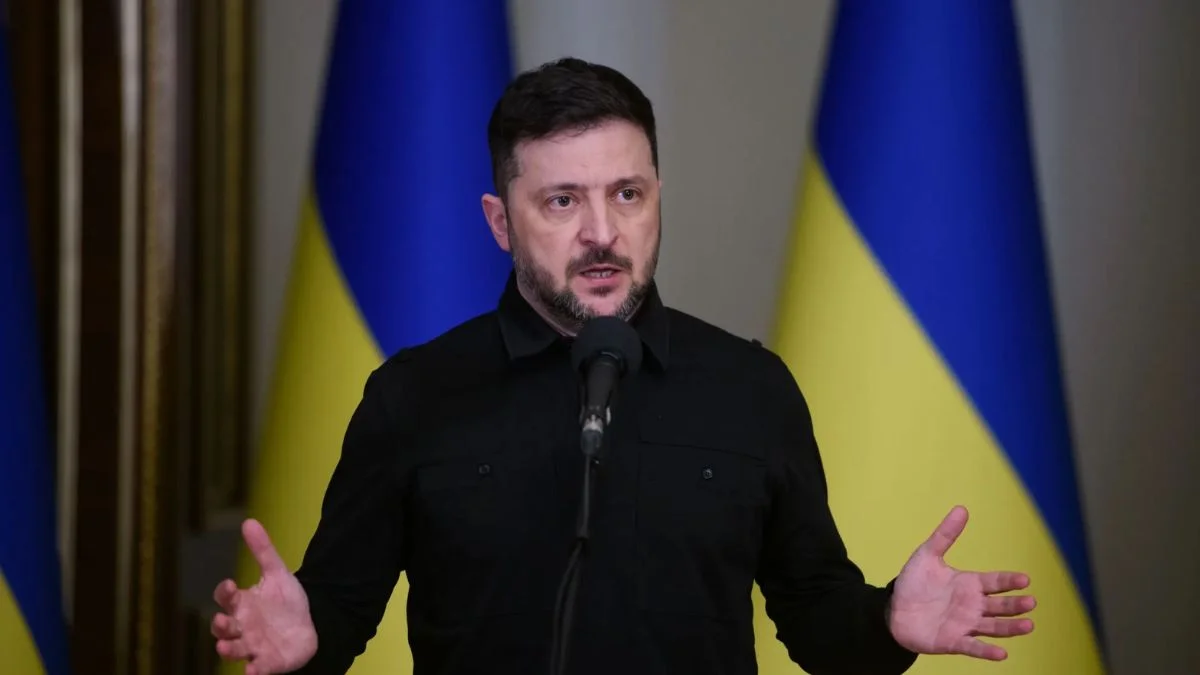
Speaking on Sunday, Volodymyr Zelenskyy described calls to restore operations on the Druzhba oil pipeline as “blackmail,” arguing that linking the issue to sanctions negotiations could weaken the EU’s collective policy aimed at limiting Russia’s financial capacity to sustain its war effort. Zelenskyy emphasized that energy infrastructure decisions during wartime must follow security, legal, and regulatory considerations rather than political pressure.
The Druzhba pipeline, one of the largest crude oil transportation systems in the world, historically carries Russian oil through Ukraine to several Central European countries, including Hungary and Slovakia. The section crossing Ukrainian territory has remained offline since late January after being damaged during a Russian strike. Ukrainian authorities say repairs cannot safely proceed while attacks continue in nearby areas, citing operational safety rules and wartime infrastructure protection requirements.
The pipeline disruption has since developed into a broader dispute within the European Union over sanctions policy and regional energy trade. Hungary and Slovakia have argued that prolonged closure threatens their energy security and disrupts established supply arrangements. Both governments have urged a rapid reopening of the route while also raising concerns during negotiations over the EU’s next sanctions package against Russia.
The sanctions proposal under discussion focuses heavily on energy trade enforcement. One major element targets Russia’s so-called “shadow fleet,” a network of tankers suspected of bypassing Western price caps and restrictions on oil exports. European policymakers view tighter monitoring of these shipping networks as a critical step in enforcing sanctions and reducing Russia’s ability to generate revenue from energy trade following Russia’s invasion of Ukraine (2022).
Under EU law, sanctions packages require unanimous approval from all member states, giving individual governments significant influence over the policy process. Hungary and Slovakia have signaled that their position on the Druzhba pipeline could affect their support for the broader sanctions framework, highlighting the legal complexity of maintaining consensus on EU foreign policy decisions.
Officials from the European Commission have acknowledged the dispute and said the issue is being reviewed within the bloc’s energy and sanctions policy framework. The Commission is responsible for coordinating sanctions implementation and ensuring compliance with EU competition law and energy market regulations. European officials have also explored whether financial or technical assistance could help facilitate future repairs once security conditions allow.
Zelenskyy warned that linking sanctions policy to pipeline operations risks weakening the EU’s broader strategy to limit Russia’s war financing. According to Ukrainian officials, energy pressure should not be used to dilute sanctions enforcement or delay new restrictions designed to curb Russian oil trade.
The dispute underscores the policy tensions facing European governments as they attempt to balance sanctions enforcement, energy security, and trade stability during the ongoing conflict. As EU leaders continue negotiations on the next sanctions package, the Druzhba pipeline issue has become a key test of the bloc’s ability to maintain a unified legal and policy approach to restricting Russia’s energy revenues.

Comments are closed.