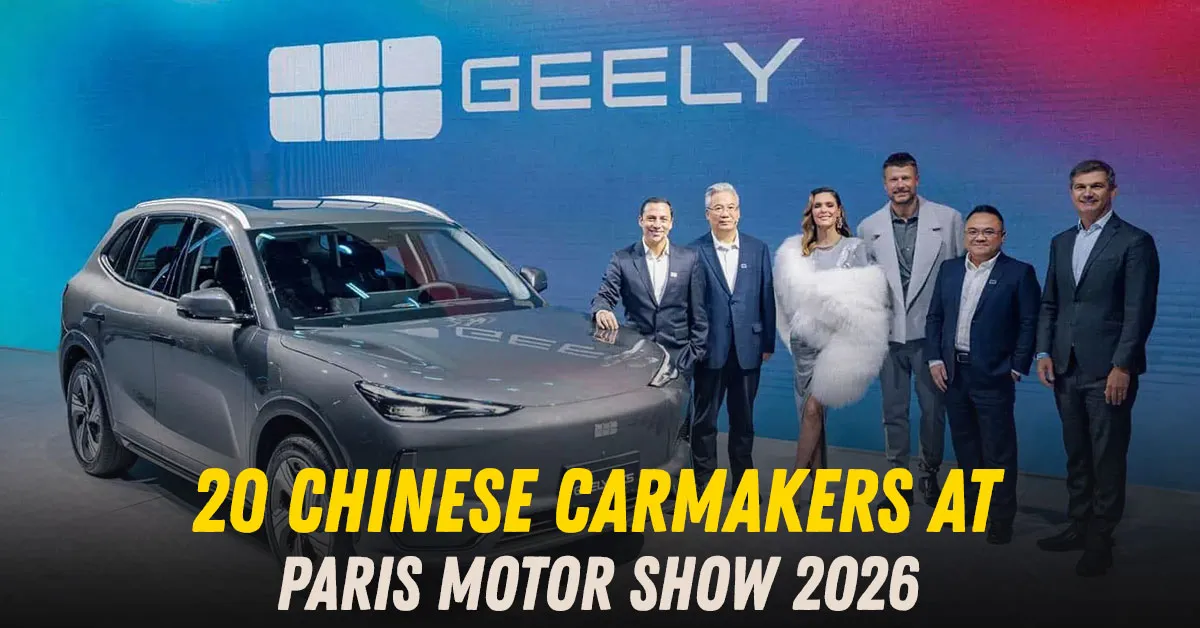
The 2026 Paris Motor Show has around 20 Chinese car brands on display, roughly a third of all brands. Two years ago, the number was nine.
That change is visible before anyone looks at sales data. BYD, Chery, XPeng, Li Auto, Aito, Avatr and other Chinese manufacturers are no longer appearing as occasional newcomers at Europe’s biggest car show. They are launching Europe-specific products, talking about local factories and competing for buyers on European carmakers’ home turf.
Only three American brands are represented at the show: Tesla, Ford and Lucid.
BYD used Paris to show the Atto 8 for Europe, while highlighting ultra-fast charging technology that can add a large amount of battery range in only a few minutes under suitable conditions.
XPeng demonstrated supervised autonomous-driving technology around the Arc de Triomphe, one of the most chaotic traffic environments in Paris.
Li Auto brought its technology-heavy luxury approach, including rear entertainment screens, massage seats and a central-console unit that can heat or cool drinks.
These are not simply China-market cars placed on a foreign stand. The brands are increasingly adapting specifications, software, pricing and distribution for Europe.
Changan wants to sell 100,000 vehicles in Europe in 2027, up from a 30,000-unit target for 2026.
The show presence reflects what is happening in registrations.
Chinese brands held 10.7 percent of the European car market in the second quarter of 2026, up from 5.7 percent a year earlier.
The change is even more dramatic in plug-in hybrids. Chinese brands accounted for more than 26 percent of the Western European PHEV market in the second quarter, compared with only 2.2 percent two years earlier.
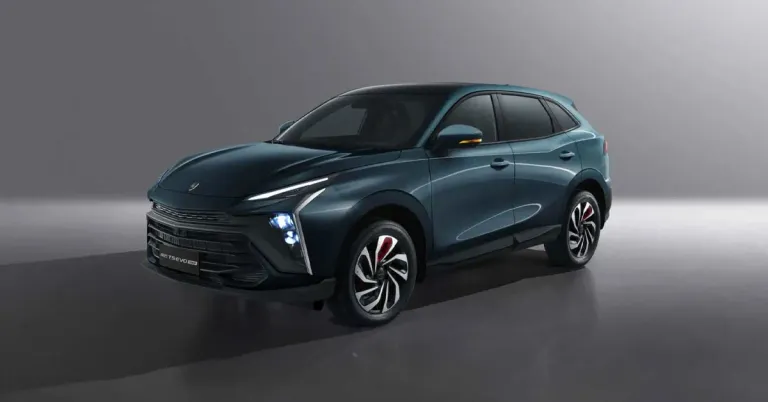
That shift partly followed the EU’s additional tariffs on Chinese-built battery EVs. Plug-in hybrids were not covered by those extra duties, so manufacturers including BYD, SAIC and Chery expanded their PHEV ranges aggressively.
Chinese companies have also been pushed outward by intense competition and weaker pricing at home, while the US market remains effectively closed to them.
Europe has therefore become the obvious next battleground.
The response from established European manufacturers is also visible at Paris.
Stellantis is reviving the Citroen 2CV idea as an affordable electric car, while Renault continues to build around revived names such as the Renault 5. Volkswagen is also pushing smaller, lower-cost EVs.
The goal is to compete with Chinese cars on price without abandoning the brand recognition European manufacturers have built over decades.
But nostalgia alone cannot solve the technology gap. Chinese brands have been particularly aggressive on batteries, charging speed, software, screens and cabin features.
That is why European manufacturers are also cutting costs and simplifying product ranges.
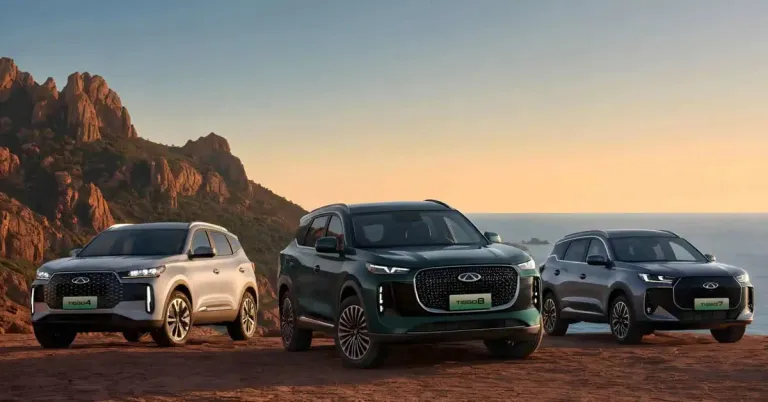
Trade barriers are changing the strategy, but they are not stopping expansion.
The EU and China have agreed to limit Chinese hybrid imports, while Europe is also developing local-content requirements for subsidies and government contracts.
Chinese manufacturers are responding by planning European production.
Changan says it expects to start producing cars in the region early next year. BYD is studying additional manufacturing, including a possible French plant. XPeng is also expanding European production plans.
So the next phase may look different from the first. Instead of shipping every car from China, more Chinese brands may build inside Europe and qualify as local manufacturers. That is what makes the Paris show significant.
Twenty Chinese brands at a European motor show is impressive. More important is what happens after the stands are dismantled: those companies are building dealer networks, gaining double-digit market share, localising production and moving into the segments where European manufacturers earn their volume.