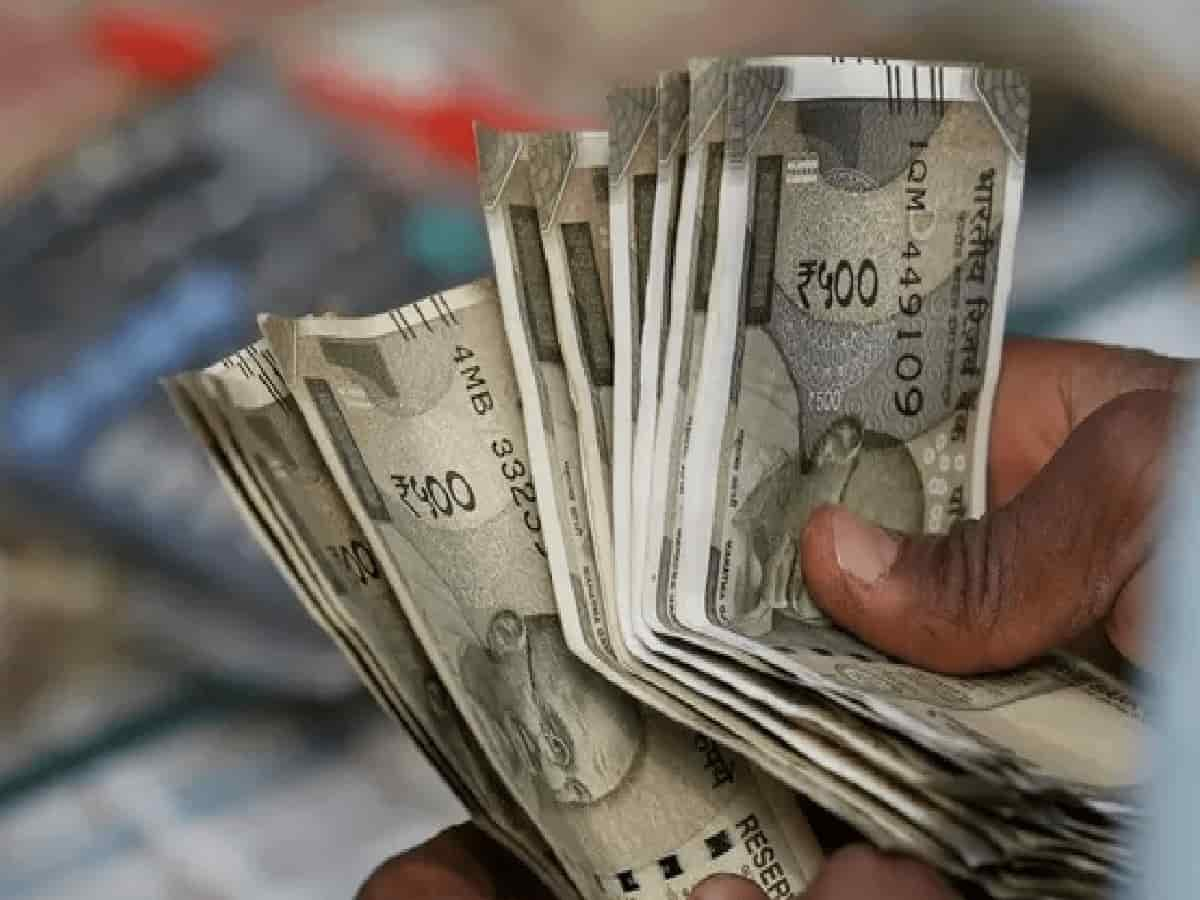
Walk down any bustling bazaar, roadside tea stall, fruit cart, or luxury shopping arcade across India today, and the technological transformation of commerce is impossible to miss. Smartphones are omnipresent, soundboxes announce real-time micro-credits, and Unified Payments Interface (UPI) quick-response (QR) codes sit taped to nearly every storefront. From the outside, the world’s most populous nation appears to have made a decisive leap toward an entirely cashless digital financial ecosystem. Yet, beneath this visible technological triumph lies a striking economic paradox revealed by empirical central banking statistics. Exactly a decade after the historic demonetisation exercise of November 8, 2016—which abruptly scrapped 86 percent of the nation’s high-value tender overnight to curb paper transactions and encourage banking formalisation—India’s affinity for physical banknotes has not merely endured, but expanded to record-shattering heights. According to the latest operational statistics from the Reserve Bank of India (RBI), the total value of currency in circulation has surged by approximately 143 percent over the past ten years, demonstrating that digital convenience and hard cash are thriving simultaneously.
Currency in Circulation Surges 143%: Breaking Down the ₹43 Lakh Crore Mark
The macroeconomic data compiled by India’s central banking authority reveals the massive scale of banknote expansion over the last decade. On the evening of November 8, 2016, when high-value ₹500 and ₹1,000 denomination notes were decommissioned, currency in circulation (CIC) across the Indian economy stood at ₹17.77 lakh crore. By October 23, 2026, that figure climbed to an astounding ₹43.16 lakh crore. This represents a net expansion of more than ₹25.39 lakh crore in physical cash floating through commercial markets, business vaults, rural distribution centers, and household lockers.
The steady accumulation of paper money underscores an unbroken upward trajectory across recent fiscal cycles:
The Fiscal Year 2025-26 Milestone: According to the RBI’s annual report published in May 2026, the aggregate valuation of banknotes in circulation had already crossed ₹41.24 lakh crore by the close of March 31, 2026.
Double-Digit Annual Growth: During fiscal year 2025-26 alone, the total monetary value of circulating banknotes expanded by 11.9 percent, while the actual volume—the physical piece-count of notes printed and distributed—rose by 10.5 percent year-on-year.
Persistent Demand in Current Fiscal: Rather than cooling down, this upward demand persisted into the first two quarters of fiscal 2026-27, carrying the national cash volume to the landmark ₹43.16 lakh crore recorded in late October.
Failure of Cash Elimination Theories: The continuous expansion demonstrates that early policy expectations linking the spread of smartphones directly to the decline of physical cash fundamentally underestimated the deeply rooted structural role paper currency serves across diverse socioeconomic strata.
The UPI Phenomenon: How Digital Payments Exploded Alongside Paper Currency
What makes this cash expansion truly remarkable is that it has taken place alongside the most successful, rapid expansion of digital payment infrastructure in modern global economic history. India’s homegrown digital payment architecture, anchored by the National Payments Corporation of India (NPCI), has set an international benchmark for seamless, zero-cost retail settlements.
The astronomical rise of the Unified Payments Interface illustrates the scale of this dual-track ecosystem:
From Nascent Pilot to National Rail: In fiscal year 2016-17, when UPI was newly launched in the wake of currency reforms, the platform processed a modest 17.8 million transactions for the entire year.
A Staggering 24,000-Crore Milestone: By fiscal year 2025-26, annual UPI transaction volumes expanded to over 24,162 crore (241.62 billion) processed payments, representing an exponential, multifaceted leap in consumer financial behavior.
Single-Month Record in October 2026: In October 2026 alone, the UPI platform logged 25.46 billion individual payment transactions, settling a collective transaction value of ₹31.53 lakh crore in a single thirty-one-day billing cycle.
Complementary Coexistence, Not Replacement: These parallel metrics clarify a fundamental reality of the Indian consumer mindset: citizens utilize UPI extensively for fast, everyday transactional convenience while simultaneously relying on physical cash for liquidity security, value preservation, and traditional trade.
Why Indians Refuse to Abandon Cash: Emergency Buffers, Literacy, and Trust
Why does the physical banknote retain its dominant appeal in a country with high-speed 5G mobile networks and ubiquitous payment apps? The answer is rooted in a blend of psychological security, informal sector economics, and infrastructural realities documented directly in research published by the Reserve Bank of India.
A landmark RBI research paper highlights several structural drivers sustaining physical currency demand:
The Precautionary Motive and Emergency Reserves: Indians hold money for two distinct reasons: transaction velocity (buying everyday goods) and value preservation (precautionary hoarding). In times of medical crises, agricultural crop failures, family emergencies, or unexpected economic shocks, physical currency provides immediate, unquestioned liquidity that does not depend on server uptime or digital authorization.
Technological Vulnerabilities and Network Gaps: While urban metropolitan centers enjoy seamless mobile internet, vast rural hinterlands, remote tribal districts, and hilly regions still experience frequent mobile signal drops, server downtimes, and digital transaction failures. For a small merchant or daily wage earner, an electronic payment that hangs in banking limbo for 48 hours presents an intolerable liquidity freeze.
The Informal Economy and Privacy: A substantial portion of India’s retail, agricultural, and artisanal commerce operates within the decentralized informal sector. Cash provides anonymity, instant finality of settlement without transaction processing fees, and complete independence from digital oversight, audit trails, or complex banking compliance.
Financial and Digital Literacy Realities: Millions of elderly citizens, illiterate rural residents, and marginal laborers find physical banknotes tangible, countable, and immune to digital fraud, phishing links, and deceptive cyber scams that increasingly target vulnerable mobile users.
Denomination Dynamics: ₹500 Note Reigns Supreme as ₹2000 Withdrawal Concludes
The compositional breakdown of currency circulating through the Indian economy reveals that the ₹500 banknote has emerged as the unchallenged cornerstone of national cash reserves, effectively replacing all previous high-value denominations.
Detailed denomination metrics reported by the RBI as of March 31, 2026, outline this currency mix:
The ₹500 Note Dominance: The ₹500 denomination note accounts for a staggering 85.5 percent of the total monetary value of all circulating banknotes in India. In terms of physical volume, ₹500 notes represent 41.2 percent of all paper currency pieces circulating across the nation.
Small-Denomination Retail Anchors: For day-to-day low-value exchange, ₹10 denomination notes represent 16.1 percent of the total physical note volume, while ₹100 notes comprise 15.7 percent, providing essential fractional change for public transport, vegetable markets, and small rural purchases.
Near-Complete Exit of the ₹2,000 Note: Following the central bank’s clean note policy directive initiated in May 2023 to withdraw the magenta ₹2,000 banknote from public circulation, the withdrawal process is now virtually complete. Over 98 percent of all ₹2,000 notes have been returned through commercial banking channels and safely retired, leaving the ₹500 note as the primary instrument for both institutional and household cash storage.
The Future of Indian Currency: A Hybrid Financial Architecture
Ten years after demonetisation rewired India’s financial consciousness, the country has not transitioned into an exclusively cashless society, but has instead engineered a resilient, world-class hybrid payment economy. Rather than eliminating banknotes, the rapid adoption of digital payment tools like UPI has absorbed the rapid growth in transaction volume generated by an expanding economy, while hard currency remains the bedrock of trust, liquidity, and emergency insurance.
As the Reserve Bank of India continues its trials with the Central Bank Digital Currency (the Digital Rupee or e₹), the lesson of the past decade is clear: paper currency and digital algorithms do not have to be mutual enemies. In a diverse, subcontinent-sized economy of 1.4 billion people, cash is not a sign of economic backwardness, but a durable instrument of economic freedom and practical utility that Indians are not ready to relinquish anytime soon.