The company says fares will remain unchanged from those charged for diesel-powered services.
The deployment marks the company’s first use of fully electric sleeper buses for inter-provincial passenger transport.
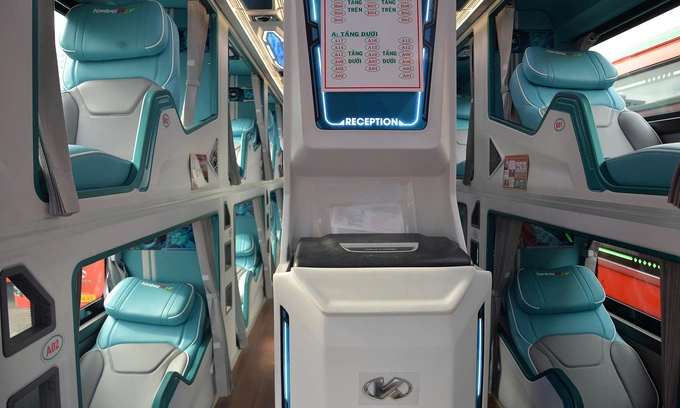
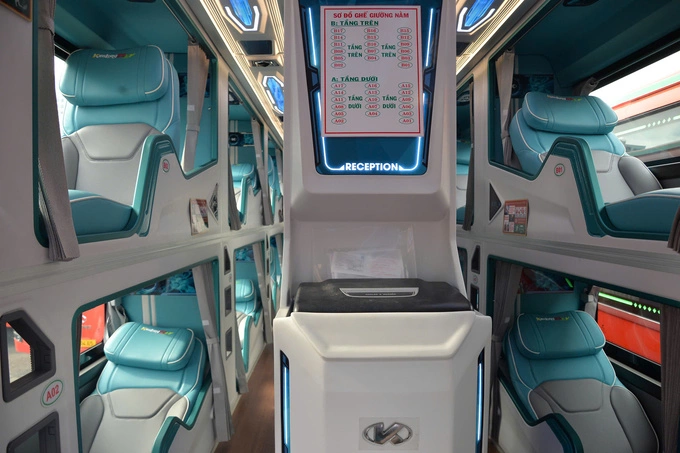
Manufactured by Vietnamese automaker Kim Long Motor, each bus is equipped with 34 sleeper berths and a 357-kWh BYD battery. According to the manufacturer’s specifications, the vehicles can travel approximately 450 km on a full charge. Their electric powertrains also offer quieter operation and produce no direct exhaust emissions.
Phuong Trang said the switch to electric buses would not affect regular ticket prices or service schedules. Vehicles will be fully charged before departure, allowing them to complete their scheduled journeys without stopping for recharging along the way.
|
Phuong Trang’s electric sleeper buses in Ho Chi Minh City, Nov. 21, 2026. Photo by Ha Giang |
Standard fares will remain at the same level as those for diesel-powered buses, although prices may be adjusted during public holidays and the Lunar New Year, in accordance with the company’s existing pricing policy.
To support the new fleet, the company has invested in charging infrastructure at bus terminals and other locations along the routes. Operating electric vehicles over long distances requires careful coordination of charging times, travel schedules, route distances and energy consumption to maintain service reliability.
Bui Hoa An, deputy director of the HCMC Department of Construction, said operating electric vehicles on inter-provincial routes presents greater challenges than running them on urban routes. Longer distances, extended operating hours and the need for strategically located charging facilities all add to operational complexity.
He said the new service would provide an opportunity to assess the feasibility of deploying electric sleeper buses for long-distance passenger transport and could help inform the sector’s broader transition to cleaner energy.
 |
|
Inside a Phuong Trang’s electric sleeper bus. Photo by Ha Giang |
An urged transport operators to develop detailed operating schedules and charging plans, conduct regular inspections of batteries and electrical systems, strengthen fire-safety measures and prepare contingency plans for potential incidents. He also called for regular assessments of operational efficiency to identify areas for improvement.
Ho Chi Minh City is stepping up efforts to transition its transport sector to electricity and other cleaner energy sources. The city currently has a fleet of more than 2,400 buses, with electric vehicles already operating on several routes.
It is also developing a roadmap to expand the use of electric and green-energy vehicles across other transport segments, with the goal of establishing a greener transport system by 2045.