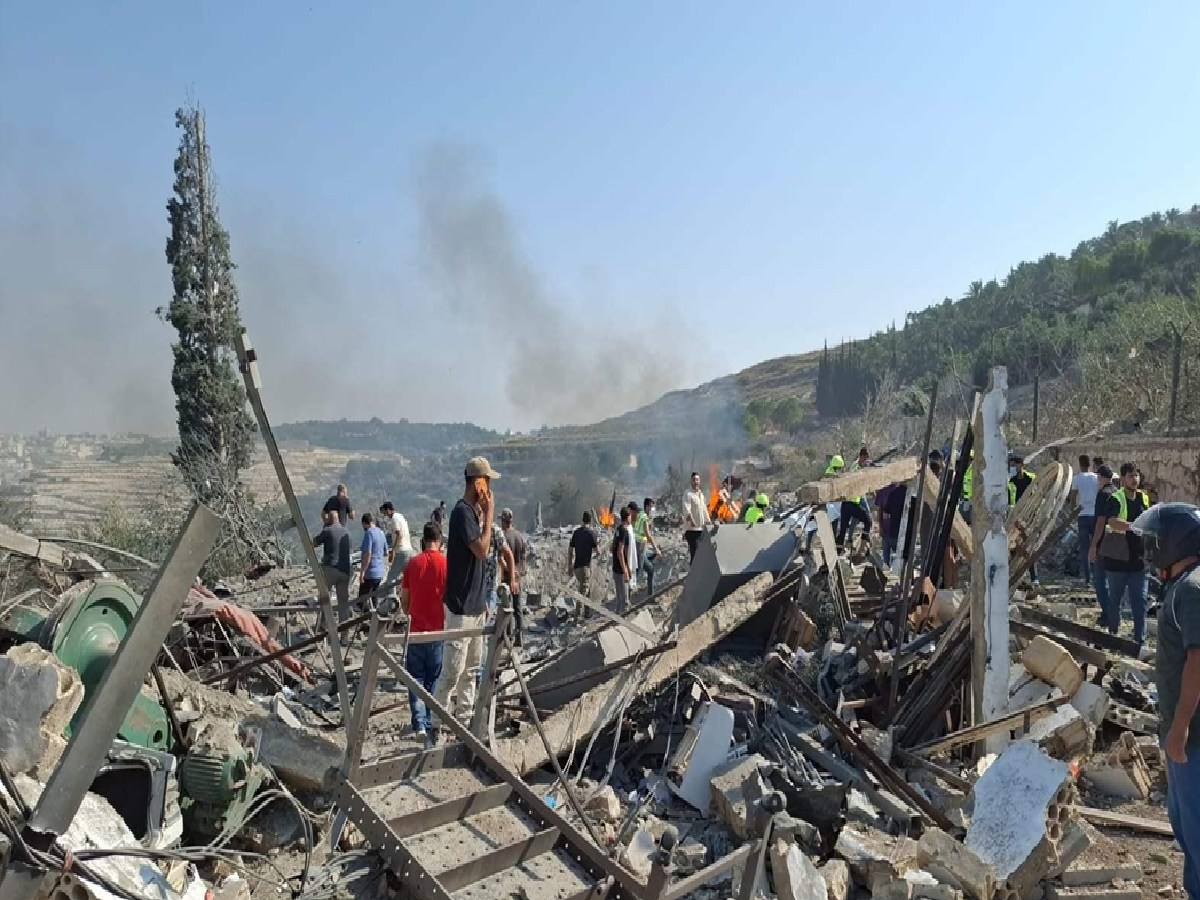
At least 11 individuals died in Israeli air strikes in southern Lebanon on Saturday. This has been the most deadly attack since a ceasefire between Israel and Hezbollah came into effect on June 20th.
Lebanese authorities reported that seven individuals, including three children, died when an attack targeted a residential house in Ansar on its outskirts. Four others died in another strike in Deir al-Zahrani. This attack has brought about fears about the sustainability of the ceasefire and peace efforts along the Israel-Lebanon border.
Children Among Those Killed In Ansar Strike
Lebanon’s Health Ministry and state news agency said two people were wounded in the Ansar strike. Another 17 were injured in Deir al-Zahrani. The latest attacks came weeks after Israel and the Lebanese government announced a framework agreement on June 26. The plan calls for Israel to withdraw from southern Lebanon in exchange for the disarmament of Iran-backed Hezbollah.
It also outlines steps towards a possible peace agreement between Israel and Lebanon. The two countries remain technically at war. However, Hezbollah was not part of the agreement and has rejected direct negotiations with Israel.
Lebanese PM Condemns Israeli Attacks
Lebanese Prime Minister Nawaf Salam strongly criticised the strikes. He said the attacks were intimidating “residents in their homes” and were hurting efforts to stabilise southern Lebanon.
“The seven martyrs of the Israeli airstrike on the town of Ansar are not military infrastructure, and the children and women killed were not military targets,” Salam said in comments posted on X.
He said dealing with any military infrastructure inside Lebanon was the responsibility of the Lebanese state.
“Israel must halt this escalation,” Salam said. He added that the safety of Lebanese people and their right to live on their land “are not subject to negotiation or bargaining.”
President Joseph Aoun also criticised the strikes. He described them as “a clear message to the negotiation track and to the American efforts aimed at implementing this agreement.”
Israel Says Hezbollah Infrastructure Was Targeted
Israeli strikes also hit the strategic Ali Taher hill early Saturday. The area overlooks parts of Nabatiyeh and key roads leading to the southern city, according to Lebanon’s state news agency.
Despite the truce, Israel has continued carrying out near-daily strikes in areas north of the Litani River. Large parts of the territory south of the river remain under Israeli military control. The Israeli military said it targeted Hezbollah infrastructure in Ali Taher and Ansar after what it described as action against Israeli soldiers.
The military said it would not allow Hezbollah to threaten Israeli civilians or soldiers “and will continue to operate to remove threats.” Hezbollah did not immediately respond to questions about whether it had attacked Israeli forces in the area.
Hezbollah Rejects US-Sponsored Talks
Hezbollah later called on the Lebanese government to take steps to stop “this aggression”. It opposed US-sponsored direct talks with Israel, saying such negotiations would amount to giving “free gifts for the enemy despite the crimes and aggression it is carrying out.”
The group also said, “The American side is a partner of the Israeli enemy in its crimes and massacres.” Hezbollah has refused to disarm and has accused Beirut of making too many concessions without securing an Israeli withdrawal.
Fresh Blow To Fragile Israel-Hezbollah Truce
This month, two Israeli troops lost their lives due to an explosion in southern Lebanon, marking the first casualties among the Israeli forces since the truce was established. The group has refused to comment on the explosion.
There have been seven rounds of negotiations between Lebanon and Israel. The last round of negotiations was carried out in Rome this month. The recent development may make things even more difficult for the negotiations. The present confrontation between Hezbollah and Israel began on March 2, following an attack by Hezbollah using rockets over the border. The attack followed the recent US-Israeli assault on Iran.
Over 4,000 people have been killed in Israeli bombings in Lebanon following March 2, 40 of whom are Israeli troops and civilians.
Sudeep Singh Rawat is a Copy Editor at NewsX Digital with over five years of experience in digital journalism. He covers national and international news, with a focus on politics, crime, technology, public affairs, and trending topics. Before joining NewsX Digital, he worked with Business Standard, The Sunday Guardian, and other digital media organisations. His reporting focuses on breaking news, enterprise stories, and explainers that inform readers through accurate, balanced, and context-driven journalism.
The post 11 Dead, Including 3 Children: What Triggered Israel’s Deadliest Lebanon Strikes Since Truce? appeared first on NewsX.