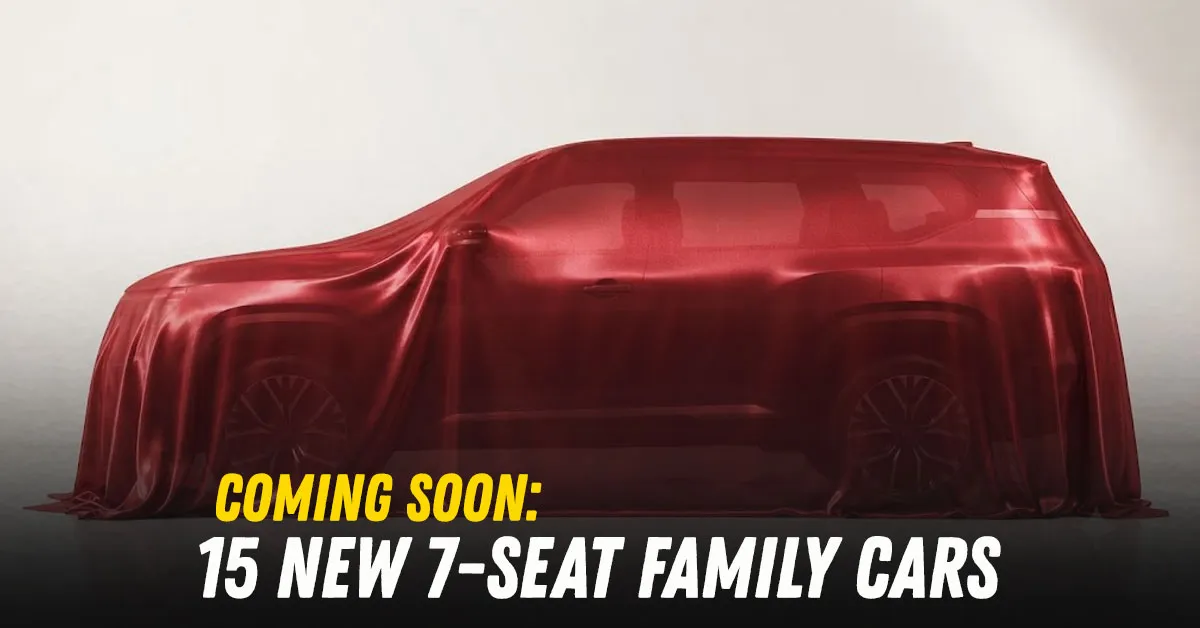
Seven-seater cars and SUVs enjoy strong acceptance among Indian families. Most large families prefer to own a seven-seater- be it SUVs or MPVs. Most carmakers already have products in this segment. Several new seven-seat SUVs and MPVs are expected to launch in the coming months. These include internal combustion models, hybrids and EVs from various manufacturers. Here are 15 launches to wait for.
JSW MG Motor India is set to launch a new electric SUV on August 26, 2026. It will likely be called the Hector Tomahawk. It will be an all-new product based on the company’s recently-unveiled ADAPT platform. This powertrain can support multiple electrified powertrains.
This electric SUV will have a seven-seater configuration and will come with a battery pack that claims a range of over 530 km per charge. It will reportedly be a 69.2kWh LFP unit. The front-mounted electric motor will make 204 PS and 310 Nm. Official teasers have confirmed that this EV will have a roomy, comfortable, and tech-laden cabin.
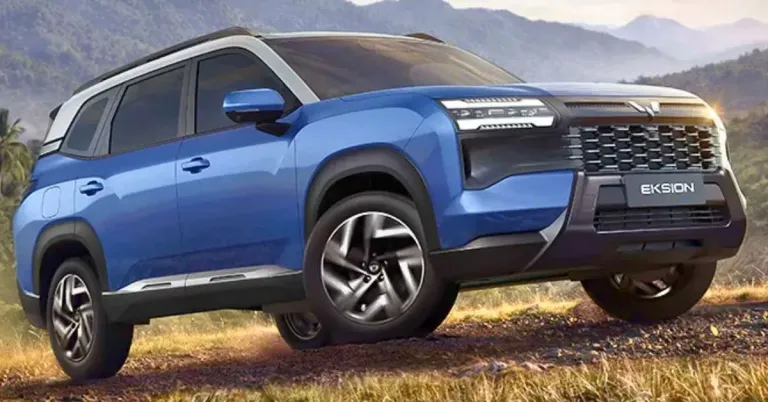
MG will also introduce a plug-in hybrid version based on the ADAPT platform, which will likely be called the Hector Hawk. It is expected to become the first relatively affordable seven-seat plug-in hybrid SUV in India, when launched. It will use a 1.5-litre petrol engine-based plug-in hybrid setup. This mates the engine with a 20.5kWh battery and an electric motor. The setup will make around 197PS and the vehicle will have an all-electric range of up to 125km. The success of this model, will depend heavily on its pricing.
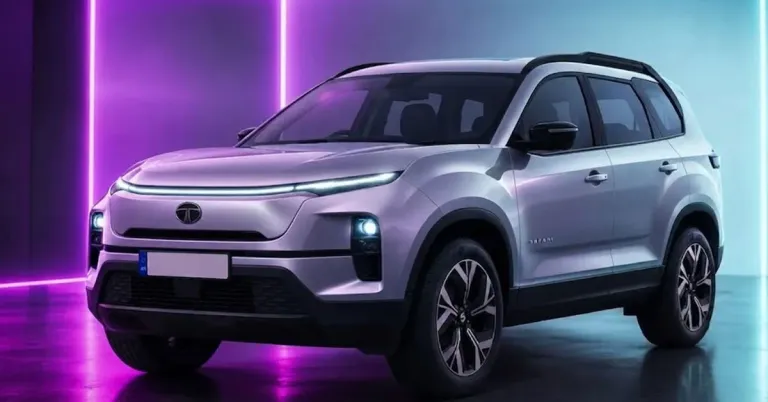
Tata Motors will launch its first three-row electric SUV around the festive season this year. It will be the electric version of the Safari, and will sit above the Harrier.EV in Tata’s portfolio. It will be based on the Harrier.EV’s Acti.EV+ platform and will likely come with two battery options- 65kWh and 75kWh. There are also reports that the higher variants will feature a new, 80kWh battery shared with future Avinya models.
This electric SUV will offer dual-motor and single-motor setups. The All-wheel drive (QWD)-equipped version could have a torque of 504 Nm. The Safari.EV will share several of its features with the Harrier.EV. Additionally, it will also get features like the triple-screen setup.
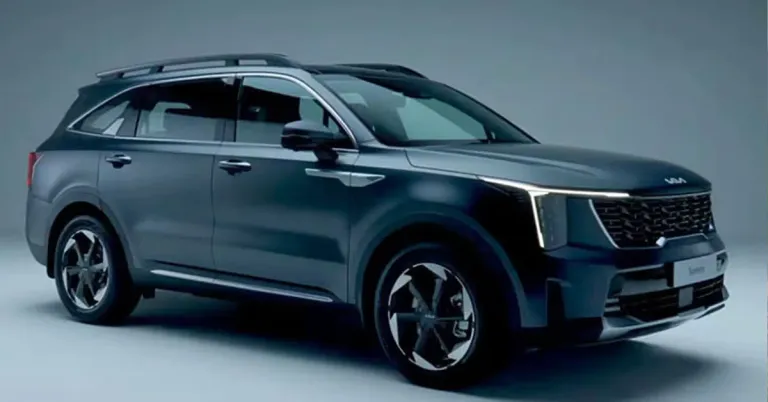
Kia will launch the Sorento on September 4, 2026. It will be offered in five-, six-, and seven-seater configurations, and will become the company’s flagship SUV. Two powertrains will be offered- 2.2L turbocharged diesel and a 1.6L turbo petrol strong hybrid. The SUV will be equipped with all wheel drive and automatic transmissions. The Sorento will have a feature-packed cabin that offers generous space. Kia has already unveiled it officially and we expect the prices to start at around Rs 28 lakh. This will place it between the XUV 7XO and the Fortuner in terms of pricing.
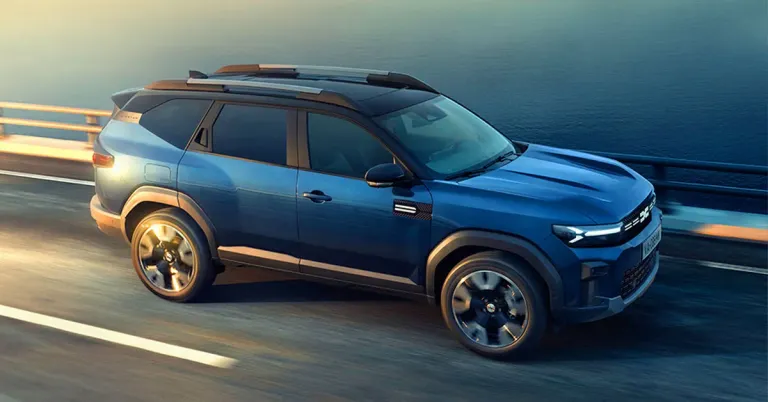
Renault will launch a seven-seater SUV based on the Duster’s platform (RGMP). According to previous spy sightings, it will likely be based on the Dacia Bigster sold overseas. Expect the launch in the second half of 2026.
The Bigster-based SUV will have three rows of seat and a wheelbase of around 2.70 metre. It will likely use the same 1.3L turbocharged petrol and 1.8L strong hybrid engines as the new Duster.
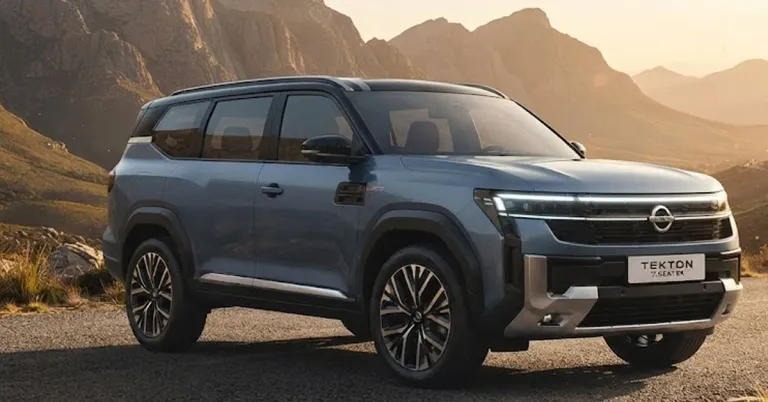
Nissan has also announced its plans to launch a seven-seat SUV in early 2027. From what we understand, it will be its own version of the Bigster. It will use the same RGMP platform but will have a substantially different visual identity. It will be powered by the 1.3L turbo-petrol engine as the outgoing Tekton.
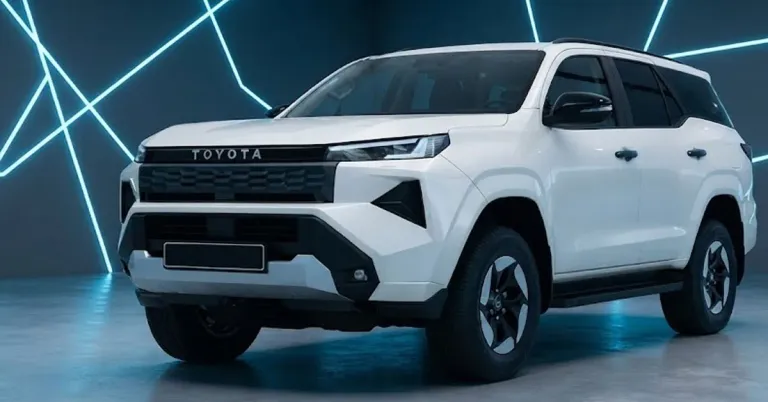
The Fortuner is due for a full generational update. We lack clarity on the actual launch timeline of this product. Speculations point to an early 2027 market-debut. It will come with significant design changes. In terms of styling, it is likely to borrow heavily from the 9th generation Hilux. The cabin experience will also improve. The new Fortuner will get more features and better trims and materials. Toyota is likely to retain the 2.7-litre petrol and 2.8-litre diesel engines. A four-wheel-drive system should continue to be available on selected diesel variants.
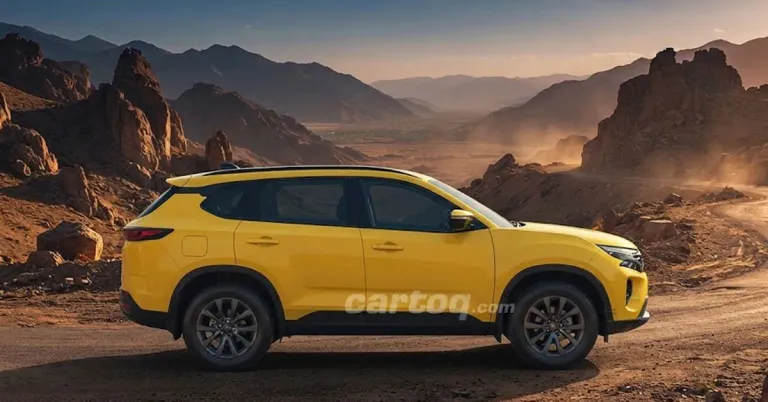
Maruti Suzuki is working on a seven-seater SUV based on the Grand Vitara. The project is currently codenamed Y17. It could launch towards the end of 2026. It will have a longer wheelbase and length (thanks to bigger overhangs) than the regular SUV. This SUV will have a tech-heavy cabin and will likely use the same 1.5-litre petrol and 1.5-litre strong-hybrid powertrains as the five-seater.
Toyota is also preparing its own version of this SUV. The vehicle has already been spotted testing, showing the increase in length and wheelbase. Like the Grand Vitara and Hyryder, the seven-seater versions will also share most of their components, including powertrains.
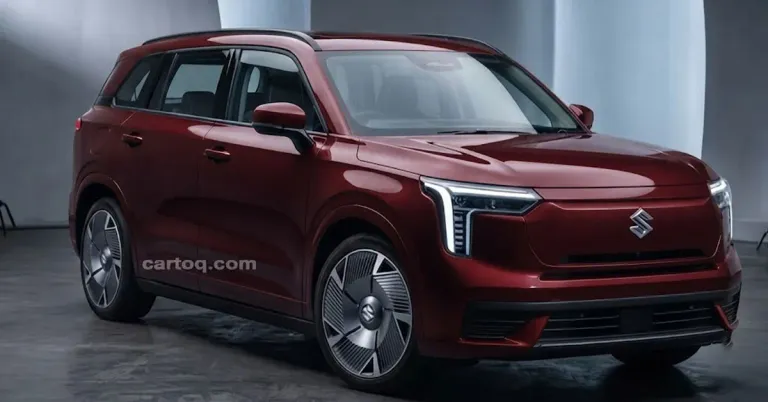
Maruti Suzuki is also working on a three-row electric MPV. The project is currently codenamed YMC. Test mule sightings have indicated that it will have a completely fresh design, and have great road presence. It will have a tech-loaded cabin. This electric MPV will be based on the Heartect-e platform and will likely use 49kWh and 61kWh battery packs.
Toyota is also likely to launch its own version of this electric MPV sometime in the future. It will be based on the same platform but may come with different battery sizes. The styling will also be different. The exterior design is likely to adhere to Toyota’s styling principles.
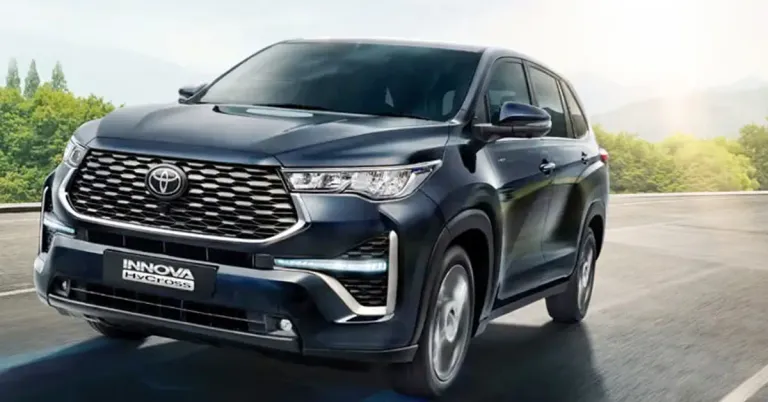
Toyota will launch more affordable strong hybrid variants of the Hycross soon. These trims will offer fewer features than the outgoing strong hybrid variants, and will, in the long run, replace the Crysta. These variants will be powered by the familiar 2.0-litre strong-hybrid powertrain, paired with an e-CVT gearbox.
Maruti Suzuki may introduce a similar update on the Invicto, its badge-engineered version of the Hycross. The Invicto is the only Maruti product that is only available as a strong hybrid. Making it more affordable will likely add to its acceptance here.
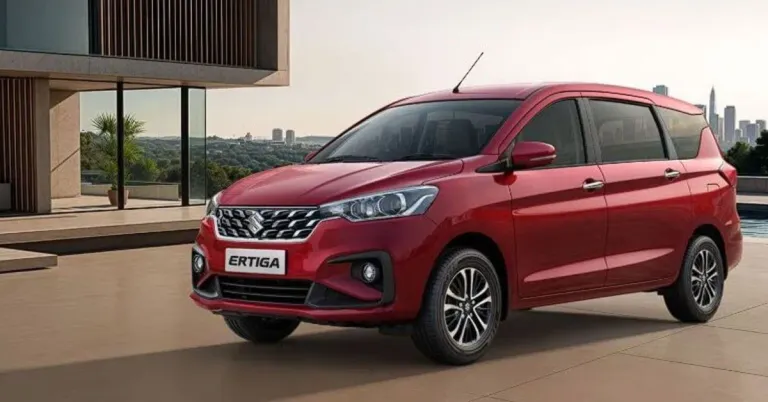
The Ertiga has a strong foothold in the seven-seater segment. It is set to get a facelift in the near future. It will bring minor (exterior) styling changes and more features to the MPV. Powertrains will remain the same- 1.5-litre naturally aspirated petrol and CNG. The CNG version is likely to get an underbody CNG tank.
Toyota is likely to introduce a corresponding facelift on the Rumion, its version of the Ertiga. Changes are likely to remain identical.