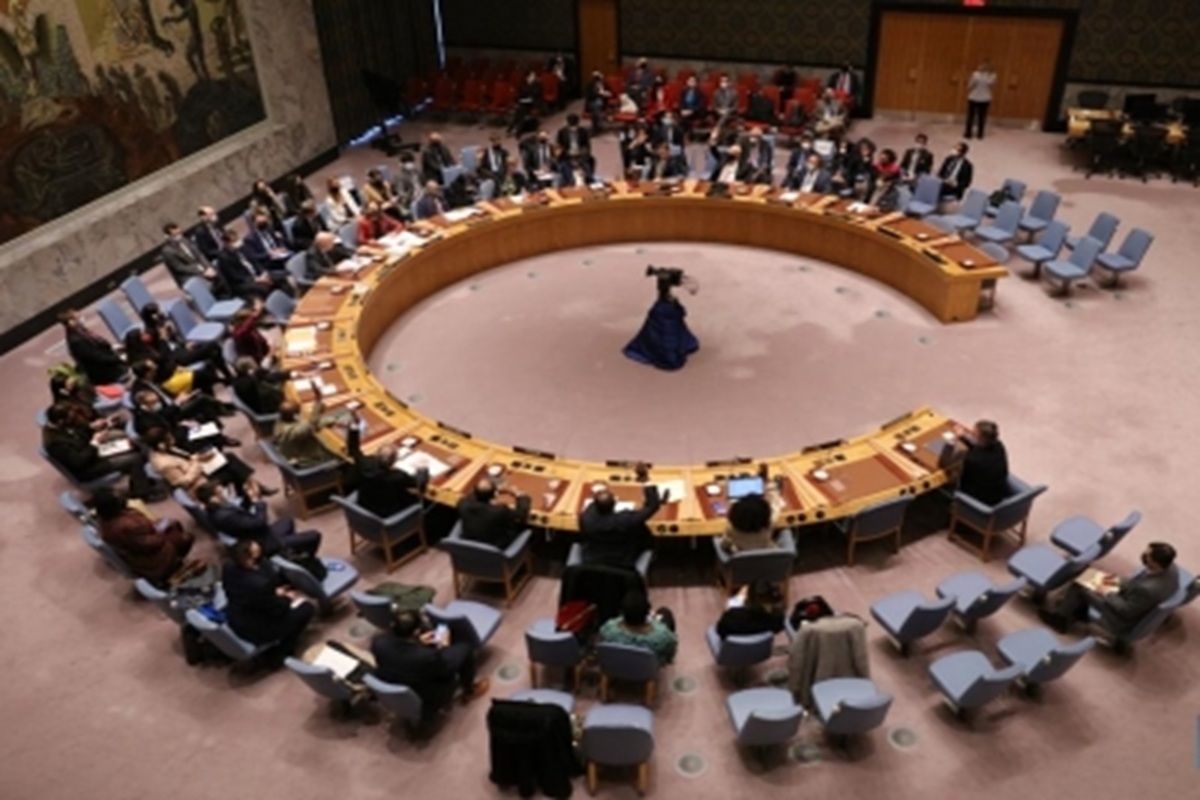
During the annual debate, leaders sought to increase the number of both permanent and non-permanent members of the Security Council. Besides, Africa was also asked to be given permanent representation with equal rights as the existing permanent members.
The leaders of African countries gave the strongest stand on this issue. At the same time, Japan and many smaller countries also stressed the need for early reform of the Security Council. They argue that the current global order does not reflect today's political, economic and regional realities, so reform is necessary to maintain the credibility and effectiveness of the United Nations.
Kenyan President William Ruto said that the imbalance of power between the General Assembly and the Security Council can no longer be defended.
Ruto said, “Every country is sovereign and equal under the UN Charter, but in the most serious matters like war and peace, five countries have permanent power, which the other 188 countries do not have. The equality that is talked about in this General Assembly ends at the door of the Security Council.”
Ruto said Africa has 54 member states in the United Nations, but Africa has no permanent voice in the Security Council, which holds the primary responsibility for international peace and security. He said that talks regarding reform of the Security Council have been going on for 17 years, but till now no result has been achieved.
“We should not assume that reform is not possible just because it is difficult to do,” he said.
Sierra Leone, the country coordinating the African Union's 'Committee of Ten' for the reform of the Security Council, also strongly put forward Africa's common stance. It has demanded at least two permanent seats, which would have all the rights like the existing permanent members. If the veto right continues, African permanent members should also have this right. Apart from this, Africa has demanded five temporary seats.
“The Security Council still reflects the world of 1945,” said Julius Maada Bio, President of Sierra Leone. “Africa is home to more than 1.6 billion people and a large part of the Security Council's work concerns Africa, yet Africa still does not have a permanent seat.”
Nigeria's Vice President Kashim Shettima also made a similar demand. Shettima said, “Reform of this institution should start with the new form of the Security Council, because the world of 2026 cannot be kept tied to the system of power decided in 1945.”
He said that it cannot be that issues related to Africa continue to be included in the agenda of the Security Council, but Africa has no place in its permanent membership.
South African Minister Ronald Lamola said that true reform of the global system should start from the Security Council. He said that a large part of the work of the Security Council remains related to African conflicts, yet Africa has been kept out of permanent membership.
Lamola said, “Africa should have got permanent seats in the Security Council and all the rights associated with permanent membership long ago.”
Ghana's President John Dramani Mahama described Africa's absence of a permanent seat on the Security Council as 'fundamentally unacceptable in the 21st century'. “Security Council reform is not a favor to be done to Africa. It is essential for the legitimacy, credibility and future of the United Nations,” Mahama said.
Japanese Prime Minister Sanae Takaichi also said that there is a need for immediate reform in the Security Council. He said that the current structure of the Council was created according to the international situation of 1945. He supported increasing the number of members, both permanent and temporary.
Takaichi said that we will have to change it without delay and create a framework that accurately reflects the real situation of today's international community. However, in its address, Japan did not name any specific country for permanent membership.
The South African country Lesotho supported comprehensive reforms under the 'Ezulwini Consensus'. Caribbean country Saint Lucia sought to increase representation of countries from Africa, Asia-Pacific, Latin America and the Caribbean. Niger raised the question that when none of the 54 countries in Africa has a permanent seat, how can this institution gain the trust of the world.
For India, this debate is also related to its long-standing demand for permanent membership of the United Nations Security Council.
India, Brazil, Germany and Japan together form Group of Four (G4). The group supports increasing the number of both permanent and non-permanent seats in the Security Council. The four G4 countries also support each other's claim for permanent membership.
At the same time, the African Union demands two separate permanent seats for Africa under the Ezulwini consensus.
There are a total of 15 members in the United Nations Security Council. Of these, China, France, Russia, Britain and America are five permanent members and they have the right to veto. The remaining 10 members are elected for a two-year term.
Changes in the UN Charter require the approval of two-thirds of the members of the General Assembly. After this, two-thirds of the member countries of the United Nations also have to ratify it. This requires the approval of all five permanent members of the Security Council.