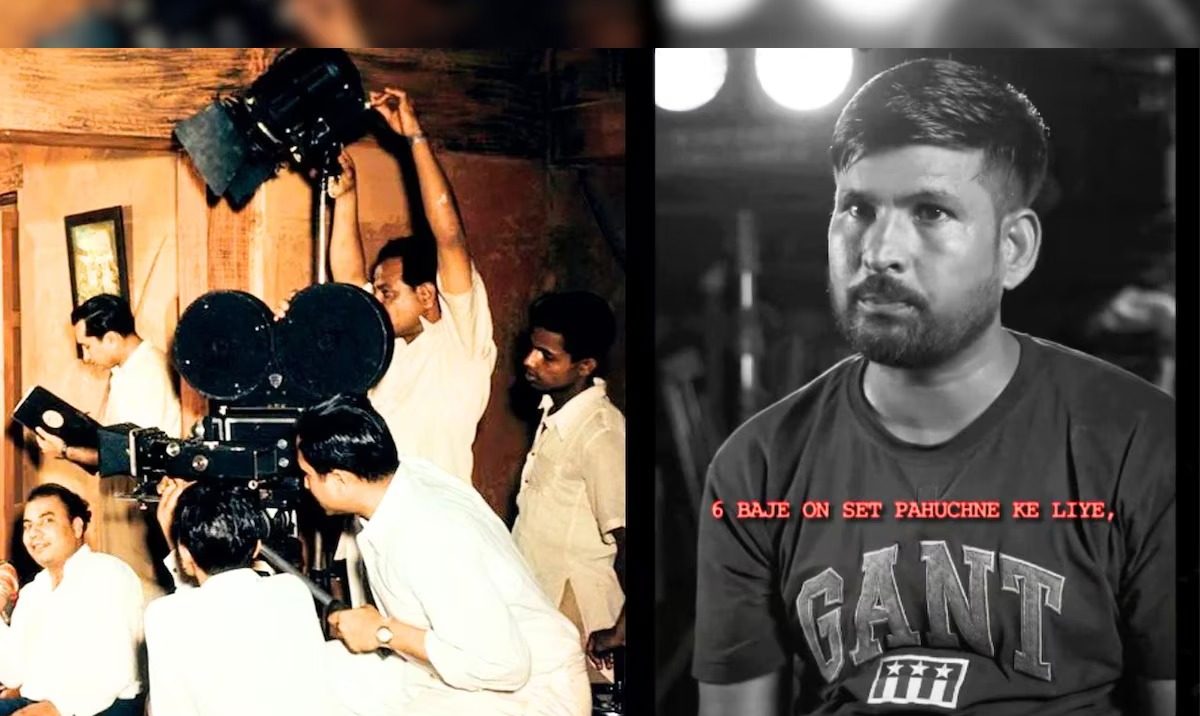
Tezzbuzz Desk – When a film appears on the big screen with beautiful lighting and stunning visuals, it’s behind the scenes, not just the stars in front of the camera, but the hard work of hundreds of people. This includes the lightmen who manage the entire lighting of the shooting set. But the lives of these people who make the screen shine are filled with many difficulties.
Long working hours, low wages, no overtime pay and months of waiting for payment… many lightmen working in Delhi have now openly exposed these problems of the film industry.
In a docu-series by production house Reelzen Creative, several lightmen from Delhi have talked about their work and the challenges associated with it.
Work starts at 2-3 in the night
A lightman’s work on a shooting set begins long before the cameras even turn on. Suraj Gautam, owner of Wide Light in Delhi, said that sometimes he has to keep call times as late as 3 a.m.
This is because the entire lighting setup on set needs to be done before the shoot even begins. By the time the camera and actors arrive, the lights must be positioned, set up, and the entire set ready for the shoot.
According to freelance lightman Dinesh Bharti, his work schedule doesn’t have fixed hours. Sometimes he has to start work at 2 a.m., sometimes at 5 a.m.
Do you work for 10 hours or 18 and get Rs 1800?
The lightmen’s biggest complaint is their daily wages. They say they get paid around 1,800 rupees for a day’s work.
The problem is that whether the shooting is over in 10 hours or goes on for 17-18 hours, many times their remuneration remains almost the same.
According to Dinesh Bharti, overtime is sometimes paid after working 17 to 18 hours. However, if a few hours more than the stipulated time are worked, no additional payment is given.
Lightmen say that inflation is constantly rising and their work requires a lot of physical labor. Therefore, they are demanding an increase in their daily wages from ₹1,800 to at least ₹2,000.
‘The hardest work, yet the least money’
Dinesh Bharti, speaking about the plight of lightmen, said that their work in the film industry is extremely demanding, but the pay is meager. From carrying lighting equipment to setting it up on set, and constantly making adjustments during shoots, lightmen have to work long hours. Despite this, he feels their hard work doesn’t receive the recognition and benefits they deserve.
Waiting for 2-3 months for payment
Not only low wages, but not getting paid on time has also become a major problem for lightmen. According to Suraj Gautam, when it comes to paying lightmen or spot boys, producers often cite lack of funds. Meanwhile, freelance lightman Amar Singh said that previously, they used to get paid the same day after shooting was completed, but now the situation has changed. He says that despite the era of online transactions, they often have to wait two to three months for payment.
“I need work immediately, but not on time.”
Lightman complains that people involved in production want work on time and immediately, but when it comes to payment, they are made to wait for a long time.
This delay directly impacts their household expenses and daily needs. Long-term payments lead to financial difficulties.
Lightmen, the behind-the-camera workers in the film and TV industry, are a crucial part of any shoot. From accurately positioning actors on screen to creating the atmosphere for each scene, their roles are crucial. Despite this, these workers say they still struggle to secure basic necessities like decent wages, fixed working hours, and timely payment.