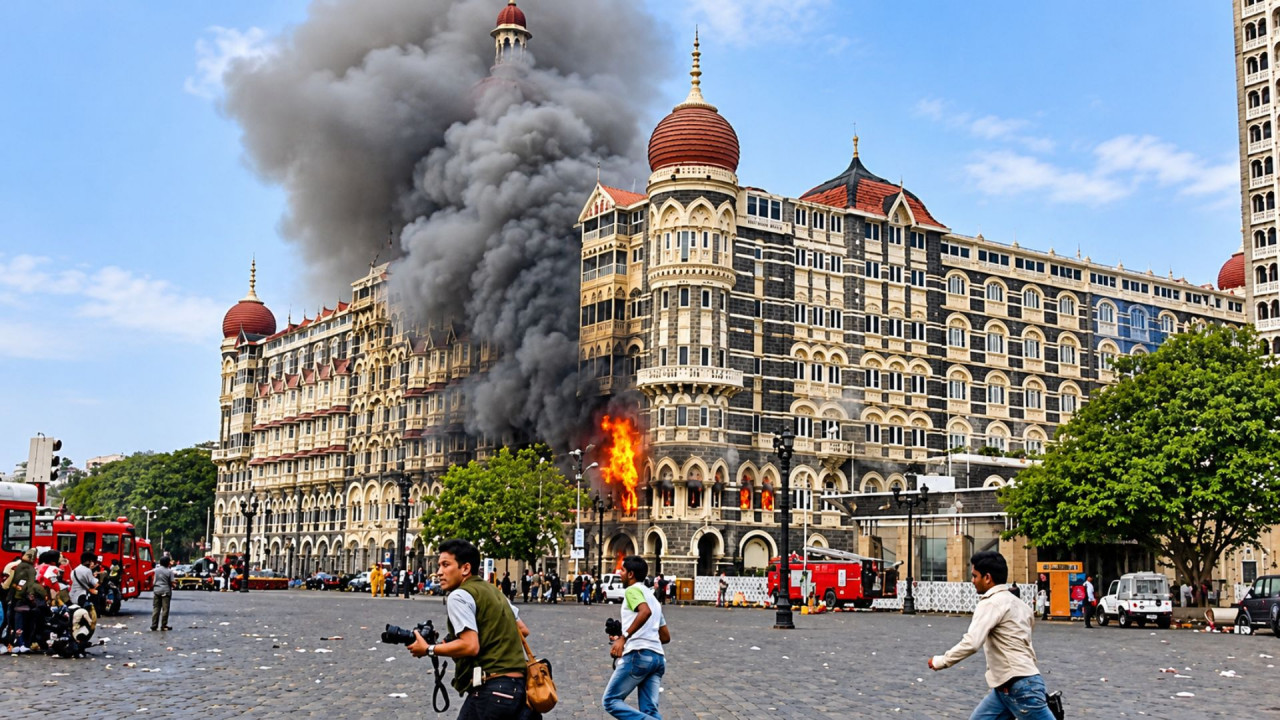
New Delhi: It has been 18 years since the terrorist attacks that took place on 26 November 2008 in the country's financial capital Mumbai, but the memories and wounds of that horrific scene are still fresh in the hearts of the people. These attacks, which lasted for 60 hours, not only terrified Mumbai, but also exposed the weaknesses of India's security and intelligence system. On the 18th anniversary of the attack, Mumbai is once again preparing to pay tribute to the brave soldiers and innocent people who lost their lives in this dark night of terrorism.
Attack by 10 Lashkar terrorists, 166 people died
On November 26, 2008, 10 heavily armed terrorists of Lashkar-e-Taiba, who reached Mumbai by sea route from Pakistan, targeted many important places of the city. In these attacks, 166 people, including foreign nationals, were killed, while more than 300 people were injured. The terrorists had carried out indiscriminate firing and blasts at many places including Chhatrapati Shivaji Maharaj Terminus, Taj Mahal Palace Hotel, Trident Hotel, Nariman House, Leopold Cafe and Cama Hospital.
This was one of the deadliest terrorist attacks in any city in India. However, in the last three decades, Mumbai has faced many major terrorist attacks. On March 12, 1993, 257 people were killed in bomb blasts at 12 places.
Previous attacks, encounters and arrest of Ajmal Kasab
On July 11, 2006, 188 people lost their lives in serial blasts in local trains. On 13 July 2011, 27 people were killed in three blasts in Dadar, Jhaveri Bazaar and Opera House. During 26/11, terrorists had taken people hostage at many places and there was a long encounter with the security forces. Mumbai Police, Armed Police Forces, Navy Marine Commandos and National Security Guard (NSG) personnel jointly conducted the operation and ended the attack after about 60 hours.
During this period, many soldiers sacrificed their lives while protecting the country. Ajmal Kasab was captured alive among the 10 terrorists involved in the attack. After a trial, he was hanged in November 2012. David Headley, who was involved in the attack conspiracy, had given a statement in the Indian court through video conferencing from the American court.
Tribute to martyrs and changes in security arrangements
At the same time, another accused Tahawwur Rana was brought to India from America in 2025. However, many of the major conspirators and masterminds of these attacks are still beyond the reach of India and many of them are believed to be hiding in Pakistan. Every year, tributes are paid to the martyrs at the places targeted in the attacks, including the Mumbai Police Headquarters. Mumbaikars also gather at 'Prerna Sthal', where the statue of Assistant Sub-Inspector Tukaram Omble is installed. He had faced terrorists with sticks at Girgaum Chowpatty in South Mumbai and was martyred while capturing Kasab. Even after 18 years, the tragedy of 26/11 reminds the country how important is vigilance, unity and strong security arrangements against terrorism. After 26/11 attacks, India has made many major changes in maritime security, intelligence system and anti-terrorism operations.
6 accused including Hafiz Saeed still absconding
The case against Jabiuddin Ansari alias Abu Jundal, who taught Hindi to 10 Lashkar terrorists, is still going on. At the same time, the orders declaring organization leader Hafiz Saeed and Zaki-ur-Rehman Lakhvi and six other conspirators as fugitives are yet to be implemented. In July this year, the special court had given orders to declare six absconding accused as fugitives. In August and September this year, the prosecution had told the court that it had requested the Home Ministry to implement the order declaring six absconding accused as fugitives in the 2008 Mumbai terror attack case. However, no response has yet been received from the Home Ministry on this request.