
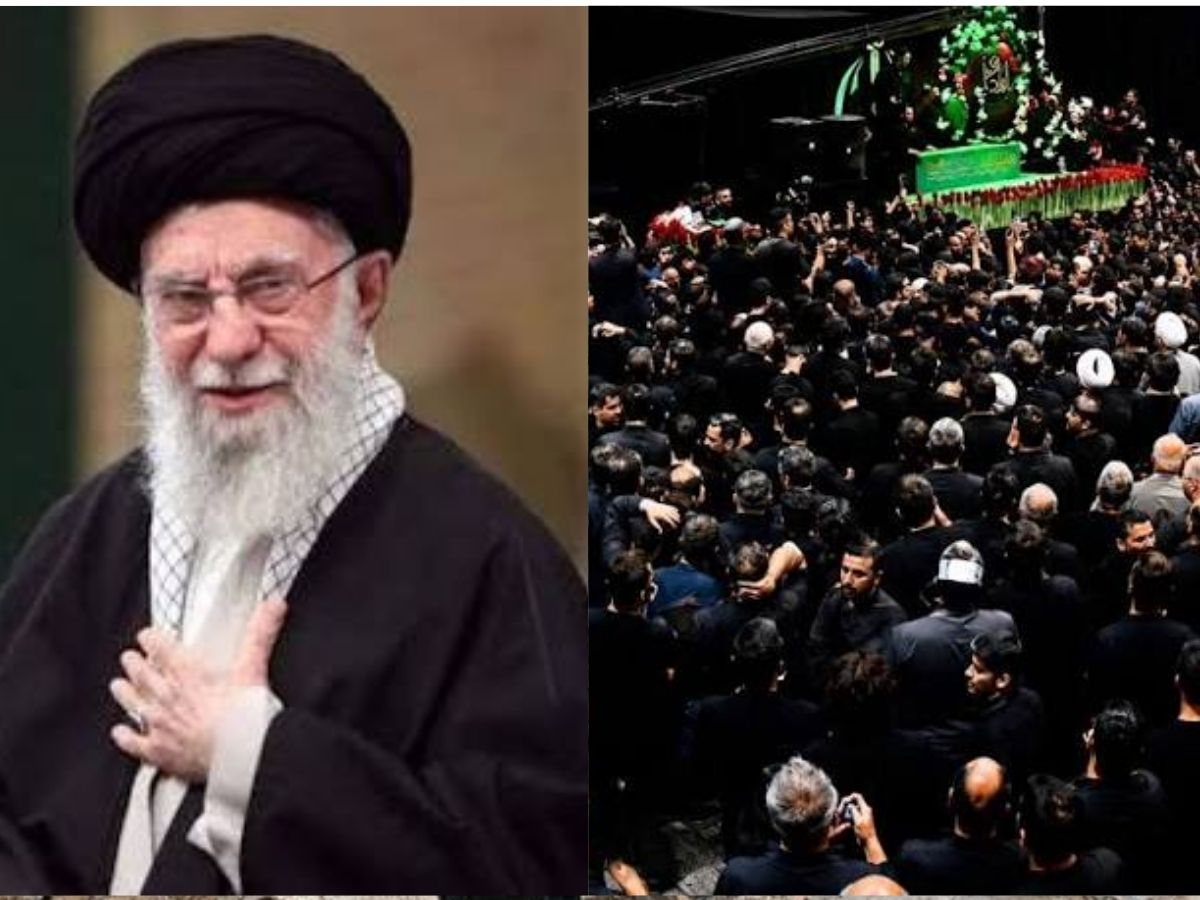

With the commencement of the official funeral ceremonies for Supreme Leader Ayatollah Ali Khamenei in Tehran, the multi-day event is expected to draw millions of mourners before the final burial. Rather than a single farewell, the progression of ceremonies will cross some of the most politically, historically, and spiritually significant cities in Shia Islam. Before the final burial takes place in Mashhad, the funeral processions will move through Qom, Najaf, and Karbala. Every destination has been selected with a reason and highlights Khamenei’s political authority, and religious influence that defined his decades-long journey.
Farewell From Capital Tehran
Tehran serves as Iran’s administrative and political nucleus, where Ayatollah Khamenei spent the vast majority of his life after ascending to the supreme leadership. Holding the initial grand ceremonies symbolizes his position as the nation’s highest political and religious authority. Following the opening rites at the Grand Mosalla, millions of citizens from various provinces alongside foreign dignitaries representing around 100 countries have arrived in the capital to pay their final respects.
The next station for the procession is Qom, recognized as the spiritual and theological capital of Shia Islam. “Qom has played a foundational role in modern Iranian history. Beyond its revolutionary legacy, it holds immense spiritual weight due to the presence of holy sites like the Shrine of Hazrat Fatima Masumeh, the sister of the eighth Shia Imam, Imam Reza and the Jamkaran Mosque,” explains Kashmir-based Shia scholar and cleric Aga Syed Mohammad Hadi, who was invited to attend the ceremonies.
Why Najaf and Karbala Chosen for Khamenei’s Funeral
The decision to include the Iraqi holy cities of Najaf and Karbala carries deep transnational significance for the wider Shia world. Najaf is home to the sacred Shrine of Imam Ali, while Karbala marks the historic site where Imam Hussain and his 72 companions were martyred.
According to Aga Hadi, the inclusion of these cities also underscores the ideological stance of resistance championed by the late leader: “The late leader frequently invoked the sermons of Imam Hussain during geopolitical standoffs with Western powers, particularly when navigating economic sanctions. He often warned his followers about entering deceptive pacts with adversaries who have historically failed to honor their commitments,” Hadi noted.
Reports indicate that public figures and prominent clerics across Iraq formally requested the Iranian leadership to allow the funeral procession to pass through these holy sanctuaries. Bringing the ceremonies to Najaf and Karbala serves to emphasize Khamenei’s legacy within the broader global Shia community beyond the borders of Iran.
Final Goodbye in Mashhad
The weeklong ceremonies will culminate in Mashhad, Iran’s second-largest city, fulfilling a personal wish left in the leader’s final testament. He will be laid to rest within the complex of the Imam Reza Shrine, the burial site of the eighth Shia Imam. Born and raised in Mashhad, the city holds immense personal significance for Khamenei due to his ancestral roots and early religious training. Laying his remains to rest near the highly revered shrine fuses his personal life story with deeply rooted spiritual symbolism for his followers and the nation.
Also Read: Panic and Stampede-Like Situation Near Kashi Vishwanath Temple’s VIP Gate After Accidental Firing
The post 2 Countries, 5 Cities, 6 Days: The Significance of Ayatollah Khamenei’s Funeral Route appeared first on NewsX.

Comments are closed.