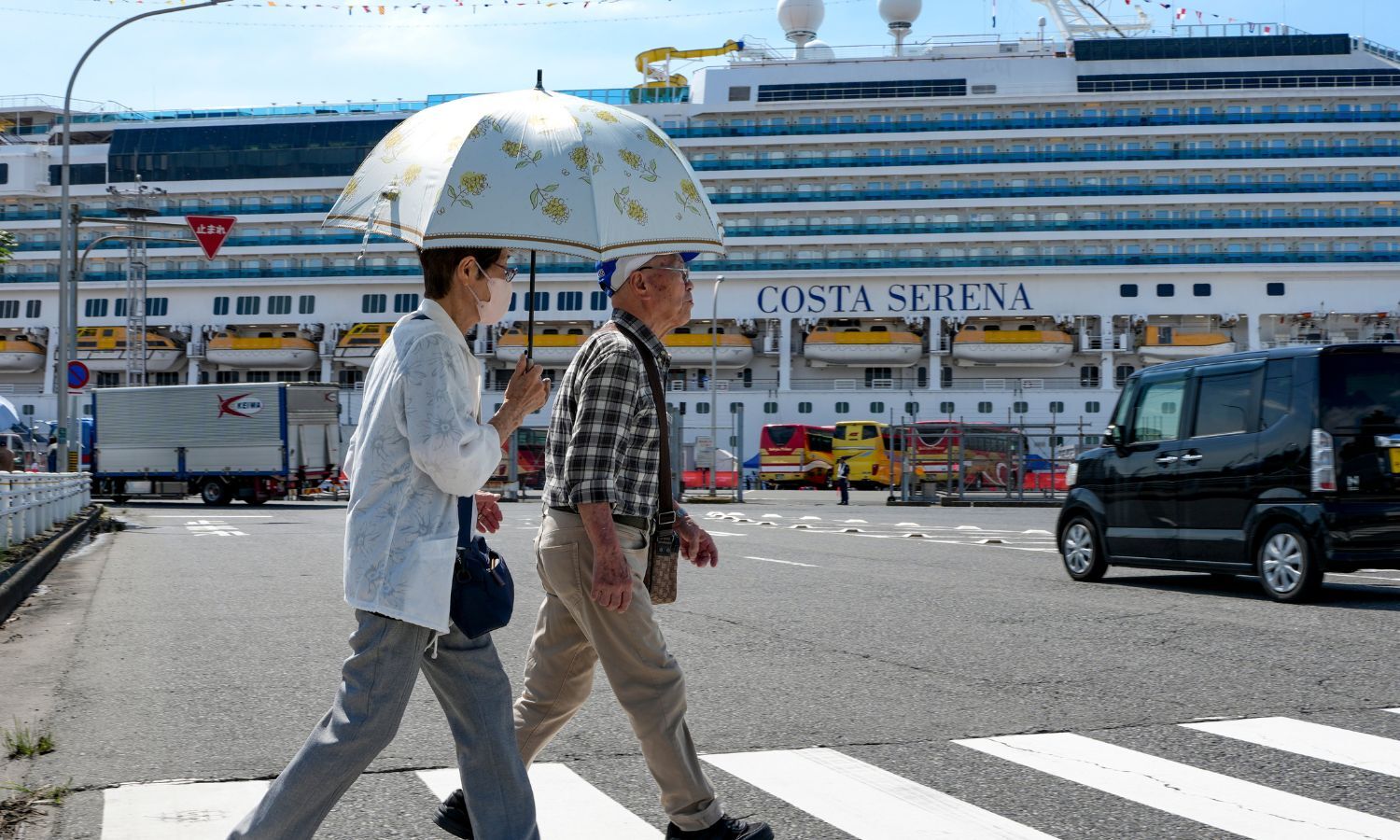
The 2026 Asian Games in Aichi-Nagoya has plunged into deep operational chaos in the lead-up to the opening ceremony, with headlines ranging from struggles for accommodation to short, cardboard beds and faraway training venues dominating media feeds more than the performances on it.
Japan, originally awarded the hosting rights a decade ago in 2016, had an initial projected budget of ¥100 billion. The Aichi-Nagoya Asian Games Organising Committee (AINAGOC) later watched the costs balloon up to ¥370 billion or USD 2.38 billion.
Driven by a combination of global macroeconomic shocks, including the supply chain disruption due to Covid-19, geopolitical instability, and a “historic depreciation” of the Japanese Yen, the host city found itself staring down a major financial crisis.
To avert complete financial collapse, the authorities initiated unprecedented cost-cutting measures — ones that could fundamentally alter the future of the Asian Games.
The most drastic of these measures was the cancellation of a ¥30 billion (USD 224 million) athletes’ village. Instead, the AINAGOC leased an Italian cruise ship named Costa Serena and docked it at the Nagoya port and constructed a temporary village using containers to house the influx of athletes and officials.
While these austerity measures helped the hosts shave about ¥100 billion off their deficit, they have now grossly exacerbated the logistical nightmare.
The crisis in Aichi-Nagoya is an inevitable manifestation of what one could argue is a structurally flawed economic model in how these big-ticket sporting events like the Olympics, Commonwealth Games, or Asian Games are conducted.
For decades, the International Olympic Committee (IOC), Olympic Council of Asia (OCA), and Commonwealth Games Federation (CGF) have insisted that hosting these events catalyses urban regeneration, boosts tourism, and elevates global prestige.
However, a deeper look into historical data suggests otherwise.
Host cities and nations tend to systematically endure massive cost overruns, severe operational deficits, and macroeconomic trauma that takes decades to recover from. This pattern can be traced back to the 1960 Rome Olympics, and it has an academic name: “The Iron Law of Megaprojects.”
Winner’s Curse & Iron Law of Mega Projects
The total expenditures in mega sporting events are divided into two groups. The first, called Organising Committee for the Olympic Games (OCOG) costs, includes venue construction, security, event administration, and technology.
The second includes non-OCOG infrastructure or indirect capital, which includes broader urban investments triggered by the event such as airport expansions, high-speed rail lines, and general urban beautification.
The Oxford Olympic Study 2016, led by Bent Flyvbjerg, Allison Stewart, and Alexander Budzier, explains it in detail.
The study, which tracked 16,000 megaprojects globally and standardised costs in real terms against the budget set when a host city is selected, draws a stark conclusion.
It notes that Olympic Games possess the highest average cost overrun of any megaproject category in the world, averaging 156% to 172%.
In comparison, nuclear power plants have an average cost overrun of 120% while information technology megaprojects, where a fifth of projects blow past by 447%, fail to match the consistency of Olympic failures.
In fact, all of the Olympic Games held since 1960 have experienced cost overruns with nearly half of them spending double their initial budget.
Economist Andrew Zimbalist, in his book Circus Maximus, traces this mechanism to what is called “Winner’s Curse”.
Because hosting rights are awarded through competitive bidding, the city willing to promise the rosier numbers and the lowest costs is, almost by definition, the one that has most thoroughly detached its budget from reality. Zimbalist’s research goes further, arguing that the “multiplier effect” cited in bid documents routinely ignores the money a host economy loses elsewhere in the process, leaving cities holding long-term debt and infrastructure nobody particularly needs.
Olympic overruns
The early Olympic Games offered a useful contrast to what came later. London’s 1948 Games, hosted by a post-war Britain, cost £732,268 and turned a small profit.
Helsinki in 1952 and Melbourne in 1956 followed the same modest template, relying on existing venues. The 1960 Rome Olympics remained largely contained.
Then something shifted.
The 1964 Tokyo Olympics ran 135% over budget while building the Shinkansen, Japan’s famed bullet train network, alongside its stadiums.
The 1972 Munich Games overshot by more than 200% chasing architectural ambition.
The 1976 Montreal Olympics, four years later, still stands as a cautionary tale for every host city. A Games budgeted at USD 124 million finished at nearly USD 1.6 billion, a 720% overrun. The Olympic Stadium, nicknamed “The Big Owe,” eventually cost USD 1.47 billion once decades of roof repairs and compounding interest were tallied.
Quebec introduced a special tobacco tax in 1976 to service the debt and that tax was not retired until November 2006, 30 years after the closing ceremony.
The 1984 Los Angeles Olympics broke the cycle, but only because no other city wanted to host the Games after Montreal’s disaster. Organisers used that leverage to refuse municipal financial guarantees, relying instead on existing private infrastructure, and it returned with a USD 250 million profit.
The Atlanta 1996 Games replicated the model and returned with a modest profit. But it displaced around 30,000 low-income residents.
Every other Games has trended in the other direction. Barcelona 1992 overran by 266% while rebuilding its waterfront.
Athens 2004 came in around 49% over an already inflated budget, with true infrastructure costs closer to €14 billion. It was the primary reason behind Greece’s sovereign debt crisis, which erupted in 2010 and required an international bailout and massive austerity measures at a national level.
Beijing 2008 crossed $40 billion at an overrun of 163%. Rio 2016 blew past its original figure by 352% and needed a federal bailout to pay public-sector salaries.
Tokyo 2020, delayed by the pandemic and stripped of ticket revenue, finished 244% over budget.
Even the most recent 2024 Paris Olympics, marketed as a leaner, more sustainable Games built around existing venues, still doubled its real-term budget for a 115% overrun.
|
Year |
Host City |
Total Cost / Outturn |
Cost Overrun (%) |
|
1948 |
London |
£732,268 |
N/A |
|
1952 |
Helsinki |
Mk 1.58 Billion |
N/A |
|
1956 |
Melbourne |
A£5.4 Million (budget) |
N/A |
|
1960 |
Rome |
N/A |
+9% |
|
1964 |
Tokyo |
$1.926 Billion |
+135% |
|
1968 |
Mexico City |
$176 Million |
+170% |
|
1972 |
Munich |
$1.009 Billion |
+204% |
|
1976 |
Montreal |
$1.596 Billion |
+720% |
|
1980 |
Moscow |
$2.0 Billion |
+50% |
|
1984 |
Los Angeles |
$413 Million |
+1% |
|
1988 |
Seoul |
$4.0 Billion |
+33% |
|
1992 |
Barcelona |
$9.3 Billion |
+266% |
|
1996 |
Atlanta |
$1.8 Billion |
+147% |
|
2000 |
Sydney |
$5.02 Billion |
+90% |
|
2004 |
Athens |
$8.5B – $11B+ |
+49% |
|
2008 |
Beijing |
$40B+ |
+163% |
|
2012 |
London |
$15.0B – $16.8B |
+76% |
|
2016 |
Rio de Janeiro |
$13.6B – $23.6B |
+352% |
|
2020 |
Tokyo |
$13.7B – $33.4B |
+244% |
|
2024 |
Paris |
$8.7 Billion |
+115% |
The Winter Games tell a parallel story on a smaller scale. Innsbruck in 1964 leaned entirely on existing Austrian alpine infrastructure and stayed cheap.
Lake Placid in 1980 needed a federal bailout after a 324% overrun. Nagano’s 1998 accounts remain a mystery because a bid-committee official reportedly ordered the paperwork burned after the 2002 Salt Lake scandal broke.
Sochi 2014 stands as the most expensive Olympics ever staged, with estimates ranging as high as $55 billion and a 289% overrun. Roughly 85% of that sum was spent building an entire resort town from nothing.
Asian Games
The Asian Games followed a gentler trajectory for decades before catching up to Olympic-scale excess.
The first edition, hosted in Delhi in 1951, was organised out of a private apartment by S. S. Dhawan and Guru Dutt Sondhi with no government budget at all. When they lacked capital to host 11 competing nations, they turned to crowdfunding via private citizens. Around 17,000 people contributed, and a stadium was built for Rs 30 lakh using that capital.
The initial restraint evaporated once countries began treating the Games as a geopolitical marketing tool. Doha spent USD 2.8 billion, more than a billion dollars of it on airport upgrades alone, to position Qatar as a global aviation and tourism hub ahead of its eventual FIFA World Cup bid.
The Chinese national treasury absorbed Guangzhou 2010’s massive overrun. The 2022 Hangzhou Games were even bigger, with nearly USD 41 billion spent as per reports, while generating only USD 728 million in revenue.
The 2014 Games in Incheon showed what happens when a mid-sized democratic city tries to play the same game without a national treasury behind it. The original $1.62 billion budget required organisers to withdraw promised free flights for visiting nations and slash the operating budget just to stay afloat. It wasn’t enough.
The Incheon Metropolitan Government was left carrying 12.6 trillion won in total debt, and the city’s bond-repayment schedule kept climbing well past 2020, running an ongoing maintenance deficit on sixteen new stadiums that never found a post-Games purpose.
|
Year |
Host City |
Estimated Cost |
|
1951 |
New Delhi, India |
30+ Lakh Rupees |
|
1954 |
Manila, Philippines |
N/A |
|
1958 |
Tokyo, Japan |
N/A |
|
2002 |
Busan, South Korea |
$2.9 Billion |
|
2006 |
Doha, Qatar |
$2.8 Billion |
|
2010 |
Guangzhou, China |
$18.0 Billion+ |
|
2014 |
Incheon, South Korea |
$1.62 Billion |
|
2018 |
Jakarta, Indonesia |
$3.2 Billion |
|
2022 |
Hangzhou, China |
$30.0 Billion+ |
|
2026 |
Aichi-Nagoya, Japan |
$2.38 Billion |
Commonwealth Games
If the Olympics are straining and the Asian Games are stretching, the Commonwealth Games appear to be snapping.
Without Olympic-scale broadcast revenue or the deep state treasuries available to China or Qatar, the financial burden falls squarely on local ratepayers. Delhi’s 2010 edition remains the starkest warning, with a roughly USD 1 billion projection ballooning into a final bill exceeding USD 11 billion, a 1000% increase that generated negligible direct revenue in return.
Birmingham’s 2022 Games cost £811 million and were followed within a year by the city council’s declaration of effective bankruptcy.
Then came Victoria. Awarded hosting rights in April 2022 at a projected AUD 2.6 billion, the Australian state watched the figure climb toward AUD 7 billion within months and simply pulled out, paying a contractual penalty rather than accept the long-term debt.
Aichi-Nagoya troubles & failed initiatives
The 2026 Asian Games is where these two pressures collide. Japan is neither an autocracy that can absorb losses into the national treasury, as China did with Guangzhou 2010 and Hangzhou 2022, nor a city which could simply walk away as Victoria did ahead of the 2026 Commonwealth Games.
The result is the improvised, uncomfortable middle ground playing out at the Nagoya port currently, with container units and a cruise ship in crossfire.
The IOC has attempted to address these rising costs with “Agenda 2020” and its follow-up, “The New Norm,” a package of 118 reforms promising cheaper bids and reuse of existing venues.
The 2024 update to the Oxford Olympics Study tested these promises against Tokyo 2020 and Paris 2024 and found little to celebrate. Costs are still rising in significant terms.
Overruns, which had briefly trended downward before Beijing 2008, are worsening again. Paris, marketed as proof the reforms worked, still finished 115 per cent over budget.
Proposals requiring the IOC to co-guarantee ten per cent of any cost overrun have been rejected by Olympic officials outright.
What it means for India ahead of 2030 CWG?
Evidence spanning decades indicates that hosting a large-scale multi-sporting event is one of the most financially hazardous undertakings a state can undertake. It takes decades for economies to recover from the financial shock.
Meanwhile, on the other side, walking away from an event as a host or severe cost-cutting measures like Aichi-Nagoya come with their own set of challenges.
As Gujarat pours in Rs 300 crore already for the 2030 Commonwealth Games in Ahmedabad and pushes aggressively for the 2036 Olympic Games, the organisers must ensure the event doesn’t spiral out of control like Montreal 1976, Athens 2004, Aichi-Nagoya 2026 or even closer to home – Delhi 2010.