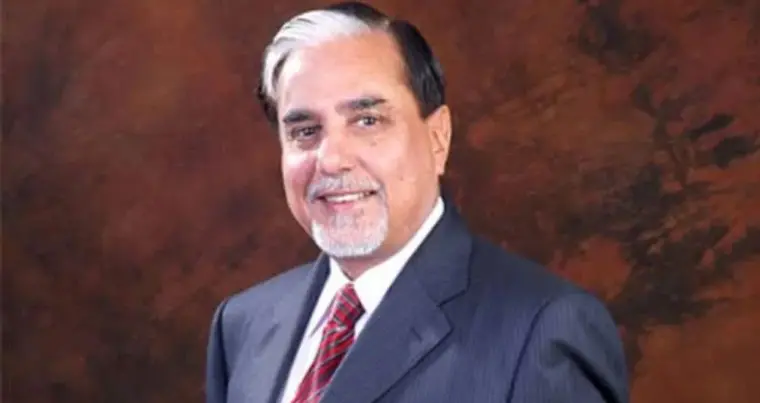
In the Subhash Chandra case, a five-member bench of NCLT stayed the order approving the repayment plan of ₹6.25 crore. The court also banned the sale or transfer of Chandra's properties and issued notices to the parties concerned.
New Delhi: The National Company Law Tribunal (NCLT) has given a major interim order in the loan case related to Essel Group founder and businessman Subhash Chandra. A five-member bench of NCLT stayed the effect of its order passed on August 25, which had approved the repayment plan of about ₹6.25 crore proposed by Chandra. Under the new order, Subhash Chandra is barred from selling, transferring or transferring any of his assets directly or indirectly. Notices have also been issued to the concerned parties involved in the case.
The case assumes significance because the total amount of claim by the lenders is said to be around ₹22,006.57 crore, while the proposed payment amount is very less in comparison. Many financial institutions and banks had opposed the plan due to this difference.
Why did the five-member bench impose the ban?
The special five-member bench of NCLT raised questions regarding the validity of the August 25 order and the decision process. This case was first heard by a three-member bench, but the three members did not have the same opinion.
According to the report, there were differences of opinion among the original bench members regarding the repayment plan. In such a situation, in the absence of a clear majority, the final decision became controversial.
For this reason, the NCLT Chairman constituted a five-member special bench to hear the case. This is said to be an unusual example of formation of such a five-member bench in the history of NCLT.
The new bench is headed by President Justice Anupinder Singh Grewal. Its members are Bachu Venkata Balaram Das, Mahendra Khandelwal, Atul Chaturvedi and Ravindra Chaturvedi.
Case of claims worth more than ₹22,006 crore
The fact that Subhash Chandra has a direct personal loan of ₹22,006 crore may be misleading in understanding the matter. This amount mainly relates to claims for which he had given personal guarantees in respect of loans of Essel Group companies.
Personal guarantee means that when a company gets a loan from a bank or financial institution, the promoter gives the assurance that in case of default by the company in payment, he will take the responsibility of payment as per the prescribed terms.
After the default in the loans of companies associated with Essel Group, claims of lenders against Subhash Chandra came to light on the basis of personal guarantee.
Therefore, it is more accurate to say that the amount of ₹22,006.57 crore is the total value of the claims of lenders against him in respect of personal guarantees and not the entire amount that he personally borrowed from the bank.
Why was there controversy over the proposal of ₹6.25 crore?
The most important aspect of the case is the huge difference between the proposed payment and the total claim. A payment of about ₹6.25 crore was proposed by Subhash Chandra.
In comparison, the total claims of lenders are said to be more than ₹22,006.57 crore. For this reason some major financial institutions raised serious objections to this scheme.
The lenders argued that payment of a very small amount compared to such a huge claim could cause huge losses to them. This is the reason why there was continuous controversy over the proceedings of NCLT regarding the scheme.
LIC Housing Finance had expressed objection
LIC Housing Finance was among the major lenders opposing the repayment plan. The institution had reportedly said that around ₹38.09 lakh was being paid in the proposal against its dues of around ₹1,322.39 crore.
LIC Housing Finance had described this arrangement as impractical and legally challengeable.
Apart from this, Canara Bank, Union Bank of India and some other financial institutions had also expressed their stand against the proposal.
Controversy related to voting of creditors
Before the order of August 25, voting was held among the lenders regarding the repayment plan. As per available information, the lenders supporting the scheme held a total of 80.81% voting shares.
At the same time, the share of opposing lenders was said to be less than 20%. It is on this basis that the objections of the opposing lenders were not accepted in the original NCLT proceedings.
However, later differences of opinion emerged among the members of the three-member bench regarding the decision. For this reason the matter was placed before a five-member bench.
Different opinions of the members of the original bench
The three members involved in the last hearing of the case had given different conclusions regarding the repayment plan.
One member took the position of approving the scheme only in the context of creditors supporting it. The second member had given his opinion to reject the plan citing shortcomings in the process.
The third member approved the proposal with some amendments. On the basis of this third point of view, the order of August 25 was issued.
Now a five-member bench has put a stay on that order. The process moving forward based on the earlier order has currently stopped.
Subhash Chandra's properties also banned
An important part of the latest order of NCLT is related to the properties of Subhash Chandra. The bench has restrained him from selling or transferring any of his assets directly or indirectly.
Its purpose is to preserve the status of the assets and protect the interests of creditors during the hearing of the case.
Unless the tribunal issues any further ruling on the matter, the ban will impact potential transactions involving Chandra's assets.
Lenders also turned to NCLAT
The controversy regarding the NCLT order was not limited to the tribunal only. The dissenting lenders have also approached NCLAT i.e. National Company Law Appellate Tribunal.
Solicitor General Tushar Mehta, appearing for LIC Housing Finance, Canara Bank and Union Bank, sought an urgent hearing. It was argued on behalf of the lenders that accepting a settlement for such a small amount compared to claims running into thousands of crores could affect the very purpose of the Insolvency and Bankruptcy Act.
NCLAT may consider the NCLT order and the objections of the lenders during the further legal process in this case.
What is NCLT?
NCLT i.e. National Company Law Tribunal is a special judicial body hearing many legal and insolvency cases related to companies in India.
When a company is unable to pay its debts or insolvency proceedings are initiated against it, the lenders concerned can approach the NCLT. The tribunal can issue orders on company restructuring, insolvency proceedings and related disputes.
The case related to Subhash Chandra is related to personal guarantee and claims of creditors, hence its legal process is very important.
What is the role of NCLAT?
NCLAT i.e. National Company Law Appellate Tribunal is the principal appellate body to hear appeals against the orders of NCLT.
If any party has objection to the order of NCLT, he can challenge it in NCLAT under the prescribed legal procedure. After this, there remains a possibility of further judicial review in the case.
The approach of the dissenting lenders to NCLAT in this case is significant as the huge difference between the claims of over ₹22,000 crore and the proposal of only ₹6.25 crore remains the main bone of contention.