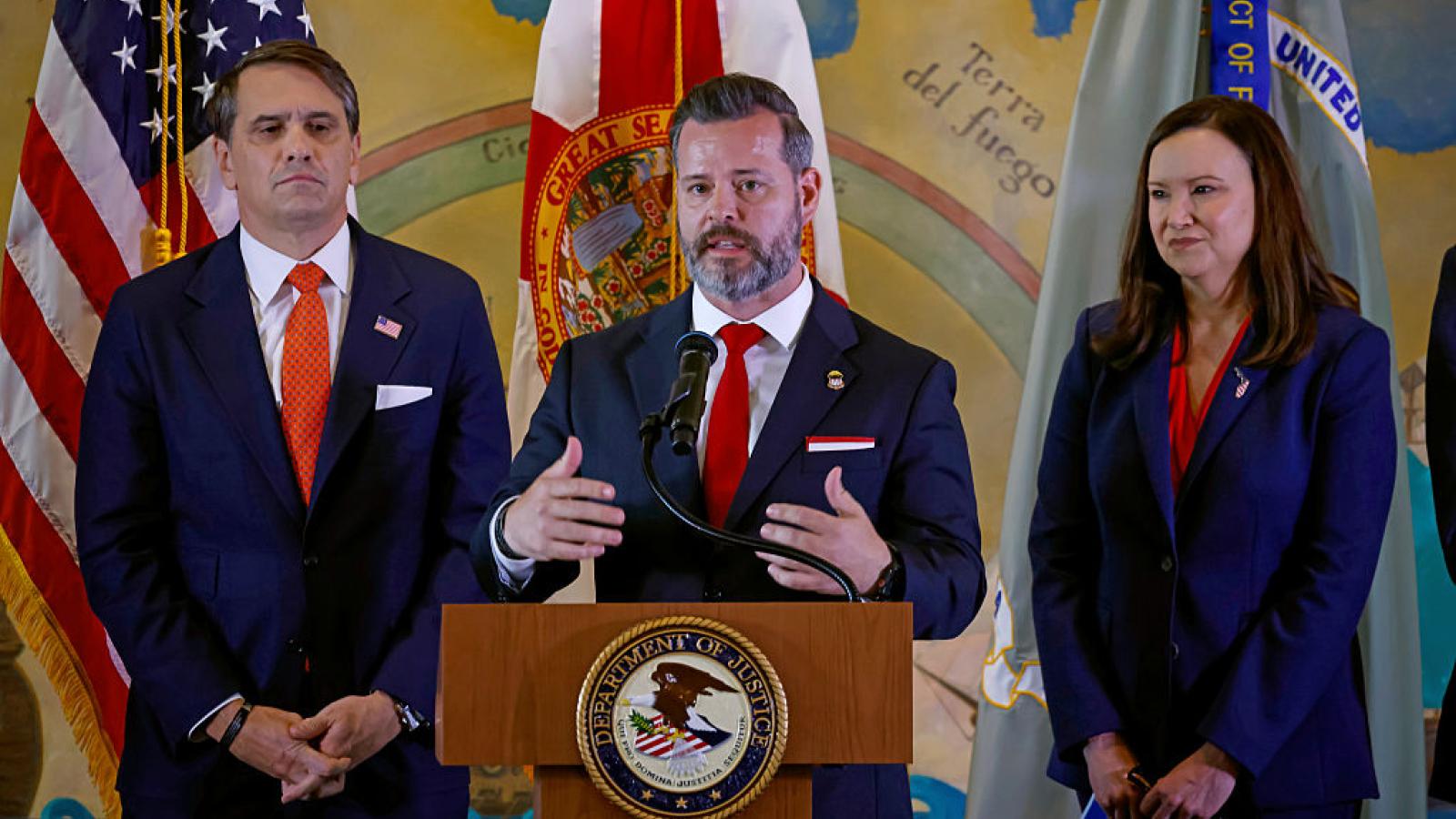
3 DOJ Officials Resign After Midterms, Including Trump ‘Grand Conspiracy’ Prosecutor/ NEWSLOOKS/ WASHINGTON/ J. Mansour/ Three senior Justice Department officials have resigned following the midterm elections, including the prosecutor leading a broad investigation into Trump’s perceived political opponents. Jason Reding Quiñones left under pressure from department leadership, according to sources cited by CNN, while John Eisenberg and Harmeet Dhillon also departed. The turnover comes as Attorney General Todd Blanche seeks greater control of the department and Democrats prepare congressional investigations.

Quick Look
- Three departures: Jason Reding Quiñones, John Eisenberg and Harmeet Dhillon resigned from senior Justice Department positions.
- Pressure on Quiñones: Sources told CNN that department leaders pushed the Southern Florida U.S. attorney to leave.
- Investigation uncertainty: His departure raises questions about the future of the so-called “grand conspiracy” probe.
- Unfulfilled promises: Senior officials reportedly faulted Quiñones for failing to deliver a major case on his proposed timetable.
- National security vacancy: Eisenberg announced his departure as head of the National Security Division Friday.
- Civil rights departure: Dhillon resigned Thursday after leading the Civil Rights Division.
- Oversight ahead: Their departures are not expected to end Democratic interest in investigating their actions.
- Replacement challenge: A Democratic-controlled Senate could complicate confirmation of successors.

Deep Look
Three Senior Officials Leave Justice Department
Three high-profile Justice Department officials have resigned in the days following Republicans’ sweeping midterm losses, creating leadership vacancies as the administration prepares for intensified congressional oversight.
The departures include Jason Reding Quiñones, the U.S. attorney for Southern Florida who led a sprawling investigation into President Donald Trump’s perceived political enemies.
Quiñones resigned under pressure from department leadership, according to sources familiar with the matter cited by CNN.
John Eisenberg, head of the National Security Division, announced his resignation Friday. Harmeet Dhillon left her position leading the Civil Rights Division Thursday.
Although the departures followed the election, CNN reported that turnover had been anticipated for weeks for several reasons, including officials’ potential return to private law practice.
Blanche Seeks Greater Control Ahead of Democratic Investigations
Attorney General Todd Blanche has sought to restore tighter control over the department, according to the report.
Some senior officials viewed figures such as Quiñones and Dhillon as creating difficulties through high-profile commitments they could not fulfill.
Democrats’ incoming congressional majorities add another consideration. With control of committees and investigative powers, lawmakers are preparing scrutiny of the administration’s conduct.
According to CNN, some department officials believe its more confrontational figures could become greater liabilities under that oversight.
Their resignations are not expected to eliminate Democratic interest in examining their actions.
Quiñones Departure Clouds “Grand Conspiracy” Investigation
Blanche announced Quiñones' departure in a social media post Friday, saying the department was “grateful for Jason’s leadership.”
The exit could significantly weaken the department’s effort to pursue a broad case against former officials involved in investigations of Trump and his campaign between 2016 and 2024.
The inquiry, described as a “grand conspiracy” investigationused a federal grand jury in Fort Pierce, Florida.
Quiñones had promised that his office could bring a case within months. When that timetable failed to produce the anticipated prosecution, senior Justice Department officials blamed him, according to CNN.
The report did not establish that the investigation had formally ended. Its future remains uncertain following his departure.
Record Included Raúl Castro Indictment
During his approximately year-long tenure, Quiñones' office secured an indictment against former Cuban President Raúl Castro, described in the report as one of the Trump Justice Department’s most consequential criminal cases.
But that achievement did not resolve his difficulties with department leadership.
His frequent travel outside Southern Florida, particularly to Washington, reportedly intensified senior officials’ frustration over the major case he had promised but not delivered.
Blanche’s announcement surprised people inside the Miami U.S. attorney’s office Friday. Sources familiar with the situation told CNN that many employees had little warning of Quiñones’ abrupt loss of support.
Eisenberg and Dhillon Leave Additional Vacancies
Eisenberg’s resignation creates an opening atop the National Security Divisionwhile Dhillon’s departure leaves the Civil Rights Division without its previous leader.
The supplied report did not identify a specific reason for Eisenberg’s decision.
Dhillon had become a prominent and divisive figure within the department, and her exit came one day before the other departures were announced.
Together, the resignations leave the administration facing multiple personnel decisions before Democrats assume Senate control in January.
Democratic Senate Could Complicate Replacements
Confirming permanent successors could become more difficult once Democrats take charge of the Senate.
The administration may turn to acting officials to fill leadership rolesalthough the report did not identify specific appointments or establish how long any individual could legally serve.
For the department, the immediate challenge is maintaining leadership while preparing for congressional demands for documents, testimony and explanations of its investigative decisions.
More on US News