
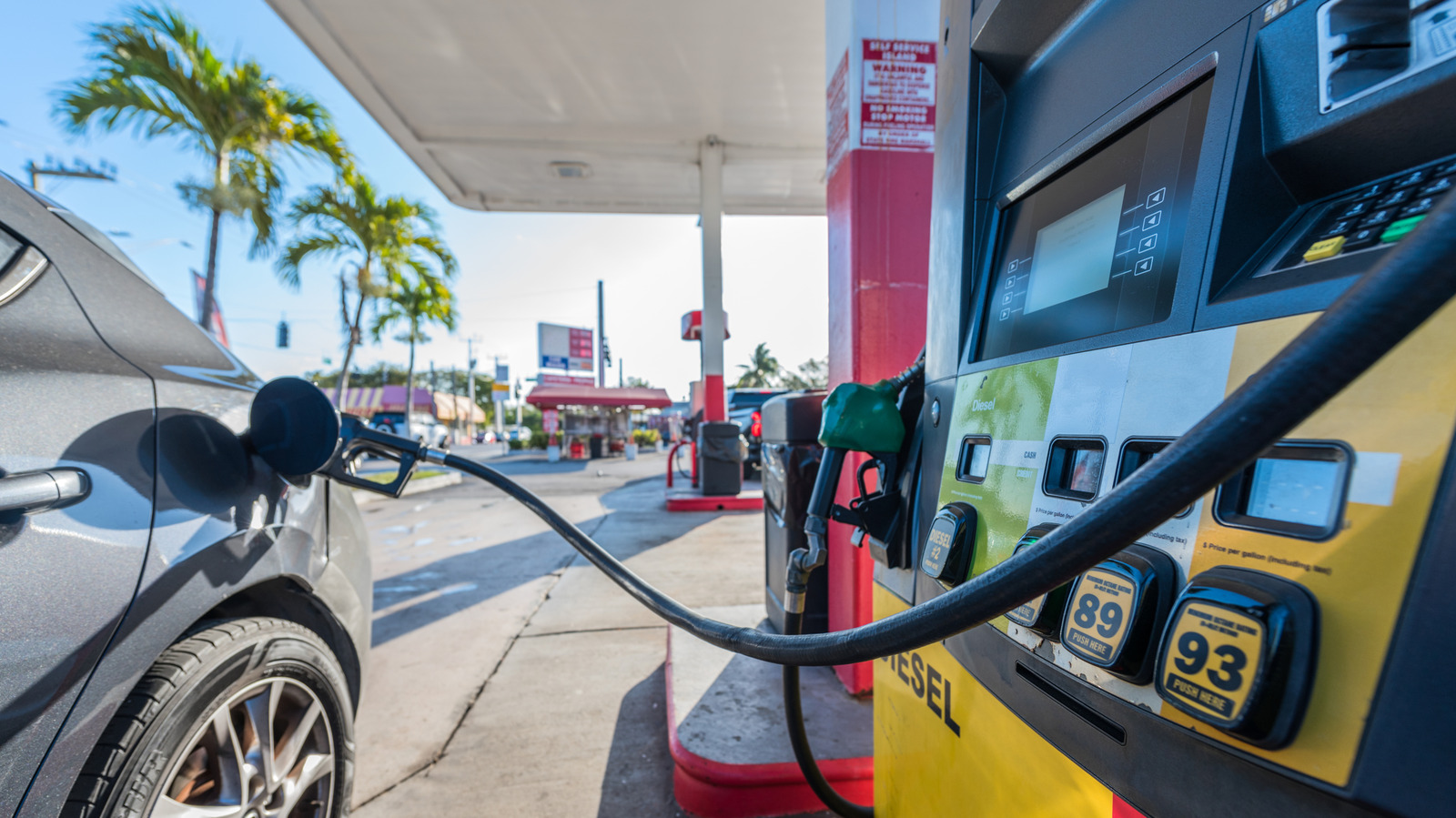

Even though EVs are gaining adoption globally, diesel- and gas-powered models still dominate our roads. This means that millions of drivers pull into gas stations every day, making fueling a routine part of driving. Just like driving your car, refueling it is a process heavily reliant on instincts and habits that can be either good or lead to a life-threatening situation. After all, gas stations aren’t exactly the safest places. They’re prime destinations for criminal activity and hotbeds of fire hazards.
As we all know, gasoline is highly flammable. If a high volume is present (as it often is at a gas station) and the fumes are exposed to an open flame or a spark, it can ignite a fire or a catastrophic explosion. Considering that an average of 4,150 fires in or on gas station properties were reported each year between 2014 and 2018, according to the National Fire Protection Association (NFPA)it’s important to learn how to stay safe.
Something as simple as static electricity generated when you enter your car while fueling can ignite a dangerous flash fire, as can seemingly innocuous things like leaving your engine on or using your phone. With that in mind, whether you are a novice at the pump or a seasoned driver, here are gas station safety tips you should know to protect yourself and others.
Do not overfill your tank
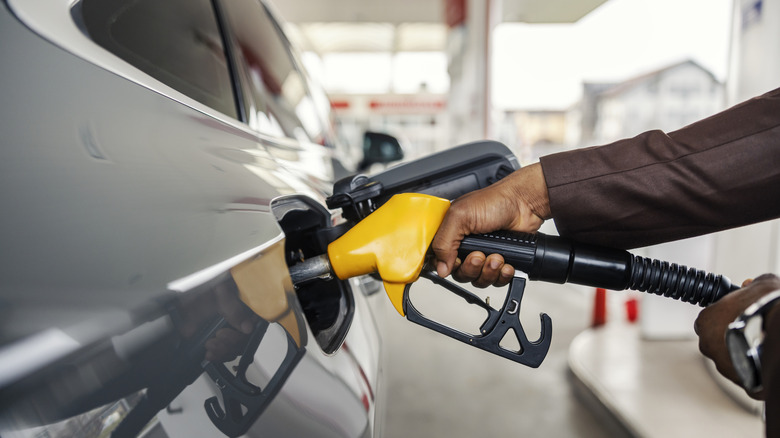
When the gas pump shuts off, you might be tempted to squeeze as much fuel as possible — maybe to maximize driving range between fill-ups or round up the dollar amount. Before you click the pump, however, you should know that this is a fueling habit that could cost you an expensive repair. You risk damaging the evaporative (or charcoal) canister, and fixing that can get expensive. Given that its role is to capture gasoline vapors and keep emissions within specs, if it fails, your car’s MPG will drop, the check engine light will pop up, and the cabin may even fill with a strong gasoline smell.
Fuel will overflow from the tank when you fill it to the brim. This will not only put your vehicle at risk but also your bank account. There’s also the risk of gasoline spilling onto a person. While limited contact with the skin is harmless, prolonged contact can cause irritation, swelling, and first- and second- degree skin burns. If gasoline spills to the ground, it will rapidly evaporate, releasing highly flammable vapors. To avoid all these dangers, don’t try to top off your car’s tank after your pump shuts off, and if you accidentally spill gas, let the gas station operator know.
Do not smoke or use lighters near fuel pumps
One of the most important rules of gas station etiquette is that you should never smoke, vape, or use a lighter while refueling. It should be obvious why. Most gas stations are packed with highly flammable materials, such as fuel tanks, LPG cylinders, aerosol cans, and cleaning products that could ignite a fire or cause an explosion. While all these are culprits, the primary cause of fires at gas stations is usually gasoline vapor. Gasoline is highly volatile, meaning it evaporates easily.
Gasoline vapor is also invisible, flammable, and three to four times denser than air, so every time you light up a cigarette while filling your gas tank, you risk igniting a fire. It’s worth mentioning that gas station fires are quite rare because most fueling stations have measures in place to limit the amount of gasoline vapor in the air. According to the National Association of Safety Professionalshowever, the consequences can be quite catastrophic if gasoline vapor concentrations are between 1.4% and 7.6% in the air.
Gasoline vapors are also among the reasons why you should not use your phone or electronics while fueling — theoretically the static electricity they produce could cause an ignition. Experts claim that the chances of that are very, very low; in fact, a mobile has never been documented as the cause of a fire at a gas station. However, even if the chance is minuscule, is it really worth risk?
Turn off your vehicle’s engine before filling up

Leaving your engine on while refueling is one of the most common gas station mistakes people make that can have life-threatening consequences. As we mentioned earlier, gasoline vapors are the leading cause of gas station fires. This means that when you leave your engine running while filling your tank, you’ll definitely increase the risk of igniting a fire.
In fact, according to a report by NFPA, between 2014 and 2018, over 2300 vehicle fires were reported at gas stations, and these fires led to 26 civilian fire injuries, one civilian fatality, and property damage totaling almost $11.0 million. Most of these vehicle fires were a result of mechanical failures or electrical failures.
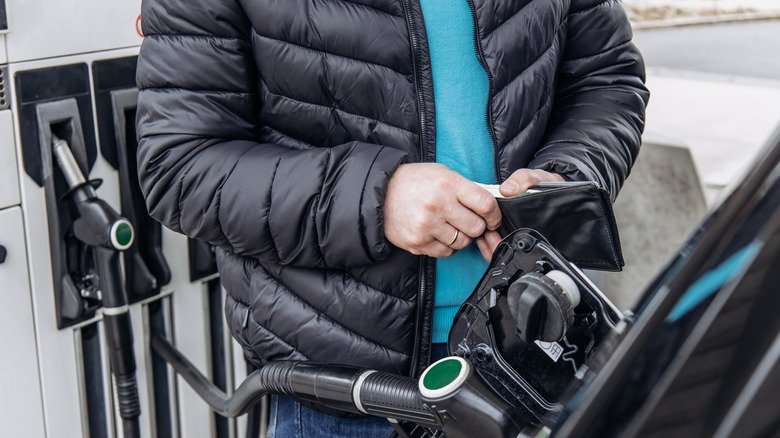
In addition to turning off your engine, it’s ideal that you remain outside the vehicle while fueling. You might be tempted to rush into your car to escape the heavy rains or to just write a check when filling up your gas tank, but it’s best you avoid that urge. Even if you’ve turned off the engine, once you enter the car, that movement can create static electric charge that can ignite the gas fumes once you touch the pump nozzle.

Comments are closed.