Flight EK302 approached Shanghai Pudong International Airport on July 22 after about seven hours in the air when thunderstorms made landing unsafe, forcing the crew to divert to Hangzhou Xiaoshan International Airport, according to the South China Morning Post.
The crew initially expected to resume the flight once weather conditions in Shanghai improved, so immigration procedures for the passengers were not activated in Hangzhou, Malay Mail reported.
|
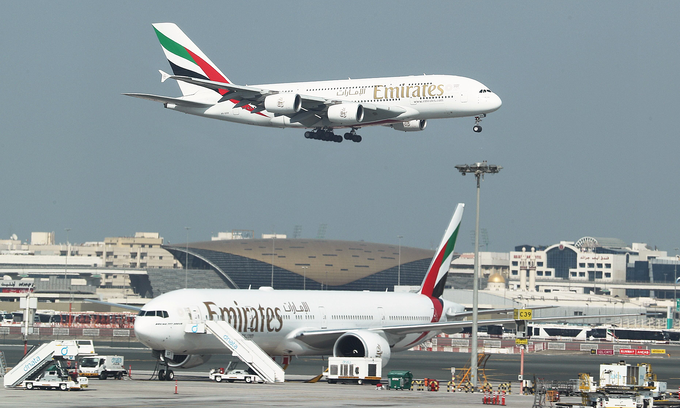
Emirates Airlines Airbus A380-800 plane approaches for landing at Dubai Airports in Dubai, United Arab Emirates, Dec. 26, 2018. Photo by Reuters |
However, the prolonged delay exceeded the crew’s legal flight duty limits, forcing Emirates to dispatch a replacement crew. Under aviation regulations, flight crews cannot remain on duty beyond a set number of hours before mandatory rest periods are required.
During the wait, the Airbus A380’s air-conditioning system reportedly lost power, leaving passengers in uncomfortable conditions. Some said emergency medical personnel were called after several people became unwell, Channel News Asia reported.
After the replacement crew restarted the aircraft’s systems, further technical issues were discovered, preventing the plane from taking off.
Passengers were finally allowed to disembark at nearly 6 a.m. before being provided with hotel accommodation and transport to continue their journey to Shanghai.
The aircraft remained grounded in Hangzhou for two days before returning to Dubai.
Emirates apologized for the disruption, attributing it to a combination of technical problems and the need to replace the flight crew, CNN reported.
The airline also defended its decision to keep passengers on board after the diversion, saying it is standard practice for international flights diverted to alternate airports to avoid complex immigration procedures and additional costs.
Hangzhou Xiaoshan International Airport also faced criticism over its handling of the incident, with passengers and observers questioning communication between the airport and the airline during the prolonged delay.
The incident highlighted the operational challenges of handling diversions involving large international aircraft, particularly when severe weather, crew duty regulations and technical failures occur simultaneously.