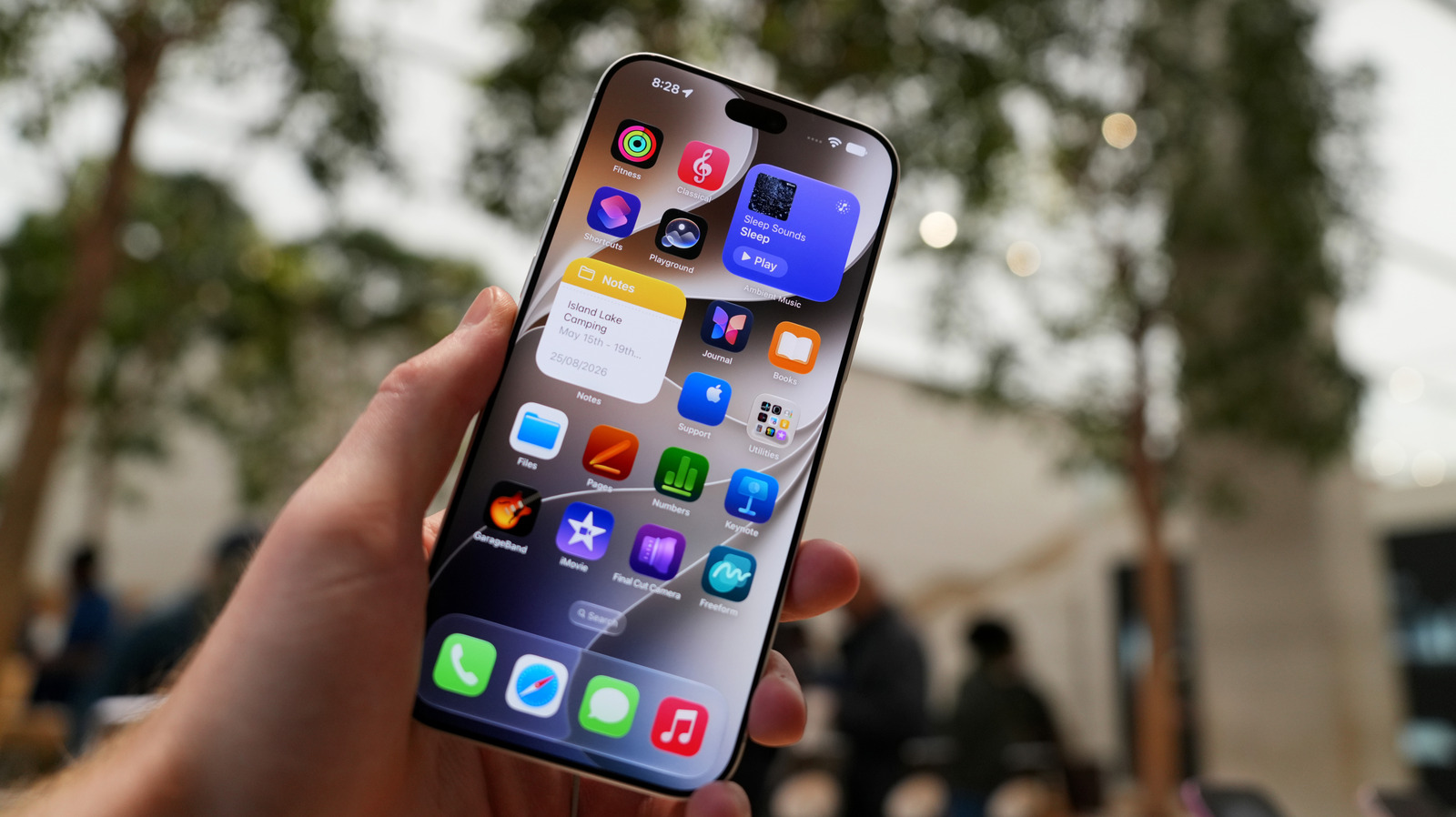
The iPhone 18 Pro is Apple’s latest flagship, and it is very impressive. It houses the company’s powerful new A20 Pro chipset, a stunning 6.3-inch Super Retina XDR display, and an advanced triple-camera system with variable aperturе, a first for iPhones. Add in a polished iOS experience, long-term software support, and robust apps, and you have a phone that check just about every box. As impressive as this device may be, it is also very expensive, with prices starting at $1,200.
Fortunately, you don’t have to spend that much money to get a highly capable smartphone. Key Android brands offer plenty of cheaper alternatives with powerful hardware, impressive cameras, and high-quality displays. Some even have features that you won’t find on Apple’s device. While these devices may not replicate every part of the iPhone experience, they’re still worthy of consideration.
We’ve selected four Android smartphones that are a compelling fusion of hardware, software, and affordability. Each one is less expensive than the iPhone 18 Pro, although not all of them are budget models, some are flagships in their own right. Rather than simply picking the cheapest Android phones on the market, we focused on devices that provide the most value across multiple price points.
Samsung Galaxy S26
First up is Samsung’s Galaxy S26. It is one of the more expensive entries on this list, with a starting retail price of $1,000. However, there is plenty to justify the price. The base model runs on Qualcomm’s custom Snapdragon 8 Elite Gen 5 for Galaxy chipset, paired with 12GB of RAM and 256GB of storage. That is a powerful combination capable of handling demanding mobile games, intense multitasking, and Galaxy AI features without breaking a sweat.
On the front, the phone boasts a 6.3-inch Dynamic AMOLED 2X display with a 120Hz refresh rate. A refresh rate that high makes nearly everything from scrolling the internet to playing games feel incredibly responsive. Around the back is a triple-camera system consisting of a 50MP main sensor, a 12MP, ultrawide, and a 10MP telephoto lens with 3x optical zoom, giving users plenty of flexibility when taking photos, even if there will more than likely be inconsistencies in image quality.
Of all the phones on this list, the Galaxy S26 arguably comes closest to delivering the same experience of the iPhone 18 Pro. Not only because of the hardware, but also the software. Samsung’s device runs on One UI 9.0, which also supports an adaptive clock feature. This tool adjusts the font, size, and placement of the clock to objects inside a wallpaper, and much like the iPhone, it provides a more personalized look.
Google Pixel 11 Pro
Google’s Pixel 11 Pro is another flagship, retailing for $1,100. It’s close in price to the iPhone 18 Pro, which retails for $1,200, but depending on your preferences, it provides better value. Starting with the display, the Pixel 11 Pro boasts a 6.3-inch Super Actua OLED screen running at a 120Hz refresh rate. Simply put, the display is stunning, and the high refresh rate ensures smooth on-screen animations. Plus, it’s brighter than the iPhone 18 as it can reach up to 3,600 nits of brightness. Like the ProMotion tech on the iPhone display, the Pixel 11 Pro supports LTPO technology. This tool allows the phone to dynamically adjust the refresh rate to conserve battery power or boost performance when needed.
When it comes to their respective camera systems, both devices have great rear lenses. They’re comparable to each other, but if you look at their selfie lenses, the Pixel 11 Pro has the clear advantage. The Pixel houses a 42MP selfie camera with autofocus and a 103-degree field of view. That combination of high resolution sensor and wide FOV ensure great-looking selfies and group photos. What’s more, every lens is enhanced by robust software, such as Real Tone, which replicates accurate skin tones in photographs.
Another major boon is the device’s support for Pixelsnap, Google’s collection of magnetic chargers and stands. Each accessory supports the Qi2 standard, enabling wireless charging of up to 25W, very similar to Apple’s MagSafe accessories, and one of many useful accessories to upgrade your Pixel.
2026 Motorola Razr+
Foldable phones tend to be pretty expensive, but if you know where to look, you can find great deals. Case in point: the Motorola Razr+, one of the best Motorola phones you can buy in 2026. Its biggest selling point is its dual-screen design, giving users more flexibility than a traditional smartphone. Unfold the device and you’ll find a spacious 6.9-inch Extreme AMOLED screen. That’s larger than the iPhone 18 Pro’s 6.3-inch screen. It is also faster than the iPhone, running at a refresh rate of 165 Hz. Over the years, the outer screen of the Razr+ series has grown to now measure four inches across. This small screen supports the same apps, allowing users to reply to messages, check notifications, control music, and browse social media without needing to open the phone. It can even function as a viewfinder for selfies.
Durability is a big focus for the Razr+. It is physically tough, sporting a titanium hinge designed for repeated folding, Gorilla Glass Victus protects the external display against scratches, and an IP48 resistance rating. That means the internal components are protected against dust and can survive brief immersion. Inside, you’ll find a hefty 4,500mAh battery that Motorola claims can last over 31 hours on a single charge.
There are areas where the iPhone is the winner. Motorola Razr+ runs on a Qualcomm Snapdragon 8s Gen 3 chipset, which is perfectly capable at multitasking, but pales in comparison to the iPhone’s A20 Pro chip. Also, it lacks a dedicated telephoto camera, housing only 50MP main and 50MP ultrawide lenses.
2025 Motorola Edge
Let’s shift gears to a more affordable device. Few companies have capitalized on the midrange smartphone market quite like Motorola. The brand has many great options, one of them being the 2025 Motorola Edge. At $550, it undercuts the iPhone 18 Pro by more than half. Apple’s flagship is undoubtedly the more powerful device, but that doesn’t mean that the 2025 Edge is a slouch.
Under the hood, the Motorola Edge houses a MediaTek Dimensity 7400 processor, 8GB of RAM, and 256GB of storage. That’s enough hardware to handle everyday activities, multitasking, and even light gaming. Its 6.7-inch pOLED display runs at a 120Hz refresh rate, delivering smooth scrolling that pairs well with the hardware. And with a peak brightness of up to 4,500 nits, Motorola’s device is actually brighter than the iPhone 18 Pro, easily making it usable in direct sunlight. The 2025 Edge has three rear cameras: a 50MP Sony LYTIA 700C main lens, a 50MP ultrawide, and a 10MP telephoto. While the iPhone 18 Pro takes better overall pictures thanks to the more advanced hardware, the Edge provides a versatile setup that many can enjoy at a lower price.
You may have noticed that we recommend the 2025 Edge rather than the newer 2026 model. That’s because the older version comes with double the storage and a lower price tag. The 2026 Edge does have hardware improvements, but the upgrade isn’t substantial enough to make up for lower storage or higher price tag.
Google Pixel 10a
Like Motorola, Google has established itself as a major player in the midrange smartphone market. Its latest offering, the Pixel 10a, is particularly compelling. Much like the Edge, the Pixel 10a is considerably cheaper than the iPhone 18 Pro, starting at just $500. Like every entry on this list, it packs an impressive 6.3-inch pOLED screen with a 120Hz refresh rate and up to 3,000 nits of peak brightness. These features ensure smooth, vibrant images that are easy to see outdoors. It also packs a 5,100mAh battery rated for more than 30 hours of continuous usage. The flat back and flush camera housing give the phone a polished experience, all without needing a premium price tag.
One of Google’s biggest strengths is its software offerings. Pixel phones fuse Android’s wide customization options with Google AI to create a distinct identity. You’ll get to enjoy Gemini Live for conversational AI interactions, Circle to Search for identifying objects on screen, and Call Screen to deal with unwanted calls. Google will expand the experience through regular Pixel Drops, which introduces new features and improvements.
Like the 2025 Edge, the Pixel 10a can’t match the iPhone 18 Pro in performance. Photography is another area where the Pixel model lags behind, housing only a 48MP main camera and 13MP ultrawide. It lacks a dedicated telephoto lens. Still, Google’s software helps make the most of the hardware available, making the Pixel 10a a solid alternative.