
None of them was an obstetrician.
But as Dr. Ho Khanh Thanh of the general planning department at Cho Ray Hospital, one of the five who helped deliver the baby, put it: “There was little time to worry in an emergency. I focused only on helping the mother deliver safely and preparing for possible complications.”
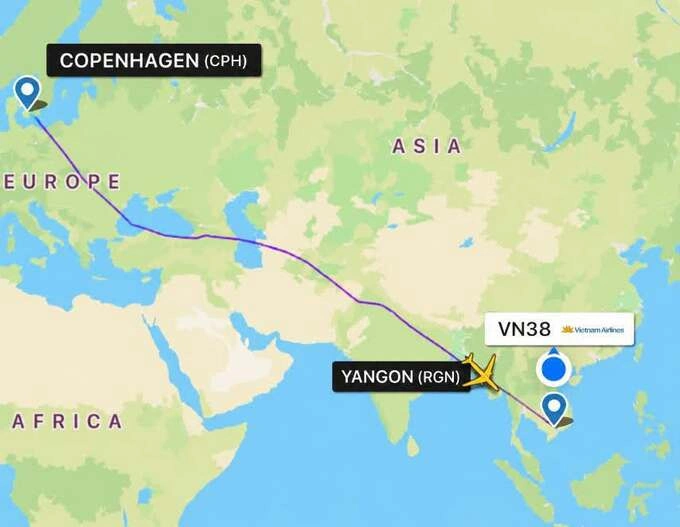
Speaking to Read on the afternoon of Sept. 6, Thanh said the unexpected situation occurred at around 1 a.m. that day on Vietnam Airlines flight VN38 from Copenhagen, Denmark, to HCMC. The plane had been in the air for about 10 hours, with around two hours remaining before it was due to touch down, when a Vietnamese passenger who was 30 weeks pregnant suddenly showed signs of labor.
|
Doctor Ho Khanh Thanh, from Cho Ray Hospital in Ho Chi Minh City, one of the four doctors who assisted in the delivery of a baby on a plane from Denmark to Ho Chi Minh City. Photo by Cho Ray Hospital |
Chief flight attendant Vu Hai Anh made an announcement asking for someone with medical expertise to provide assistance.
Besides Thanh, there was a Vietnamese cardiologist and pediatrician each and the foreign doctor and nurse, all of whom immediately came to the passenger’s aid.
The five quickly assigned tasks among themselves.
Medical gloves, disinfectants and other medical supplies are available on all aircraft.
At first, Thanh thought the passenger might simply be extremely anxious. However, her abdomen was contracting strongly, her water had broken and he could feel the baby’s head. The group determined that she was genuinely in labor and needed immediate attention. Delaying the delivery could have increased the risk of respiratory problems for the baby.
The flight crew moved the passenger to the business-class cabin, where there was more space. The passenger spoke several languages and remained calm, communicating and cooperating with the doctors.
For Thanh, this was a premature delivery under conditions completely different from those in a hospital, with no delivery room, resuscitation equipment or obstetric team available. The last time he had personally assisted with a delivery in the emergency department at Cho Ray Hospital was some 12 years ago.
The woman was instructed to hold her breath, push with the contractions and cooperate with the doctors.
Within six or seven minutes, the baby was born.
 |
|
A tracking map of Vietnam Airlines flight VN38 from Denmark to Ho Chi Minh City, which landed in Yangon to provide medical assistance to a passenger in labor. Photo courtesy of Vietnam Airlines |
The medical team immediately kept the baby warm and monitored its breathing. Without the equipment available in a hospital, they made use of items on the aircraft. They placed the baby skin-to-skin on the mother’s chest and cut the mother’s shirt to position the baby against her chest, both to promote contact with the mother and help keep the newborn warm.
Without a specialized cord tie, the doctors used a mask strap from a sterile package to tie the umbilical cord before cutting it.
The nurse established an intravenous line and administered fluids to the mother. Her blood pressure was around 110/70 mmHg. The baby was crying and breathing well.
Mother and baby were temporarily stable, but the doctors had to determine nevertheless what to do next. The aircraft was more than two hours from Vietnam, while the 1.3-kilogram newborn needed immediate neonatal care.
Emergency landing in Myanmar
Thanh said he told the medical team and flight crew that if they continued to Vietnam, Cho Ray Hospital’s emergency team could be ready to assist when the aircraft landed, but being in the air for more than two more hours posed a risk to the premature baby.
The medics considered two options for a quick landing: Bangkok in Thailand and Yangon in Myanmar.
Bangkok was about one hour and 20 minutes away but the airport had already granted permission for the plane to land.
Yangon was 20 minutes away, but discussions took longer before Myanmarese authorities agreed to allow the aircraft to make an emergency landing.
The aircraft landed in Yangon, where the mother and baby were taken to a hospital. After refueling, the plane continued its journey to HCMC, landing at 6:05 a.m.
Speaking to Readchief flight attendant Hai Anh said the airline’s representative in Myanmar had informed them that “the mother and baby are safe and healthy.”
“This was the first time in my nearly 30 years in the profession that I had witnessed a passenger give birth on a flight. The delivery happened very quickly. I only felt reassured when I heard the baby cry,” she said, adding that she was impressed by the mother’s composure and courage.
“Although she was somewhat worried, she remained very calm and followed the doctors’ instructions.”
According to a Vietnam Airlines spokesperson, the emergency landing was a timely and necessary decision given the exceptional circumstances, and it was one of several cases in which the airline had made emergency landings this year to assist passengers requiring medical attention.
On June 24, a flight from Ho Chi Minh City to Shanghai made an emergency landing in Hong Kong.
On Jan. 7, a flight from Frankfurt to Hanoi also made an emergency landing in Kolkata in India.
 |
|
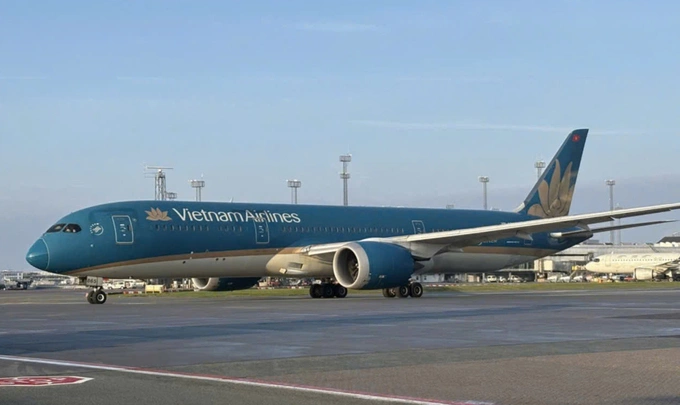
A Boeing 787-9 aircraft operated by Vietnam Airlines at Copenhagen Airport, Denmark. Photo by Vietnam Airlines |
Vietnam Airlines only refuses carriage to passengers who are 36 or more weeks pregnant, whose expected delivery date falls within seven days or have given birth in the previous seven days.
Before boarding, pregnant passengers must provide documents confirming the gestational age and showing that mother and fetus are fit to travel by air.
For Thanh, the most memorable aspect was the calmness and cooperation of strangers in a situation no one had prepared for.
He said: “Medicine is not confined to hospitals, where colleagues and medical equipment are readily available. In unexpected situations, simply being present and providing timely assistance within one’s professional expertise can help a patient through a critical moment.”