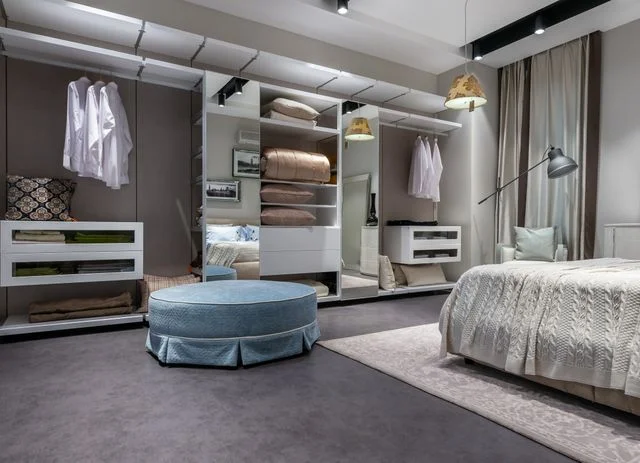
A small primary suite needs furniture that works hard without making the room feel crowded. The right silhouettes create open sightlines, improve movement, and give everyday items a proper place. Instead of filling every corner, choose pieces that combine storage, proportion, and visual lightness. These five bedroom furniture choices help you create a calmer, more spacious room without sacrificing comfort or function.
1. A Low-Profile Bed
The bed takes up more floor area than any other bedroom piece, so its shape affects the entire room. Choose a frame with a low headboard, slim rails, and visible space beneath it. A lower profile keeps the wall and ceiling in view, which makes the suite feel less enclosed.
Before choosing a frame, browse Miami bedroom furniture to compare beds with nightstands, dressers, mattresses, bedding, and lighting in the same category. Seeing related pieces together helps you judge scale before committing to one style. A platform bed with simple lines also reduces visual clutter because it needs fewer decorative layers.
Keep the bed centered on the most practical wall, rather than forcing it into a corner. This arrangement gives you a clearer path around the room and leaves space for storage or a reading light.
2. Wall-Mounted Nightstands
A nightstand still matters in a small suite, but a bulky cabinet can consume valuable floor space. Wall-mounted nightstands keep the floor visible beneath them and create a lighter edge beside the bed. Their compact surface can hold a lamp, book, and phone without overwhelming the wall.
Choose a model with one drawer if you need concealed storage. Open shelves work for a few attractive items, but they require regular editing because crowded shelves make a small room look busy. Match the nightstand width to the bed rather than choosing the largest available option.
Install each piece at a comfortable height beside the mattress. A nightstand that sits too low or high feels awkward and draws attention to the furniture instead of the room’s open space.
3. A Tall, Narrow Dresser
A wide, low dresser spreads storage across the room and often creates a heavy visual block. A tall, narrow dresser uses vertical space instead. It holds folded clothing while preserving more open floor area, improving circulation around the bed.
Place the dresser against a wall that does not interfere with the entry path or closet doors. Measure the full clearance around drawers before buying, including space for standing in front of them. A slim chest also works well in a corner that cannot accommodate a wider storage unit.
Select a finish that blends with the bed or wall rather than introducing another competing color. Consistent tones make separate furniture pieces read as one arrangement, even when their shapes differ.
4. A Mirrored Wardrobe
A wardrobe provides valuable clothing storage when the suite lacks a large closet. Mirrored doors reflect light and give the room a second visual plane, making the space appear deeper. Choose a tall design with clean doors instead of heavy trim or ornate hardware.
Position the wardrobe where it reflects daylight or a well-lit area, not a cluttered corner. The reflection should repeat brightness and openness rather than display laundry, cables, or crowded surfaces. Keep the area directly in front of the doors clear so the storage remains easy to use.
Check the door swing, drawer access, and ceiling clearance before delivery. A wardrobe that blocks a window, vent, or passage creates daily frustration and cancels out the space saved through vertical storage.
5. A Slim Bench
A slim bench at the foot of the bed adds a useful landing spot without requiring another large cabinet. It gives you somewhere to sit while dressing and can hold a folded blanket. Choose an open-leg style or a narrow upholstered form so the floor remains visible underneath.
Keep the bench shorter than the bed width, leaving enough clearance to walk around it. A bulky, deep bench can make the bed feel boxed in, especially when the suite has a narrow passage between the bed and wall.
Use the bench as a controlled storage point, not a permanent pile of clothing. If the surface fills quickly, choose a model with a lift-up compartment or move excess storage to the dresser.
Conclusion
Start with the bed because its height and footprint establish the suite’s visual balance. Add storage vertically, keep bedside pieces compact, and preserve visible floor beneath furniture wherever possible. Before purchasing, measure walking paths, door swings, drawer clearance, and the bed wall. A small primary suite feels spacious when each piece has a clear job, and the arrangement leaves room to move.