
The government of India has been pushing for the adoption of ethanol-blended petrol to reduce the country’s dependence on imported crude oil. Currently, most new petrol cars sold in India are compatible with E20 fuel, which contains 20 percent ethanol and 80 percent petrol. However, carmakers are now developing flex-fuel vehicles which can operate on much higher ethanol blends, including E85 and E100. So, if you are also someone who wants to know which new flex-fuel cars are coming, here are all the details.
The first flex-fuel vehicle which will be launched in India will be the Toyota Innova Hycross Flex Fuel. It is expected to be launched on November 26th. Recently, Union Road Transport Minister Nitin Gadkari announced that he would launch a Toyota Innova capable of running on 100 percent bioethanol during November.
For those who may not be aware, Toyota had already showcased an electrified flex-fuel prototype based on the Innova Hycross back in August 2023. This particular model combines a petrol engine which can operate on high ethanol blends with a strong-hybrid system.
Talking about the powertrain, the Innova Hycross Flex Fuel uses a specially modified version of the 2.0-litre petrol engine. The engine and fuel system have been adapted to handle higher ethanol concentrations. Apart from this, the strong-hybrid system uses an electric motor and battery pack. This allows the vehicle to operate on electric power under suitable driving conditions.
What is interesting is that the flex-fuel Innova could also be introduced alongside the upcoming Innova Hycross facelift. The updated MPV is expected to get a redesigned front grille, new LED headlamps, revised bumpers and additional interior features. However, Toyota has not officially confirmed whether the flex-fuel model will be offered for regular showroom sales in November.
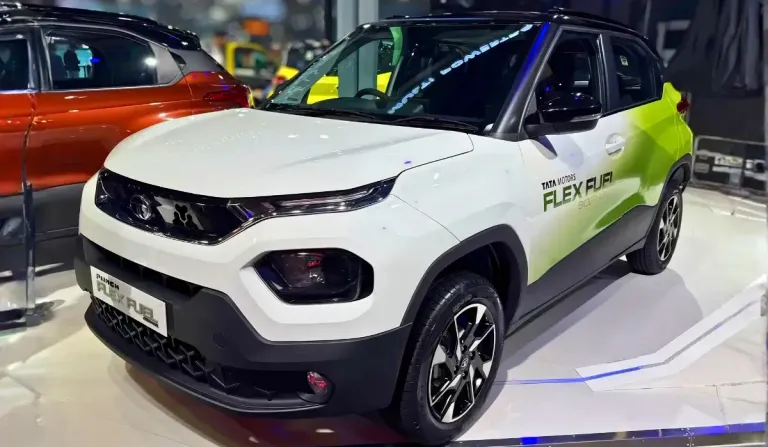
Next up is the Tata Punch Flex Fuel, which could become one of the first affordable flex-fuel SUVs in India. Tata Motors showcased this particular model at the Bharat Mobility Global Expo 2025. And the company has already confirmed that it is preparing to introduce its first flex-fuel passenger vehicle towards the end of 2026 or in early 2027.
However, Tata has not officially confirmed whether the Punch will be the first production model. Talking about the powertrain, the showcased Punch Flex Fuel gets a modified version of the existing 1.2-litre naturally aspirated petrol engine. This three-cylinder engine produces around 88 bhp and 115 Nm of torque in the referenced specification.
The prototype was developed to operate on high ethanol blends of up to E85. Now, to achieve this, Tata has made changes to the fuel injection system, engine control unit and other components. Coming to the design, the Punch Flex Fuel looks almost identical to the standard petrol-powered SUV.
There are no major cosmetic changes, as most of the modifications have been made to the engine and fuel system. As for the launch, Tata could introduce its first flex-fuel vehicle between the end of 2026 and early 2027, although the final model and pricing have not been announced.

The South Korean automaker Hyundai is also planning to launch the flex-fuel version of the Creta. This SUV was also showcased at the Bharat Mobility Global Expo 2025. What is interesting is that, according to Hyundai, this SUV can operate on fuel blends ranging from E0 to E100.
Unlike the standard Creta sold in India, the flex-fuel version gets a smaller 1.0-litre, three-cylinder turbocharged petrol engine. This engine produces around 120 bhp and 170 Nm of torque and comes paired with a 6-speed torque-converter automatic gearbox.
To make the engine compatible with pure ethanol, Hyundai has modified its fuel system and ECU calibration. These changes will help the engine adjust its operation depending on the ethanol concentration in the fuel. Talking about the design, the Creta Flex Fuel looks almost identical to the standard model.
It retains the familiar exterior styling and overall body structure. However, Hyundai has not announced when the Creta Flex Fuel will enter production or reach Indian dealerships. Also, its final specifications and pricing have not been revealed.
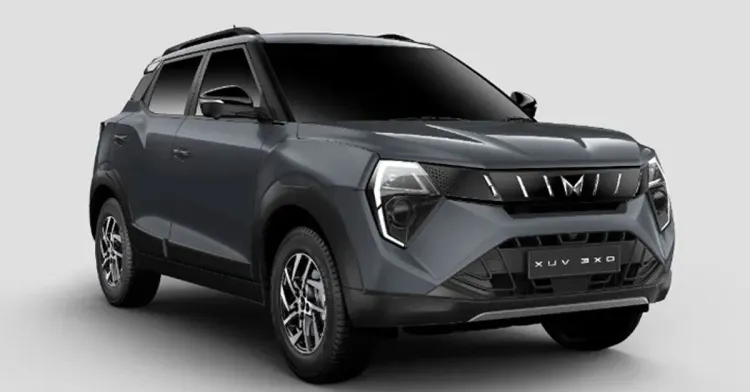
Mahindra is also in line to launch its first flex-fuel vehicle, the XUV 3XO Flex Fuel. It was showcased at the Bharat Mobility Global Expo 2025. The company has also developed this prototype to show its progress on ethanol-compatible petrol engines. Talking about the powertrain, the XUV 3XO Flex Fuel uses a modified version of the existing 1.2-litre turbocharged petrol engine.
This engine has been adapted to operate on ethanol blends ranging from E20 to E85. Apart from this, Mahindra is also working on a number of new technologies for its upcoming flex-fuel engines. These include ethanol sensors, heated fuel injectors, fuel rail heaters and revised ECU systems.
Coming to the design, the XUV 3XO Flex Fuel will retain the familiar appearance of the standard SUV. Most of the changes will be mechanical instead of cosmetic. However, at this point, Mahindra has not confirmed the production launch date, final engine specifications or pricing of the flex-fuel XUV 3XO.
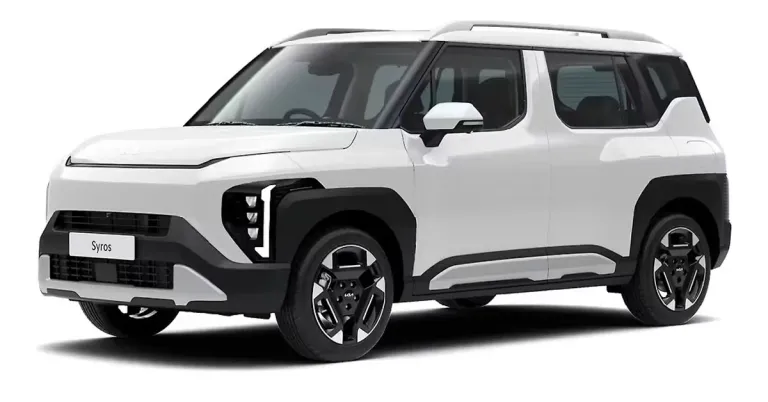
Last on this list is the Kia Syros Flex Fuel, which was recently showcased at the company’s Inspiration Day event. This concept is based on the standard Syros but was shown with a modified petrol engine capable of operating on high ethanol blends.
Kia claims that the Syros Flex Fuel can operate on anything from E0 to E100. This means that the SUV can use standard petrol, pure ethanol or compatible mixtures of the two. Mechanically, the Syros Flex Fuel gets a 1.0-litre turbocharged petrol engine paired with a 6-speed torque-converter automatic gearbox.
Kia has modified the engine management and fuel delivery systems to support different ethanol concentrations. In terms of the design, the flex-fuel version gets the familiar boxy styling of the regular Syros. This includes its vertically stacked headlamps and upright stance. As for the launch, Kia has not announced an official timeline or pricing for the Syros Flex Fuel.