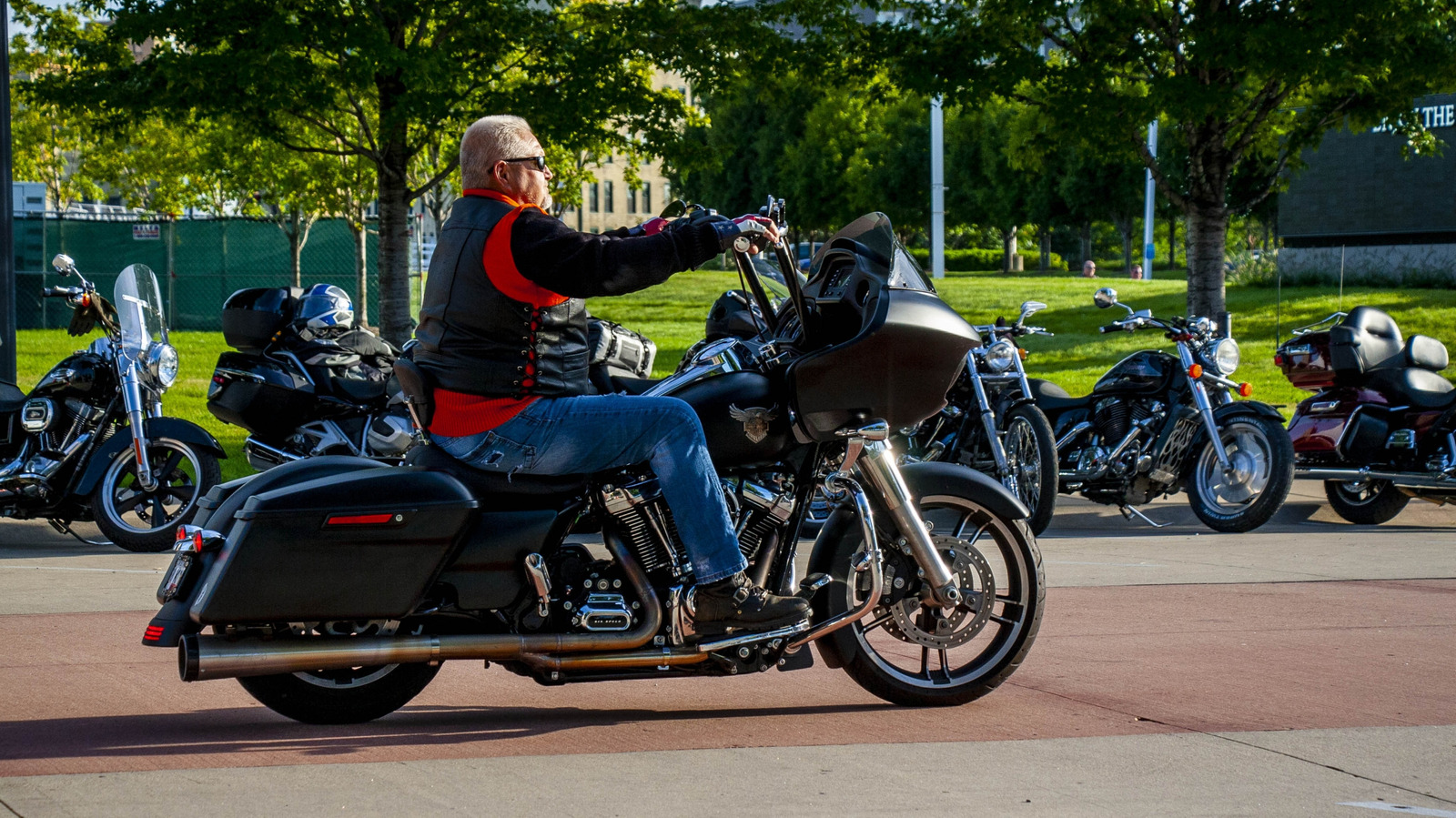
For years, it almost seemed like American highways belonged entirely to a single brand from Milwaukee. Defined by free-spiritedness and an unmistakable exhaust note, Harley-Davidson has held a near monopoly in the cruiser world, convincing riders of all stripes that its cultural cachet was worth buying into — even if it was pricey. This continues today — just take a look at the outfit’s 2026 motorcycle lineup prices.
According to FortNinethis brand and symbol of Americana, to the cruiser world what McDonald’s is to fast food, has jumped the shark. More recent reporting has confirmed that sales are indeed declining further, thanks to steep sticker prices and overall brand perception. And it’s not like consumers haven’t had cheaper, more reliable options from competitor brands, especially those from Japan, which is stacked with amazing bike makers.
Sure, the air-cooled Big Twin tradition has a certain allure, but Japanese manufacturers have quietly spent decades turning engineering sorcery into rolling art and, in turn, driving sales. By blending liquid-cooled reliability with competitive pricing, companies like Honda, Suzuki, Kawasaki, and Yamaha have produced a very solid lineup of cruisers. For motorcyclists who don’t care about the cultish side of brands and seek reliability, it’s time to ride past the Harley lot and see what the Japanese dealerships have in stock. Here are five Japanese cruiser motorcycles that can easily go toe-to-toe with a Harley-Davidson.
Honda Rebel 1100
The Honda Rebel 1100 is the ultimate sleeper in the cruiser market. At first glance, it looks rather stripped-down, like a mid-weight bobber, but hiding under its exposed steel frame lies a powerhouse taken directly from Honda’s Africa Twin adventure bike. By employing a 1,084cc liquid-cooled SOHC Unicam parallel-twin, Honda avoids the heavy, vibrating V-twin tradition entirely. To ensure the motor still has that classic cruiser rumble emanating from the exhaust, engineers gave it a 270-degree crankshaft, creating an uneven firing order that replicates a conventional V-twin heartbeat.
Producing 87 horsepower and 72 lb-ft of torque, the Rebel 1100 competes with bikes like the Harley Nightster, which puts out 91 horsepower and 72 lb-ft of torque. In fact, even when compared to some of the new cruiser motorcycles, like the Yamaha Bolt R-Spec, this Honda delivers a robust overall powerband.
One of the Honda’s defining characteristics is the Dual Clutch Transmission (DCT); the Rebel shifts with precision, letting riders focus purely on the throttle and the road ahead. While the 3.6-gallon gas tank is a bit small, the Rebel 1100 remains an untouchable piece of modern bike engineering. Unlike its cousin, the Gold Wing, which is among the cruiser motorcycles with high resale value, the Rebel makes a case for world-class performance at an inclusive MSRP.
Yamaha Bolt R-Spec
If the Harley-Davidson Sportster is the polished, corporate-exec, weekend warrior flex of the cruiser world, the Yamaha Bolt R-Spec is its gritty counterpoint. Built for the streets and stripped away of unnecessary plastic parts — even with minimal chrome — the Bolt offers a 942cc air-cooled V-twin delivering a good dose of low-end torque, as you’d expect from a bike of this ilk. Here, Yamaha not only cloned a proven, old engine design, they packed the cylinder heads with advanced mechanical features. The pent-roof chamber geometry optimizes combustion, while ceramic composite plating on the cylinders helps keep the engine cool and reduces oil consumption.
The ride might not be the plushiest; 70 millimeters (2.8 inches) of rear-wheel travel means deep dips in the road could fully compress the shocks. Granted, the Bolt isn’t an enduro, nor is it meant to hit hairpins hard. The ultimate advantage here is its Japanese pedigree and quality that’s baked in, meaning it demands little maintenance beyond the usual. Whether buying new or used, Bolt riders can turn the key and ride with little worry, while those looking for a vintage Harley might want to avoid certain engines, lest they miss weekend rides while laid up in a garage, waiting on parts.
Suzuki Boulevard M109R
The Suzuki Boulevard M109R is an utterly cool-looking bike, with elegant lines and a stout, assured stance. The B.O.S.S. (Blacked-Out Special Suzuki) edition takes it a step further, with subtle chrome accents shining through its beefy black frame and body. This bike exists purely to rip the asphalt off the road, powered by a 109-cubic-inch V-twin engine that delivers big power and torque on demand.
To achieve that kind of brute force, Suzuki used massive 112-millimeter forged aluminum pistons and a Dual Throttle Valve system for sharp fuel delivery. Even more proprietary features, like the Suzuki Advanced Sump System (SASS) and a two-stage cam — both of which allow for a low-slung profile — keep the Boulevard glued to the road. If you catch a glimpse of one zipping by, you’ll notice its enormous 240-millimeter rear tire to help it push through the corners, and slash-cut chrome mufflers that announce its presence with key audio cues.
While early 2006-2009 models had a bad habit of popping out of second gear under heavy load — an issue that Suzuki later resolved – the Boulevard could be compared with the Harley FXDR 114 or Breakout, but at much cheaper sticker prices, to say nothing of the potential long-term repair costs associated with Harleys. Suzuki is, after all, rated higher than the American brand out of 17 major bike manufacturers.
Kawasaki Vulcan 1700 Vaquero
When it comes to covering interstate miles in comfort, the Vulcan 1700 Vaquero is a masterclass in long-haul touring. Designed to go toe-to-toe with Harley-Davidson’s legendary Street Glide, the Vaquero wraps a massive 1,700cc V-twin in a sleek, frame-mounted fairing and puts out 82 horsepower and 107 lb-ft of torque. The damping capacity in the Vaquero’s suspension acts like plush mechanical pillows, soaking up road bumps and dips that road-tripping cruisers will appreciate. And with electronic cruise control and integrated hard saddlebags, you’d be a fool not to plan some big trips on this bike.
Beneath the classic cruiser styling lies a suite of modern tech, including Kawasaki’s proprietary Advanced Coactive-braking Technology (K-ACT) and a sophisticated Electronic Throttle Valve. There is a catch, though—strict emissions tuning means the ECU runs the bike quite lean, which can cause the massive V-twin to heat up in slow traffic. Fortunately, an aftermarket ECU flash resolves the issue, improving engine cooling and even boosting the bike’s roll-on torque, turning the Vaquero into a bulletproof, continent-crossing tourer that, you guessed it, costs thousands of dollars less than its cultish American rival.
Kawasaki Vulcan 2000
The Kawasaki Vulcan 2000 is a big boy, and although it has been long discontinued, it is a legend that still commands respect on the street. Just being able to handle the bike’s massive frame might raise eyebrows, with a curb weight of 820 pounds, giving your legs a real workout in the parking lot. When it debuted in 2004, Kawasaki set out to build the biggest mass-produced V-twin the world had ever seen, creating a 2,053cc monster that aimed to compete directly with Harley’s ultra-premium CVO lineup.
In a rare move, Kawasaki ditched overhead cams and used a classic pushrod design to keep the engine profile low, all while retaining a modern four-valve head. The result is a machine that delivers a peak 141 lb-ft of torque, with pulling power that starts almost off idle. While Kawasaki execs thought it would draw Harley nativists in swarms, sales were never great, especially impacted by the 2008 financial crisis. The Vulcan 2000 has been out of production for years, so finding a used one is like uncovering a hidden mechanical treasure. It’s an unapologetically aggressive machine that proves Japanese engineers were capable of recreating their own version of well-engineered, pavement-crushing Americana wrapped in chrome and steel.
Methodology
To select these standout Japanese cruisers, we evaluated mechanical specs, displacement, engine architecture, reliability, and, where available, general user feedback — pitting them against the closest Harley-Davidson counterparts. While comparative analysis involves some subjectivity, we prioritized models that could hang with Harley benchmarks through advanced engineering.
Beyond specs, we factored in sticker prices, maintenance requirements, and reliability amid what seems like devolving H-D quality. Finally, we looked for real-world feedback from riders on forums to ensure these cruisers had the backing of enthusiasts who opted for a well-made import over a Harley. While you may disagree with some of our picks, we think these eight motorcycles can go toe-to-toe with Milwaukee iron horses, even with dozens of bikes to choose from in this category.