
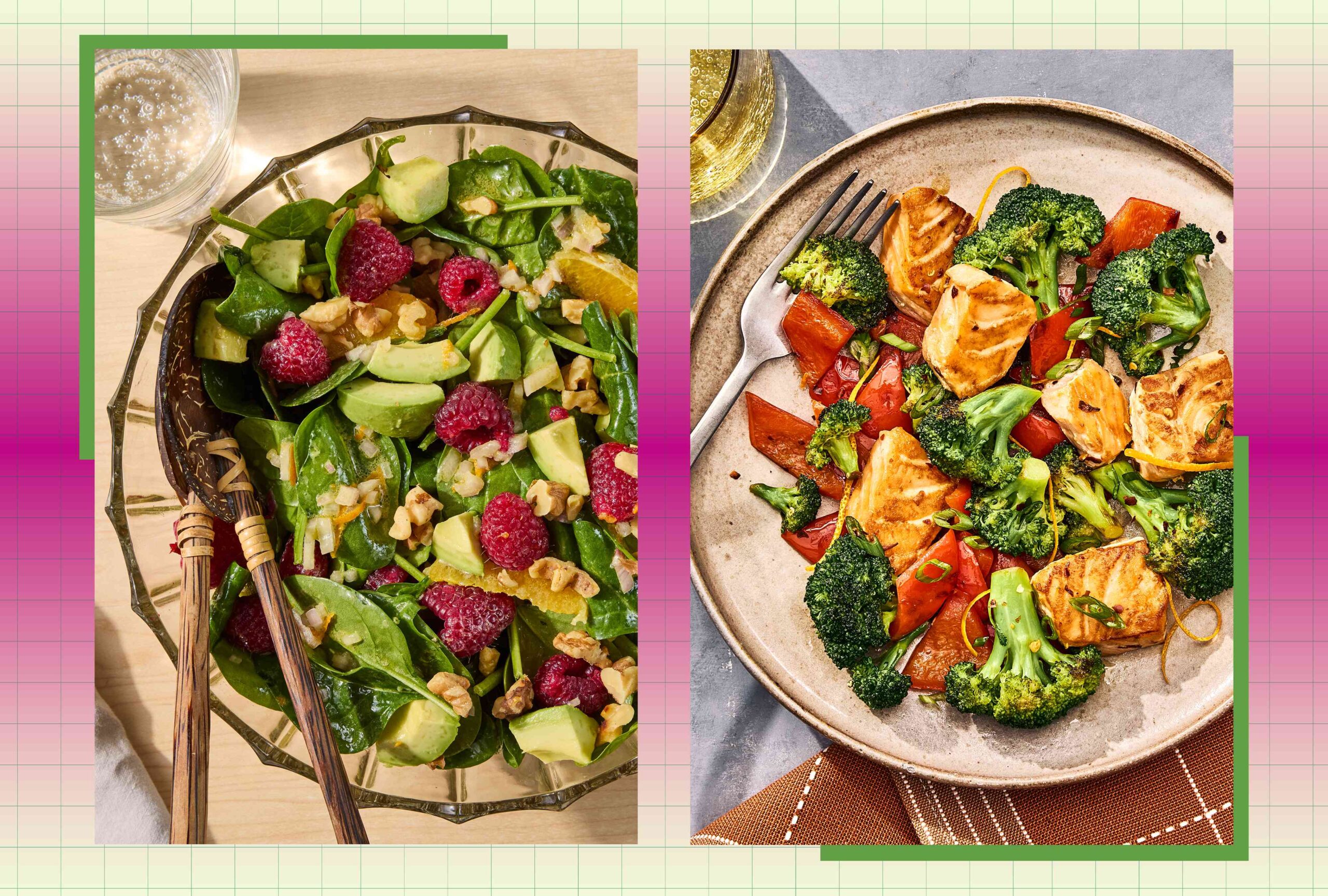
7-Day High-Protein Anti-Inflammatory Meal Plan for Better Blood Sugar, Created by a Dietitian

The anti-inflammatory diet can reduce inflammation, but did you know that it can support healthy blood sugar levels, too?
Reviewed by Dietitian Jessica Ball, M.S., RD
About This Plan
- This 7-day plan is set at 1,800 calories, with modifications for 1,500 and 2,000 calories.
- Each day provides at least 103 grams of protein and 33 grams of fiber to support satiety.
- This plan prioritizes anti-inflammatory proteins such as nuts, salmon and beans.
Whether you currently have type 2 diabetes (or prediabetes) or you're looking to reduce your risk, research shows that following an anti-inflammatory diet may be a useful tool to help support healthy blood sugar levels. On the other hand, a pro-inflammatory routine, such as one that contains large amounts of refined grains and excess added sugar, can increase the risk of developing type 2 diabetes by 61%. Fortunately, this meal plan is here to help. In this high-protein anti-inflammatory meal plan for better blood sugar, you'll find a week of nutrient-rich meals as well as a moderately-low-carbohydrate, high-protein routine to support healthy blood sugar levels. We include three different calorie levels to choose from, which allows this nutritious meal plan to work for most people. Check it out!
| DAYS | 1 | 2 | 3 | 4 | 5 | 6 | 7 |
| MEALS | Breakfast: Banana–Peanut Butter Yogurt Parfait ——– Lunch: Greek Salad with Edamame ——– Dinner: One-Skillet Garlicky Salmon & Broccoli | Breakfast: Banana–Peanut Butter Yogurt Parfait ——– Lunch: Chickpea Chopped Salad with Pita Chips ——– Dinner: Crispy Chicken Rice Bowl | Breakfast: Spinach & Egg Scramble with Raspberries ——– Lunch: Chickpea Chopped Salad with Pita Chips ——– Dinner: Spiced Couscous-Stuffed Peppers | Breakfast: Tofu Scramble with Spinach ——– Lunch: Chickpea Chopped Salad with Pita Chips ——– Dinner: Pistachio-Crusted Halibut | Breakfast: Spinach & Egg Scramble with Raspberries ——– Lunch: Chickpea Chopped Salad with Pita Chips ——– Dinner: One-Pot Chicken & Rice Soup | Breakfast: Tofu Scramble with Spinach ——– Lunch: One-Pot Chicken & Rice Soup ——– Dinner: Spring Roll Salad | Breakfast: Spinach & Egg Scramble with Raspberries ——– Lunch: One-Pot Chicken & Rice Soup ——– Dinner: Lemon-Garlic Chicken Casserole |
| DAILY TOTALS | Calories: 1,816; Protein: 103 g; Fat: 85 g; Carbs: 174 g; Sodium: 1,573 mg | Calories: 1,785; Protein: 124 g; Fat: 70 g; Carbs: 182 g; Sodium: 1,832 mg | Calories: 1,788; Protein: 124 g; Fat: 82 g; Carbs: 173 g; Sodium: 1,826 mg | Calories: 1,780; Protein: 121 g; Fat: 72 g; Carbs: 179 g; Sodium: 2,044 mg | Calories: 1,801; Protein: 142 g; Fat: 73 g; Carbs: 166 g; Sodium: 2,274 mg | Calories: 1,817; Protein: 128 g; Fat: 83 g; Carbs: 158 g; Sodium: 2,139 mg | Calories: 1,806; Protein: 144 g; Fat: 68 g; Carbs: 173 g; Sodium: 2,291 mg |
Day 1
Daily Totals: 1,816 calories, 85g fat, 16g saturated fat, 103g protein, 174g carbohydrates, 40g fiber, 1,573mg sodium.
Breakfast (301 calories)
Lunch (384 calories)
- Serve with 1 cup sliced strawberries
Dinner (439 calories)
- Serve with 1 serving Easy Brown Rice
Snacks
- 1 medium apple and 2 Tbsp. almond butter (291 calories)
Make it 1,500 calories: Omit the evening snack.
Make it 2,000 calories: Add 1 serving Massaged Kale Salad to dinner.
Day 2
Daily Totals: 1,785 calories, 70g fat, 14g saturated fat, 124g protein, 182g carbohydrates, 33g fiber, 1,832mg sodium.
Breakfast (301 calories)
- 1 serving Banana–Peanut Butter Yogurt Parfait
Lunch (427 calories)
- Serve with 1 (3-oz.) cooked chicken breast
- ½ cup blueberries
Dinner (558 calories)
Snacks
- 1 serving Lemon-Raspberry Frozen Yogurt Bites (230 calories)
- 1 cup edamame, in pods (179 calories)
- 1 cup nonfat plain kefir (90 calories)
Make it 1,500 calories: Omit the A.M. snack and reduce to ½ cup kefir at the evening snack.
Make it 2,000 calories: Add ¼ cup dry-roasted unsalted almonds to the evening snack.
Meal-Prep Tips
- Make Chickpea Chopped Salad with Pita Chips to have for lunch on days 2 through 5.
Day 3
Daily Totals: 1,788 calories, 82g fat, 14g saturated fat, 124g protein, 173g carbohydrates, 41g fiber, 1,826mg sodium.
Breakfast (385 calories)
- Serve with 1 cup nonfat plain kefir
Lunch (427 calories)
- 1 serving Chickpea Chopped Salad with Pita Chips
- Serve with 1 (3-oz.) cooked chicken breast
- ½ cup blueberries
Dinner (486 calories)
Snacks
- 1 cup nonfat plain strained (Greek-style) yogurt, ½ cup blackberries, ¼ cup sliced almonds, and 1 serving No-Sugar-Added Chia Seed Jam (311 calories)
- 1 cup edamame, in pods (179 calories)
Make it 1,500 calories: Omit the A.M. snack.
Make it 2,000 calories: Add 1 serving Apple with Cinnamon Almond Butter as an evening snack.
Day 4
Daily Totals: 1,780 calories, 72g fat, 14g saturated fat, 121g protein, 179g carbohydrates, 36g fiber, 2,044mg sodium.
Breakfast (411 calories)
- Serve with 1 medium banana
Lunch (427 calories)
- 1 serving Chickpea Chopped Salad with Pita Chips
- Serve with 1 (3-oz.) cooked chicken breast
- ½ cup blueberries
Dinner (527 calories)
- Serve with 1 serving Raspberry-Spinach Salad with Avocado & Walnuts
- 1 (1-oz.) slice whole-wheat baguette
Snacks
- 1 serving Lemon-Raspberry Frozen Yogurt Bites (230 calories)
- 1 medium apple and 1 cup nonfat plain kefir
Make it 1,500 calories: Omit the A.M. snack and omit the blueberries at lunch.
Make it 2,000 calories: Add ¼ cup dry-roasted unsalted almonds as an evening snack.
Day 5
Daily Totals: 1,801 calories, 73g fat, 14g saturated fat, 142g protein, 166g carbohydrates, 35g fiber, 2,274mg sodium.
Breakfast (385 calories)
- 1 serving Spinach & Egg Scramble with Raspberries
- Serve with 1 cup nonfat plain kefir
Lunch (427 calories)
- 1 serving Chickpea Chopped Salad with Pita Chips
- Serve 1 (3-oz.) cooked chicken breast
- ½ cup blueberries
Dinner (499 calories)
- Serve with 2 cups mixed greens with 1 serving Italian Dressing
- 1 (1-oz.) slice whole-wheat baguette
Snacks
- 1 cup nonfat plain strained (Greek-style) yogurt, ½ cup blackberries, ¼ cup sliced almonds, and 1 serving No-Sugar-Added Chia Seed Jam (311 calories)
- 1 cup edamame, in pods (179 calories)
Make it 1,500 calories: Omit the A.M. snack.
Make it 2,000 calories: Add 1 serving Apple with Cinnamon Almond Butter as an evening snack.
Meal-Prep Tips
- Reserve 2 servings One-Pot Chicken & Rice Soup to have for lunch on days 6 & 7.
Day 6
Daily Totals: 1,817 calories, 83g fat, 14g saturated fat, 128g protein, 158g carbohydrates, 37g fiber, 2,139mg sodium.
Breakfast (411 calories)
- 1 serving Tofu Scramble with Spinach
- Serve with 1 medium banana
Lunch (450 calories)
- 1 serving One-Pot Chicken & Rice Soup
- Serve with 1 cup sliced cucumbers
- ¼ cup hummus
Dinner (523 calories)
Snacks
- 1 cup nonfat plain strained Greek-style yogurt, ½ cup blackberries, ¼ cup sliced almonds, and 1 serving No-Sugar-Added Chia Seed Jam (311 calories)
Make it 1,500 calories: Omit the A.M. snack.
Make it 2,000 calories: Add 1 serving Apple with Cinnamon Almond Butter as an evening snack.
Day 7
Daily Totals: 1,806 calories, 68g fat, 14g saturated fat, 144g protein, 173g carbohydrates, 37g fiber, 2,291mg sodium.
Breakfast (385 calories)
- 1 serving Spinach & Egg Scramble with Raspberries
- Serve with 1 cup nonfat plain kefir
Lunch (413 calories)
- 1 serving One-Pot Chicken & Rice Soup
- Serve with 1 cup sliced cucumbers
- 3 Tbsp. hummus
Dinner (462 calories)
Snacks
- 1 cup nonfat plain strained (Greek-style) yogurt, ½ cup blackberries, 1 serving No-Sugar-Added Chia Seed Jam, and 2 Tbsp. sliced almonds (244 calories)
- 1 serving White Bean–Stuffed Mini Bell Peppers (122 calories)
- 1 cup edamame, in pods (179 calories)
Make it 1,500 calories: Reduce to ½ cup nonfat kefir at breakfast and omit the A.M. snack.
Make it 2,000 calories: Reduce to 1 Tbsp. sliced almonds at the A.M. snack and add 1 serving Simple Spinach Salad to dinner.
Frequently asked Questions
Is it OK to mix and match meals if there is one I do not like?
Yes! This meal plan is meant to serve as inspiration. It doesn't need to be followed exactly to reap the benefits. When choosing recipes, we made sure to check the calories, fiber, protein and sodium to align with the parameters of this plan and be within our sodium limits. If you're making a recipe swap, it may be helpful to choose a recipe with similar calories, fiber, protein and sodium levels. For more inspiration, check out these delicious diabetes-friendly recipes.
Can I eat the same breakfast or lunch every day?
Definitely, it's fine to eat the same breakfast or lunch every day. The breakfasts range from 301 to 411 calories, while the lunches span 384 to 450 calories. These ranges are fairly close, though if you're closely monitoring your calories or other nutrients, like protein, you may want to adjust a snack or two.
Why is there not a modification for 1,200 calories?
We no longer provide modifications for 1,200-calorie days in our meal plans. The 2020-2025 Dietary Guidelines for Americans suggests that limiting calories to 1,200 per day is too low for most people to meet their nutritional needs, plus it's unsustainable for long-term health and well-being.
Should I cut back on carbohydrates?
If you've been told you have high blood sugar levels or are looking to reduce your risk, you may think you need to cut back drastically on carbohydrates. However, that's often not necessary or sustainable long-term. Many carbohydrates, such as whole-grains, legumes and fruits, contain fiber, which is a beneficial nutrient for healthy blood sugar levels. Instead, focusing on fiber-rich carbs and reducing refined grains and added sugars can be an effective strategy. For more individual recommendations, consider reaching out to a registered dietitian for guidance.
How This Meal Plan May Benefit Blood Sugar
This meal plan focuses on foods that are higher protein and moderate in carbohydrates. More specifically, we chose anti-inflammatory foods that are also high in protein to support healthy blood sugar for individuals with prediabetes and type 2 diabetes. Here's how it can help you:
- Follows the Anti-Inflammatory Diet: To support healthy blood sugar levels, we include the principles of the anti-inflammatory diet. Research shows that following an anti-inflammatory diet may lower blood sugar levels and reduce the risk of developing type 2 diabetes. An anti-inflammatory diet focuses on nutrient-rich fruits and vegetables, legumes, whole grains, seafood and a wide array of healthy fats, such as nuts, olive oil and avocado. It limits refined grains, processed foods with minimal nutritional value and added sugars.
- High-Protein with Moderately-Low Carbohydrates: To support healthy blood sugar levels, we opted for a moderately-low carbohydrate level of about 40% of daily total calories and spread the carbohydrates out fairly evenly between the day's meals and snacks to support stable blood sugar levels. While there's no one-size-fits all recommendation for the amount of carbohydrates a person should eat per day, there are some nutrition strategies that may help support healthy blood sugar levels. These strategies include reducing total carbohydrates, emphasizing high-fiber carbohydrates and including plenty of protein. Each day provides at least 103 grams of protein and 33 grams of fiber in this blood sugar–friendly plan.
- Heart-Healthy: Having type 2 diabetes can increase the risk of developing heart disease, so we made this plan with both blood sugar and heart health in mind. To support a healthy heart, we capped saturated fat at 14 grams per day (with an upper limit of 20 grams on days we include fatty fish, like salmon) and capped the sodium at 2,300 milligrams per day.
How We Create Meal Plans
Registered dietitians thoughtfully create EatingWell’s meal plans to be easy-to-follow and delicious. Each meal plan meets specific parameters depending on the health condition and/or lifestyle goal it is targeting and is analyzed for accuracy using the nutrition database, ESHA Food Processor. As nutritional needs differ from person to person, we encourage you to use these plans as inspiration and adjust as you see fit.

Comments are closed.