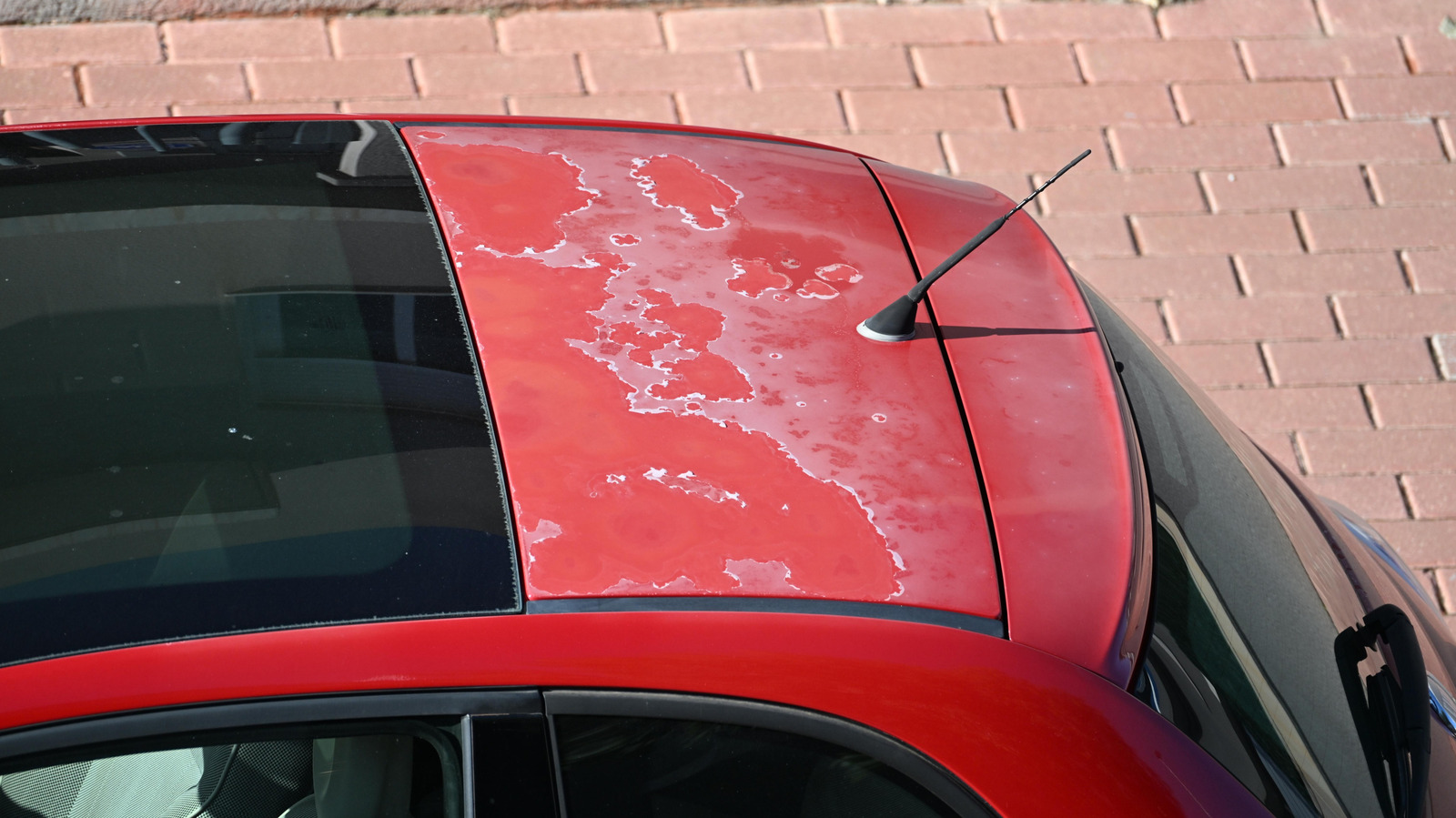
With so many different parts and materials going into a modern automobile, the question of whether a particular vehicle is reliable or well-made is not always a straightforward one to answer. Typically speaking, if a vehicle is dinged for being low quality or unreliable by an outlet like Consumer Reports, we picture mechanical defects or electrical issues that, at their most serious, can render a car completely unusable — but quality issues can go far beyond that.
Along with their long-term ownership tests to check a vehicle for those mechanical defects, Consumer Reports’ reliability data also logs owner complaints about paint-related problems, and in 2024, CR published a report highlighting some of the makes and models of vehicles with the most instances of reported paint problems. Obviously, there are lots of variables in how a paint job holds up on any one vehicle, including how it’s maintained and what kind of climate it’s in, and there are some common mistakes from car owners that can make for ruined paint jobs.
That, however, doesn’t mean there aren’t vehicles with serious paint defects from the factory. It’s not just in Consumer Reports’ findings where these models are exposed for paint problems either. In many cases, there are factory service bulletins that have been issued, and in some cases class action lawsuits have been filed. Below are five notable used models from the last decade that stood out to Consumer Reports for their poor paint quality.
2016 Ford Explorer
There are some big things you’ll want to know before buying a Ford Explorer, and along with those, the Explorers of the late 2010s in particular are known for having paint issues. It’s the 2016 model-year Explorer that Consumer Reports highlights, but their data shows the issue affects all Explorers from 2014 to 2020. Blisters in the paint seem to be the big issue here, with the front of the hood being one of the most common spots for the issue to pop up.
That hood part is important because the Explorers of this era use an aluminum hood, and Ford has dealt with widespread paint issues on its aluminum body panels. It’s enough that the company has put out technical service bulletins (TSBs) over corrosion and paint bubbling on its aluminum panels, recommending their replacement with new panels that have been applied with seam sealer.
In 2019, things got to a point where owners filed a class action lawsuit against Ford for bubbling paint and corrosion on their hoods. In 2021, a judge dismissed the suit, claiming that the issue had been addressed sufficiently, likely via the aforementioned technical service bulletins. Sure, the issue of bubbling paint on an aluminum hood might be a relatively small issue for a vehicle to have, but when you consider how popular the Explorer is, it’s easy to see why it created such a mess.
2010s Hyundai Sonata & Hyundai Elanta (in white)
Sometimes a car can be prone to paint issues because of the body material itself or because of issues during the paint application process. Other times, it’s cars painted in one particular color that can be prone to problems. That seems to be the case for certain white-colored Hyundai models built from the late 2010s through the early 2020s. The Consumer Reports list includes both the 2014-2018 Hyundai Sonata and the 2014-2019 Hyundai Elantra for having high reported instances of peeling paint, with white-colored cars in particular called out as the most problematic.
Looking into the problem further, the Hyundai white paint issue is fairly widespread, and it expands beyond just the 2010s models that made the Consumer Reports list, onto some SUV models made well into the 2020s. The problem eventually became so widespread that Hyundai expanded its paint warranty coverage period to 10 years for a number of its white-painted models, with the company paying for body shops to repair and repaint affected vehicles covered by the warranty.
Ultimately, problems with peeling white paint might not be as troublesome for owners as some of Hyundai’s well-publicized Theta engine issues, but nobody wants the paint falling off their car. For now, it’s simply one more issue that the company is working to overcome as it tries to improve its reputation for long-term quality.
2022 Toyota Tundra
Despite Toyota’s generally excellent reputation for build quality, it hasn’t been particularly smooth-sailing for the third-generation of the popular Tundra pickup. The 2022 and newer Tundra has already been the subject of significant recalls for potential engine failures, but it turns out that the engine bay isn’t the only place the new Tundra may be lacking in quality control. The 2022-2023 Tundra was one of the newer vehicles on the Consumer Reports list, with owners reporting cracking paint on the truck’s bed.
Looking into this further, it’s not just on the bed where the Tundra seems to have issues with paint cracking and falling off. A number of Tundra owners have also reported fairly major paint issues in the roof panels and roof channels of their trucks — with a lot of these problems popping up when the trucks were still nearly brand new.
Needless to say, serious paint issues can be a black mark on any vehicle’s reputation, but it’s especially notable on a model like the Toyota Tundra, which was once known for its quality. Late-model Tundras having both paint problems and major engine risks is a disappointing development for Toyota, and one that might potentially draw Tundra buyers to earlier models of the truck.
2020 Ford Mustang
Another Ford product that made Consumer Reports’ list of the models most likely to have paint issues is the Mustang — and, not surprisingly, the symptoms and reasons are similar to those of the Ford Explorer. Consumer Reports singled out the 2020 model year Mustang specifically, but the affected Mustangs include lots of cars made between 2014 and 2020, with owners commonly reporting paint bubbling on the edge of the hood.
Looking around ownership communities, reports of bubbling hoods are indeed a real thing for the Mustang, with some instances being particularly severe. As with the Explorer, the Mustang’s paint problems seem to stem from Ford’s use of aluminum in the hood, with corrosion being caused by the poor bonding of the paint and aluminum.
For the Mustang, peeling hood paint is an issue that actually goes as far back as the 2000s era cars, for which owners unsuccessfully filed a class action lawsuit over paint corrosion. Meanwhile, Ford’s own TSBs have addressed widespread problems with painted aluminum panels on vehicles from 2000 to 2020. What’s interesting, though, is that the Ford F-150 pickup truck did not make the Consumer Reports list, despite having its entire body structure made out of aluminum for over a decade now. For this one, it also seems that Ford may have finally fixed the problem on Mustangs (and other models) made after 2020.
2016 Chevrolet Suburban and GMC Yukon XL
The only Chevrolet vehicle to appear on the Consumer Reports list is the 2015-2016 Chevrolet Suburban, with which CR also added the closely related GMC Yukon XL. The Suburban and Yukon XL are noted for having paint that fades prematurely, and this is just scratching the surface — no pun intended — of the GM SUV paint issues.
According to lawsuit filings, the GM paint issue goes far beyond just the 2015-2016 Suburbans and Yukon XLs mentioned by Consumer Reports. A 2024 class action lawsuit was filed on behalf of owners of many full-size GM SUV models made between 2015 and 2020, including the popular Chevy Tahoe and Cadillac Escalade, with owners claiming their vehicles are prone to having paint that cracks, fades, and delaminates at a rate that suggests a widespread manufacturer defect.
While this particular generation of Suburban was replaced with a new model beginning in 2021, it appears that didn’t stop the paint issues. Ownership communities have shown 2021 and 2022 model-year Suburbans can also experience a similar problem of peeling paint on their roofs. Along with other issues, poor paint quality has long been listed among the most common problems for Suburban owners, and it seems like that’s still the case today.