
8th Pay Commission: Big bet of Railway Union, salary will increase up to 4 times due to 5 different fitment factors.

The discussions regarding the 8th Pay Commission are no longer limited to just salary revision, rather it has become a big debate on how much financial burden it will put on the government. At the center of this debate is a unique proposal by the Indian Railway Technical Supervisors Association (IRTSA), which has created a stir in every government office.
What is the new proposal and the different ‘fitment factor’?
Generally, every pay commission has the same ‘fitment factor’ (salary increase multiplier) for all employees. But this time, the association has demanded five different fitment factors for different pay levels.
- Levels 1 to 5: Fitment factor of 2.92
- Level 6 to 8: Fitment factor of 3.50
- Level 9 to 12: Fitment factor of 3.80
- Fitment factor for levels 13 to 16: 4.09
- Level 17 to 18: Fitment factor of 4.38
What will be the impact on salary?
If the government accepts this formula, then the basic salary of some senior officers may increase by more than 400 percent (4 times).
- Senior Level: The current basic salary of an officer of level 17-18 can directly increase from ₹ 2.5 lakh to approximately ₹ 10.95 lakh.
- Mid-Level: The basic salary of level 6-8 employees of Rs 45,000 can increase to Rs 1.57 lakh.
The association says that with the current system the difference in salary between junior and senior staff has reduced significantly. Especially injustice is being done to the technical employees of Railways, who handle very sensitive work related to security. Apart from this, he has also demanded 5% annual increment and adding 50% Dearness Allowance (DA) to the basic salary before calculating the new salary.
What is ‘fitment factor’?
The direct formula for pay revision is:
New Basic Pay = Existing Basic Pay * Fitment Factor
It was fixed at 2.57 in the 7th Pay Commission. This time the employee organizations are making huge demands. Bharatiya Immunity Mazdoor Sangh has demanded a minimum salary of Rs 72,000 and a fitment factor of 4.0, while the National Council-JCM has advocated for a minimum basic pay of Rs 69,000.
Real challenges before the government
Amidst this huge increase, the big question is whether the country’s budget will be able to bear its burden? Employee leaders themselves also believe that along with the welfare of the employees, the government also has to look at the economic condition of the country, pension expenses and the risk of inflation. With increase in fitment factor, not only the salary but also the expenditure on pension, allowances and arrears increases manifold. After the Centre, state governments also implement it, which puts economic pressure on the states too. This is the reason why the government can choose a middle path.
Debate on ‘Family Unit’ and Old Pension Scheme (OPS)
Another big demand of the unions is to increase the ‘family unit’ formula from 3 to 5, because in today’s era, the cost of care, treatment and education of elderly parents has increased a lot.
It is no longer practical to bring back the Old Pension Scheme (OPS) completely, so unions are now focusing on “OPS-like protection” (minimum guaranteed pension linked to DA).
Impact on 1.1 crore employees
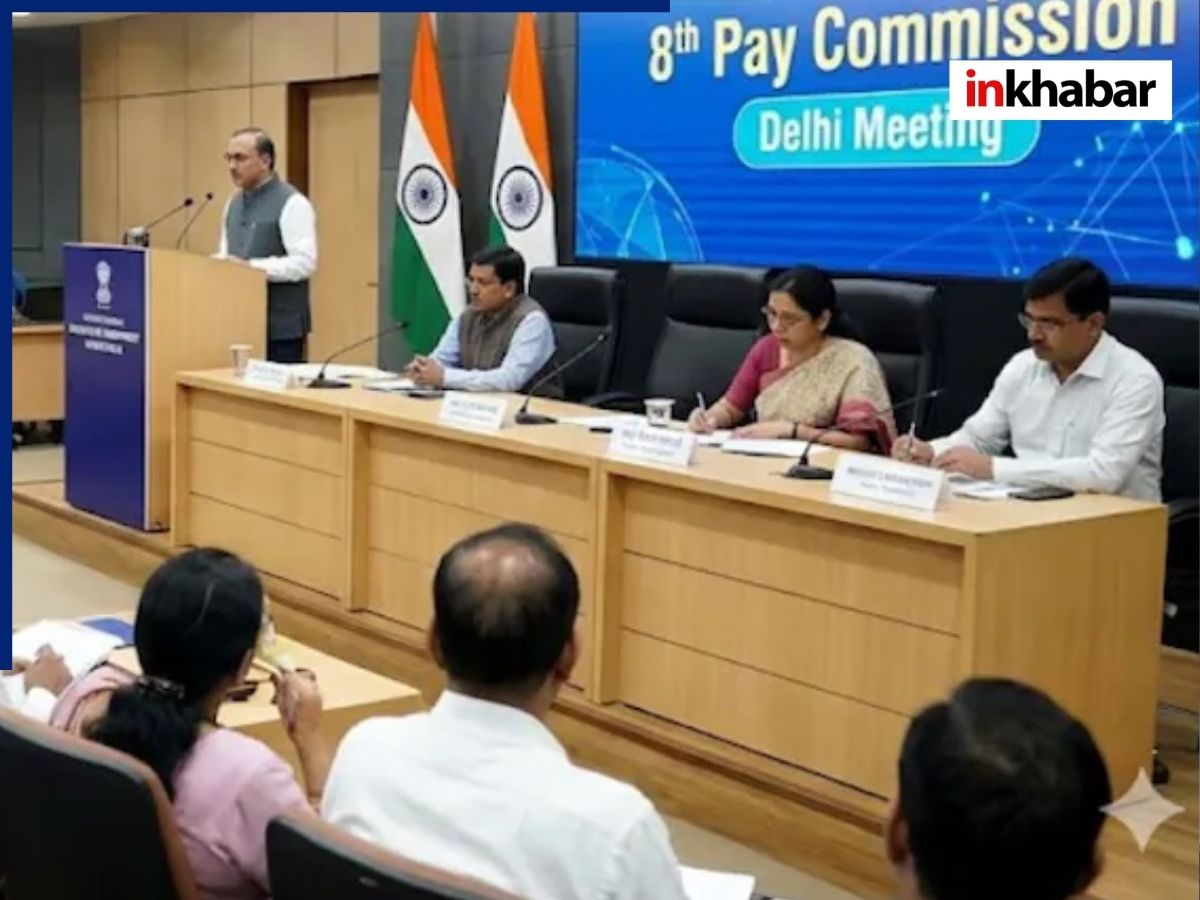
The 8th Pay Commission, headed by Justice (Retd) Ranjana Prakash Desai, is currently in an intensive consultation phase through countrywide tours and meetings. This entire exercise will have a direct impact on more than 1.1 crore central employees and pensioners of the country. The government constituted this commission on 3 November 2025. Now it remains to be seen how the government manages to balance the expectations of the employees and the country’s coffers amid economic pressures.
The post 8th Pay Commission: Railway Union’s big bet, salary will increase up to 4 times due to 5 different fitment factors appeared first on Latest.

Comments are closed.