
Vietnam tightens street food inspections before Lunar New Year, fines up to $115 per violation

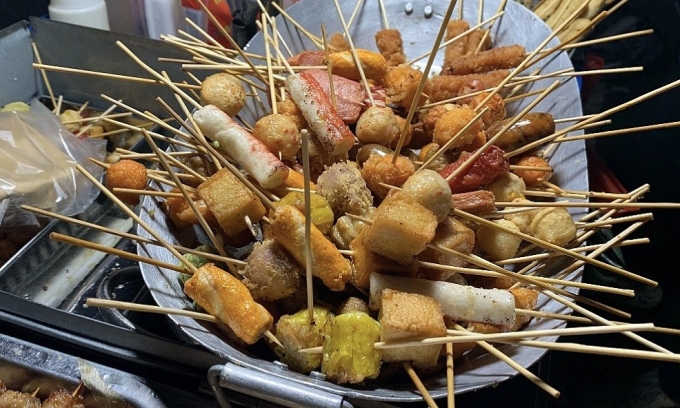
Assorted fried fish balls are displayed in a pan after deep-frying for sale to customers at a street-food stall in Hanoi. Photo by Thanh Nga
As street food demand surges ahead of the Lunar New Year, Vietnam’s health ministry has ordered tighter inspections nationwide, warning that unsafe vendors could face fines of up to VND3 million (US$115) and be forced to destroy their products.
In a document sent to provinces and cities on Feb. 9, the Food Safety Authority said common but risky practices such as displaying food without proper tables or racks, failing to cover dishes to prevent dust and insects, or handling ready-to-eat food without gloves all threaten consumer health. These violations can draw fines ranging from VND500,000-1 million.
More serious breaches, including using unsafe processing equipment, non-compliant water sources, or allowing food handlers with infectious diseases to prepare food, may be fined up to VND3 million.
Authorities also warned that the illegal use or repackaging of food additives would be heavily penalized, with all non-compliant products subject to destruction. In cases of food poisoning or safety incidents, vendors must provide full information on ingredient sources to support traceability and investigations.
The penalties are stipulated under several government decrees. However, this is the first time the Ministry of Health has publicly called for tougher enforcement against unsafe street food practices as Tet approaches, amid rising dining demand and a series of recent food poisoning cases.
Under current regulations, street food vendors are not required to obtain a food safety certificate. They must, however, meet standards related to hygiene conditions, equipment, ingredients and food handling. Individuals directly preparing food must undergo food safety training and must not have infectious diseases as defined by law.
The ministry acknowledged that violations remain common among small-scale roadside stalls, where some vendors lack clean water, proper waste disposal or basic protective gear. Low-cost ingredients of unclear origin are still widely used, and prepared foods such as pâté, crab soup, cold cuts and leftovers are sometimes improperly stored or kept beyond safe time limits, increasing the risk of food poisoning.
Provincial and municipal authorities have been asked to strengthen post-inspection monitoring and conduct inter-agency checks, particularly during Tet and the upcoming festival season. Violations will be handled strictly and publicly disclosed to warn consumers and protect public health.

Comments are closed.